At The Next Economy, we are excited to team up with Erinch Sahan for his Australian tour to share ideas, provocations, and proof of what is possible in the world of business and investment.
Businesses and investment matter in Australia. They have a significant role in shaping economic, ecological, and social outcomes – for good, and sometimes for ill.So how can business and investment ensure that their activities and ways of working contribute to an Australia that future generations will be proud of?
Erinch is a globally renowned thought leader with expertise in business design and investment. Join us to hear from Erinch and widen the discussion about the critical role of business and investment in building the economy we could have. This is a rare opportunity to hear him speak in Australia and not to be missed!
Melbourne:
Transforming Business and Investment into a force for good. Erinch Sahan, with special guests from Regen Melbourne and Social Traders.
Join Erinch in conversation with special guests Tara Anderson, CEO of Social Traders, and Josh Devine, Collaboration and Investment lead at Regen Melbourne.
Together they will explore how Melbourne can become a place where purpose-led business is not the exception, but the new business as usual.
Global lessons, regional opportunities: A special conversation with international thought-leader Erinch Sahan and The Next Economy’s Economic Program Director Katherine Trebeck and Land Program Director Jacqui Bell.
📅 Date: Thursday 8 October 2026, 10-11am, AEDT (9-10am AEST),
What would business look like if it worked for everyone?
Global thought leader Erinch Sahan will share ideas, provocations and real proof of what’s possible – followed by a panel discussion with Melina Morrison, CEO of Business Council of Co-operatives and Mutuals, Dr Belinda Russon, CEO of Tranby Aboriginal Co-operative Ltd, and Nathan Robertson-Ball, Founder of Finding Nature.
📅 Date: Wednesday 14 October, 2026
🕰️ Time: 6–8pm
📍 Location: Blue Gum Hall, Yirranma Place, 262 Liverpool St Darlinghurst
🌍 Hosted by: The Next Economy and Paul Ramsay Foundation
Uralla’s Renewable Energy Strategic Action Plan is here
Two years of listening, testing and co-design have led to this: a practical plan for how NSW’s Uralla Shire can host large-scale renewable energy development on its own terms – protecting what the community values while sharing the benefits of the transition fairly.
Uralla’s RESAP was developed by Uralla Shire Council with the community with in-kind support from The Next Economy, as part of the national Striking a New Deal (SaND) collaboration.
Communities like Uralla in NSW are on the front line of Australia’s renewable energy transition – facing real opportunity alongside real disruption.
Two years ago, Uralla Shire Council and its community set out to shape the impacts of the New England Renewable Energy Zone (REZ) with a practical, community-informed Renewable Energy Strategic Action Plan (RESAP). The result of that process was endorsed last month.
As the New England Renewable Energy Zone develops around us, our region is entering a period of significant change. This will offer a once in a lifetime opportunity. However, how that change is managed will impact generations to come.
Uralla Mayor Robert Bell
Only just released, it’s already showing results: stronger community voices in decision-making, and improved trust between Uralla Shire Council, community and developers.
In May, councils across the REZ joined the University of New England, Regional Development Australia, Regional Economic Development NSW and EnergyCo to shape a REZ build that benefits the community and delivers lasting regional infrastructure.
The New England REZ forum, supported by The Next Economy (TNE), delivered on two of the actions identified in Uralla Shire Council’s RESAP: actively engaging in coordination forums to spot gaps in responsibility or sequencing; and convening the right parties to close those gaps.
Further afield, insights from RESAP are already feeding practical guidance to government and industry, including being shared by The Next Economy at the NSW Parliamentary Inquiry into the impact of renewable energy zones on rural and regional communities and industries.
During engagement, locals told us again and again that water was their biggest concern. ‘Improve Water Security’ is a key strategy in the RESAP. We needed all government and industry stakeholders to really appreciate that concern. And I think we achieved that. No one who attended the NE REZ forum left without a clear picture of the regional water security challenge. We now have strong and ongoing regional collaboration on water security.
Emily Sims, Strategic Planning Officer, Uralla Shire Council
There’s no shortage of toolkits for renewable energy development – what’s missing is a full picture that puts it into practice on the ground.
The Next Economy’s Saideh Kent, who led the work with Uralla Shire Council to build RESAP, shares her top six insights, developed with commentary from Uralla Shire Council Strategic Planning Officer Emily Sims and Group Manager Infrastructure Services Myles McLindin.
They contain valuable lessons on how communities, industries and governments can work together for shared value outcomes across the country.
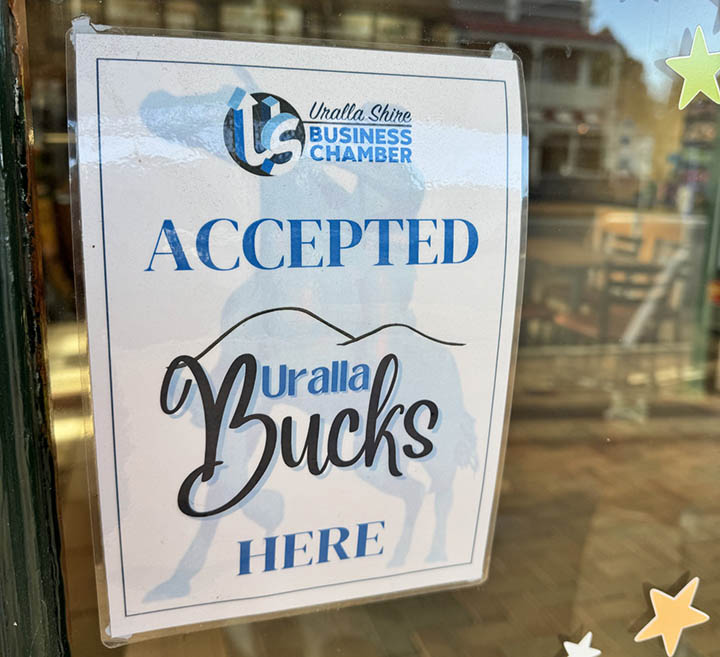
Buy local with Uralla Bucks. Credit: The Next Economy
1. Communities are partners, not stakeholders to manage
Good development is built with communities from the outset, not delivered to them. Done well, this doesn’t extend timelines or budgets but does improve outcomes all round. This means moving beyond social licence toward genuine, shared-value relationships – development done, as the nearby Hay community puts it in their Economic Transition Roadmap: “with the community, not to it”. In Uralla, that’s taken shape as a simple guiding principle: minimising impacts and maximising benefits.
The Renewable Energy Zone will offer a once in a lifetime opportunity, however how that change is managed will impact generations to come. We have a responsibility to help our community be ready for what is coming and to make sure local voices are heard
Mayor Robert Bell, Uralla Shire Council
A shared community vision is a good starting point, setting out what matters most, and where the opportunities for mutual benefit might lie. This could be attracting investment in roads and housing, or welcoming new people into the community to grow the town and the local economy.
From the conduct of workers on the ground to policy, siting and land access negotiations, respectful engagement – backed by communities and councils with the capacity to engage as equals – builds trust. Its absence erodes it fast.
For example, land access is often a community’s first contact with a project, and openness – transparency, legal advice, free and informed consent – builds cohesion, whereas individual, non-disclosure agreement-bound deals, for example, breed suspicion between neighbours.
In Balala, landholders formed their own group to engage collectively with EnergyCo and a wind farm developer, rather than negotiating one-by-one. They worked collectively with a lawyer to review the terms of the agreement.
Legal advice should be as close to free as possible to landholders. This can be a real barrier for many and also stretches limited legal expertise in the region.
Myles McLindin, Group Manager Infrastructure Services, Uralla Shire Council
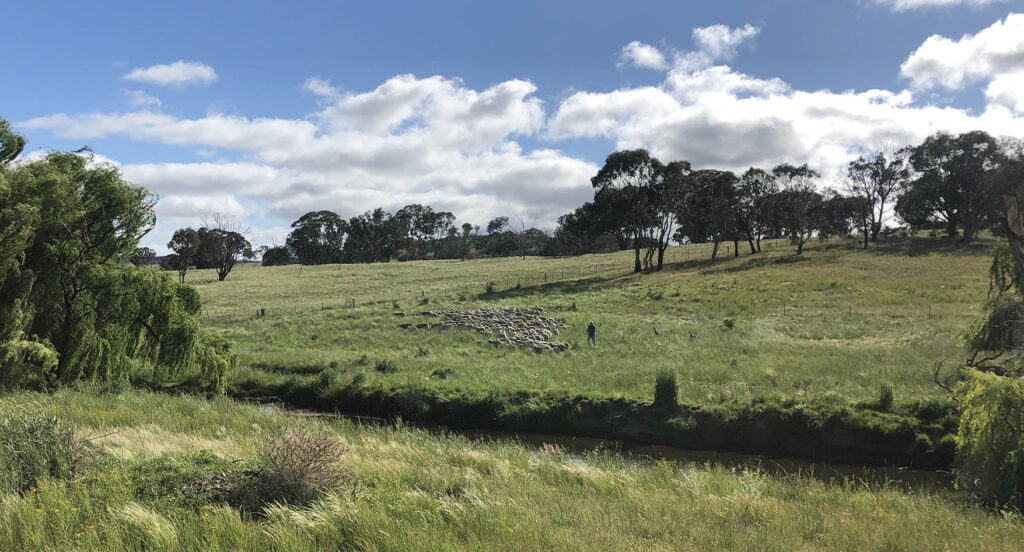
Farmers in Balala are working together to engage with developers and share their priorities. Credit: Cr Sarah Burrows
3. Benefit-sharing is collaborative, not transactional
Communities and developers work together across the full benefit spectrum, from community grants through to legacy infrastructure like housing to joint enterprises that create lasting shared value.
For example, the Armidale Regional Council and Uralla Shire Council have been working together to address the water needs of their communities. The Renewable Energy Zone infrastructure also requires large amounts of water for development. By working together to increase local water storage capacity and supply networks, the Renewable Energy Zone can improve the water security of the region.
We see it as a regional opportunity the REZ provides a chance to bring in those major infrastructure developments and provide a legacy outcome that gives our communities safe and secure water in the future.
Good siting supports multiple land uses and actively protects and enhances both farming operations and local ecology efforts.
In Uralla, a sixth-generation farming family is negotiating with EnergyCo and a developer to host solar on part of their land. They believe development around Uralla Shire must enhance the township’s character and deliver lasting local benefits. Construction-phase impacts are a key concern – particularly truck movements affecting road conditions and blocking highways used to move stock to market. Uralla Shire Council has already recommended alternative transport routes to protect local assets like the avenue and bridge near Gostwyck Church.
The Uralla Shire Council, is also working with local biodiversity experts to provide advice on how to protect and enhance biodiversity as new energy infrastructure is developed.
New England is a unique bioregion. Over the years of intensive grazing practices, tree clearing, drought and eucalypt die-back, the region’s woodland ecosystems have become increasingly threatened. Locals told us very clearly that what remains is precious. They want to see that, at the end of this renewable energy rollout, the environment is in a better place than before.
Emily Sims, Strategic Planning Officer, Uralla Shire Council
A pilot study undertaken by the University of New England on the ACEN New England Solar Farm is demonstrating ways to improve biodiversity within the region.
Useful resources:
Hay Inc.’s Rural Education Program – a hands-on training initiative to provide pathways for young people including on the importance of food and fibre production co-existing with renewable energy production.
University of New England’s pilot study into how renewable energy zones can double as valuable habitats for wildlife
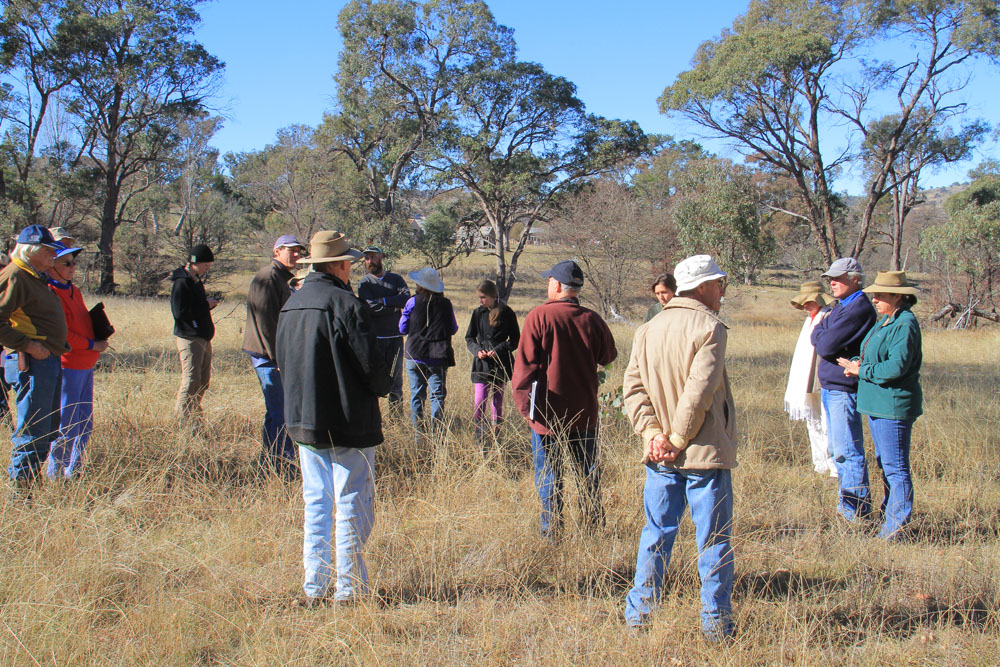
Balala Brushgrove Landcare Group conduct landholders walk. Credit: Southern New England Landcare (SNEL)
5. Coordination is the multiplier
Strong governance – linking developers, government and community, managing benefit funds, and investing in enabling infrastructure like water, housing, transport and telecommunications – turns individual projects into regional benefit.
For example, the Uralla Shire Council Strategic Planner worked with the University of New England to host EnergyCo and the other councils to coordinate infrastructure planning and investment as part of the NE REZ Forum.
There is an understandable perception in the community that ‘the REZ’ is an entity that can be held accountable. We often hear things like ‘The REZ should pay for upgrades to local roads before they start construction’. In fact, the REZ is being shaped by multiple tiers of government, state functions, and private industry. EnergyCo doesn’t hold all the levers that need to be pulled. Collaboration is necessary to ensure that our community doesn’t fall through some of the cracks.
Emily Sims, Strategic Planning Officer, Uralla Shire Council
Those Councils with expertise and more resources can engage developers on equal footing, they can spot where projects meet roads, water and housing, and negotiate collaboratively. Councils, often facing multiple projects at once, or without appropriate funding or governance structures, can quickly be outmatched.
In Uralla, a funding agreement with EnergyCo for $750k over three years has been used to fund a strategic planning role that lifted local capacity to coordinate and respond to activity associated with the renewable energy development in the Shire. This approach has been adopted by nearby Tamworth and Walcha councils.
There is no chance Uralla Shire Council would be in the position where we are able to advocate effectively for our community without this funding and support.
Myles McLindin, Uralla Shire Council’s Group Manager Infrastructure Services
7. Construction is an economic opportunity, not just a disruption
Managed well, construction builds local business capability, attracts and retains workforce, and strengthens social cohesion rather than straining it.
For example, in Uralla and across the surrounding region, local Aboriginal cultural heritage practitioners are working on the ground as renewable energy projects take shape. Steven Ahoy, a local Anaiwan man, carries out cultural heritage assessments for multiple solar, wind and transmission projects and manages a heritage maintenance crew at an operating solar farm. He has also helped set up an Aboriginal work crew that employs both Indigenous and non-Indigenous people.
Good renewable energy development is not theoretical – it’s already happening, in Uralla and elsewhere across the country. The task now is to learn from it and scale it.
To read more inspiring examples beyond Uralla, check out these recent projects The Next Economy has collaborated on including place-based, co-design projects over multiple years in nearby Hay (Economic Transition Roadmap) and the South West Queensland Regional Organisation of Councils’ Future Economy Strategy.
Erinch Sahan is an expert on making business work for good and is not to be missed during his Australian tour this October. Tickets are now available for Erinch’s public events. Find them all here.
Although Erinch Sahan grew up in Sydney, he has spent decades abroad working across academia, civil society, government and business to bring genuine sustainability and long-term thinking to the business community that can build the economy we could have. He currently works to lead the Joseph Rowntree Foundation in their mission to align their £400 million endowment in support of a just and sustainable future.
Supported by The Next Economy, with help from partners at Paul Ramsay Foundation, WWF Australia, and Greater Melbourne Foundation, Erinch is returning to home soil this October to share his expertise, passion and lessons learned along the way. Ahead of his visit, TNE caught up with him to talk all things business and investment and how we can make sure that the business and investment community is a force for good, rather than ill.
The time for a fresh approach is well and truly here and Erinch is wonderfully positioned to bring this vision to Australia.
What have you missed about Australia since you were last here 14 years ago?
There’s a down-to-earth quality about Australia that I miss. I remember that sense of scepticism towards anything that presents itself as too high-and-mighty or ‘elite’. Some might call it tall poppy syndrome.
To me, this is about Australian culture being about not taking yourself too seriously and scrutinising hierarchies. It’s that sense of egalitarianism that I remember coming through in subtle ways.
I didn’t appreciate this dynamic when I lived in Australia, but do now miss this, along with the beaches, eucalyptus and food culture (particularly across the rich multicultural mosaic of suburbs I remember from across Sydney and Melbourne).
We have been exploring predistribution: the idea that we need fairer market outcomes by design, not just redistribution after the fact. From your vantage point in business design, where do companies have the most leverage to predistribute?
Our economies increasingly reward capital more than they reward labour, even where productivity has grown. As a result, I think we need to redesign for two objectives:
Structurally better distribution of upside and profit: Workers and communities benefitting as co-owners and co-governors – as partners alongside financial capital
Operationally better practices: Better wages and working conditions (especially through deeper collaboration with and empowerment of trade unions), and fairer pricing with suppliers and business partners (to enable distributive and regenerative practices across these business partners)
These can create a virtuous cycle, with better designed structures unlocking fairer practices and vice versa. And both together forge deeper partnerships for businesses, drive greater innovation and ultimately lead to more resilient businesses. It is about shared prosperity, purpose beyond extraction of value and true long-termism.
Worker cooperatives and community ownership models keep appearing as examples of businesses that serve place. You’ve seen these up close through the World Fair Trade Organisation (WFTO) and Doughnut Economics Action Lab (DEAL). What are some of the successes you have seen and what makes the difference between a cooperative that genuinely transforms a local economy and one that stays marginal?
Too often cooperatives and other shared ownership models become confined to industries, markets and contexts that have low potential for wealth generation. They are deployed where mainstream capital doesn’t want to flow and operate where margins are slim and commercial viability is an uphill climb.
This is often for good reason, as parts of the economy or market that are ignored by mainstream business and finance can often be vital for a community (e.g. a community shop, a care business that operates where there is high need but low profitability, or a business focused on skilling-up people who need the most support). Or often, these models are used in businesses that are beginning to deliver government services. These are valuable, often essential businesses.
But we need to spread shared ownership models to businesses with high growth prospects too. Imagine if all of Silicon Valley was dominated by businesses owned and governed like Wikipedia? Or if AI was developed through a platform cooperative or steward ownership structure? We could shape the businesses that will shape the world and ensure that the wealth generated is directed in service to life.
There are exciting examples of governments, businesses and investors doing things differently: but they’re often described as ‘niche’ or ‘exceptional’ – we call them ‘Lego wins’ as they’re building blocks of what’s possible. In your experience, what’s holding back the mainstream from adopting these models, and is that barrier shifting?
I find predicting the path to unlock a rapid expansion of distributive and regenerative models is extremely hard, and perhaps impossible.
Is it through government policy that shifts the playing field – e.g. tax breaks to convert business ownership or procurement to genuinely favour such models?
Is it through government regulation of the worst kinds of business practices to ‘level the playing field’ – through pricing of ecological and social harms, deep supply chain regulations, banning of practices that give extractive businesses a cost advantage?
Or is it through pioneering innovations that demonstrate what is possible even in regulatory and financial systems that are stacked against such businesses?
I think the answer is all of the above – everywhere all at once. I think policymakers are emboldened by pioneering action that seems to be gaining momentum in the world of business and finance. It gives them cover against people making the claim that action is anti-business and ‘bad’ for the economy. And pioneers in business and finance are emboldened by a sense that policymakers are interested in a transformation of the economy, and policy-action is around the corner. They don’t want to be left high and dry if they act boldly.
A sense of inevitability is needed to shift structures and cultures. A narrative change. It builds slowly, until it reaches a tipping point of authentic and spreading belief that these ideas are not for the margins, but are beginning to sweep into the mainstream economy.
They are diverse, innovative and designed around the realities of what people need and designed within the realities of this living planet. How all this unfolds, how it is sequenced, and which actions lead to which change… well I don’t know. But I see how all of these trigger each other and put wind in the sails of the deeper narrative shift around how the world of business and finance could be and will be.
Tickets are now available for Erinch’s public events! See all his events and find out more here.
A version of this article was originally posted on The Point.
Many policy discussions centre on how to spend more and spend better, patching up after the fact. But this investment framing misses a crucial third pillar of prevention: stopping harmful activities from happening at all or before their impact gets even worse. Check out the latest reflection for our series ‘Building the economy we could have’.
Gambling advertising is a hot topic in Australia right now, with a range of groups and political players calling for more to be done to stop ads popping up on our screens.
Taking action to stop an activity known to be causing so much harm to so many Australians and their families is not really in question: the push and pull between the parties is more how much action to take and how firm government needs to be.
Banning gambling ads is a great example of how important stopping bad things is. Yet it seems to be the exception that proves the rule: so often policy discussions instead swirl around spending to patch up after the fact. It is rare to focus on stopping bad things from happening in the first place.
Compared to how and how much to spend and on what, far less attention gets paid to avoiding costly repair and remediation, and yet this can be much cheaper than the vast sums of public money spent fixing the damage caused by policies that allow, and sometimes even subsidise, harmful activities.
There are so many examples. Think about the ‘direct costs from extreme weather events, which are estimated to grow by 5.13 percent each year (before inflation) and reach $35.24 billion (in 2022 dollars) by 2050.’ Or what about the health impacts of pollution in the air from truck and bus exhaust, which costs about $6.2 billion each year. Children at childcare centres on busy roads are exposed to air pollution that is equivalent to eight cigarettes a day, according to scholars at the University of Melbourne.
In relation to chemical pollutants, the Centre for Policy Development (CPD) reports that if they had ‘been regulated early, the enormous cost of clean-up – and the impacts on human health – could have been prevented’, but now, as the CPD explains, the ‘cost of remediating Australia’s approximately 160,000 contaminated sites is impossible to quantify, but a thorough clean-up would almost certainly amount to hundreds of billions of dollars’.
And because of child poverty, various Australian governments spend at least $16 billion annually on government services like child protection, health services, legal system costs, homelessness services and education services, and the need for Jobseeker and Family Tax Benefit in later life.
These costs are illustrations of failure demand: demands on public services and budgets that arise because various systems, institutions, policies, and practices fail to prevent harm in the first place, let alone create the conditions for people and planet to thrive.
What is needed is upstream prevention that stops problems before they start. This is 3-4 times more cost-effective than treating them later. This is further evidence of the very real fiscal benefits to be obtained from creating an economy that better aligns with what people and planet need. Preventing harm would deliver benefits for communities and the natural world (most importantly), while also reducing avoidable public expenditure: a potential prevention dividend.
Taking prevention upstream to the economy
Conversations about prevention tend not to go as far ‘upstream’ as the economy. Yet how the economy operates and for whom matters to people’s ability to thrive, and that of the planet. Going as far upstream as the economy makes it necessary to ask which activities are enabled; who benefits from them; who bears the costs; and how are resources treated and distributed?
There is ample evidence of the environmental impacts of how we produce and consume, and inequalities within them. The socio-economic determinants of health are not disputed, but what is seldom acknowledged that much social policy is necessary because of economic policy that does not share our wealth and resources effectively.
Acting on this evidence requires investment spending and early intervention, which is all well and good. But the investment framing misses a crucial third pillar of prevention: stopping harmful activities from happening at all, or before their impact gets even worse.
Currently, many laws, taxes, and subsidies still permit or actively encourage activities known to cause harm, creating downstream costs for government and society (incidentally, these downstream costs align with the International Monetary Fund’s definition of ‘implicit subsidies’).
Stopping the bad
Addressing the fact that our economy actively encourages harm and causes downstream costs would require governments not just focus on adapting to shocks, but become more proactive in stopping the causes of harm in the first place.
The first task is to identify what is permitted, but which is proven to:
Damage health, the environment, or economic security
Shift costs onto the public while profits remain private, or
Persist only because they are familiar, not because they work.
Then legislators need to regulate out activities and behaviours that create more harm than good via bans, phase out, tax hikes, subsidy removals, tighter licensing, restrictions and limits, or withdrawing other forms of government support.
Crucially, this would be accompanied by transition plans and support to avoid unfair burdens or unintended hardship for affected groups. Alongside nurturing the new, the task is to let go of the old and no longer necessary: ‘hospicing the old’ in systems thinking terms.
Fairness: to individuals and enterprises doing the right thing
Taking steps to ‘stop the bad’ would shift the onus away from blaming individuals and avoid infamous ‘lifestyle drift’: a phenomenon ‘where policies tend to recognise upstream factors in their rationale but drift downstream to “life-style factors” when recommending action and defining impact measures’.
It is also about fair competition: if a practice is profitable only because its costs are borne by the public, that’s implicit subsidies, not efficiency nor genius entrepreneurship.
Already happening
The biggest quality of life improvements often come not from new spending, but from deciding that certain harmful practices are no longer acceptable.
Around the world there are examples that show the effectiveness of stopping bad things happening:
New Zealand’s restrictions on zero-hour contracts.
Sao Paulo, Amsterdam, Edinburgh and the Australian Capital Territory are restricting the use of outdoor advertising (either outright or for certain goods, such as SUVs).
Scotland’s smoking ban twenty years ago has seen rapid reductions in heart attacks and respiratory admissions (including reduced admission for child asthma by 18 percent), and healthier workers.
Asbestos is banned in new buildings in many countries.
Brazil’s “Dirty List” of firms using forced labour.
France has banned short haul flights for journeys where there are suitable alternative train options.
Wales has a moratorium on building major new roads.
Conclusion
If efforts to stop the bad were to become more deliberate than simply sporadic, debate would move from the Treasurer’s calculator to the auditor’s assessment, and ultimately to the legislator’s pen. We’d spend less time and money fixing preventable damage, and more time building an economy that doesn’t create the damage in the first place. The gambling advertising debate shows that when the case is clear enough, stopping the harm becomes common sense. Imagine if we applied that same common sense across the board.
The ideas that have informed this piece were first mooted at an event hosted by NESTA Scotland at the Edinburgh Futures Institute in early 2026.
The economic development framework, Community Wealth Building, is receiving increasing attention worldwide after Scotland passed a law that brings the framework to a whole country and our last instalment of ‘Building the economy we could have’ explored the history of the concept and how it works (See our explainer here). To better understand what it looks like in practice for Australia, The Next Economy’s Economic Change Project Officer Josie Foster sat down with Annie Smits and Bill Mithen, Co-CEOs of Neighbourhood Economics to discuss how they’re applying the framework to Norlane and Corio in Victoria.
Their motto? A fair economy isn’t impossible, it’s overdue.
Josie from TNE and Annie and Bill from Neighbourhood Economics
What is Neighborhood Economics all about?
Annie: Neighborhood Economics is committed to places of disadvantage and thinking about those places and re-imagining those places through an economic lens. Part of our theory sits in the idea that places of disadvantage often get looked at through a health lens, or an education lens, or a services lens, but rarely through an economic lens, and if we don’t think about local economies, we won’t shift the conditions of places like Norlane and Corio, which is where we’re working,
Why did you pick Norlane and Corio as the location to pilot Neighborhood Economics?
Bill: Norlane is the most disadvantaged place in the state for Victoria, and Corio is the fourth most. I’ve worked in Geelong for a long time, it’s where I grew up, and I currently live. We both worked in places where disadvantage is prevalent and have seen that things in places of entrenched disadvantage just don’t shift, it doesn’t matter the amount of capital or labour or time or effort that people put in, the conditions stay the same.
Norlane and Corio are two of those places. There’s also been a significant amount of work done in Geelong on entrenched disadvantage, so we feel like starting in a place where the preconditions are already set and organised, made sense.
Can you tell us about the industrial history of Norlane and Corio?
Bill: Norlane and Corio have a story that is similar to lots of places that have been left behind, where they powered the industrial transformation of the Australian economy and the manufacturing part of the Australian economy, and as that has changed over time to become a more services-based economy, these places have often been left behind. They were typically working-class places that had – in Norlane and Corio’s circumstance – large manufacturers; Ford being one. There’s an oil refinery that still exists in Corio [and] International Harvester had their head office there too.
Going back a bit further, there was a whisky distillery as well. There were big manufacturing organisations and businesses that employed lots of people. And as globalisation came in, as trade conditions changed within nations, and tariffs shifted, as a country we really became unviable in those industries, and so they shut down. This meant a whole heap of jobs left with them, and the nature and identity of those suburbs changed forever.
What drew you to Community Wealth Building?
Annie: Community Wealth Building is a practical economic development framework that has five levers that can be pulled to shift the economy in a place. The reason we go to the economy is because fundamentally the economy is the starting point of disadvantage and inequality, and if we don’t start at that place, we won’t get to actually shift the conditions of a place. We’ll do good things for people or with people, but people will remain locked in or locked out of participation in an economy and continue to be left behind.
Bill: The levers are essentially; land, labour, ownership, finance and procurement. So that’s using land for local benefit, having a finance system that supports local institutions and local organisations, doing more socially beneficial procurement, having greater plurality or democratic ownership and having a just labour market.
Annie: One of the other things within Neighbourhood Economics that Bill and I talk about all the time is what we call “our matters” – the things that matter in economic development that have been left out of how we talk about local economies. They are democratic ownership, shared value, distributed power, and human connection.
Democratic ownership is important because if we don’t go to the heart of ownership – who owns what and how wealth is concentrated – we will never push back on this sense of extraction and wealth accumulation.
Shared value goes to this sense of whoever creates value in the system is rewarded at that place, including the environment and First Peoples. Distributed power, which sits right alongside democratic ownership, is how do we distribute power and decision making differently and closer to the action or the people. Then human connection – if we’re well connected as human beings and see ourselves in the other, it’s less likely that I’m going to extract from you or take from you in inappropriate ways.
How has this idea been received in the local area?
Bill: We’ve just released a suite of reports, and in the production of those we’ve talked to lots of people. We talked to just under 20 business owners in Norlane and Corio, from very small corner shops and retail stores to large manufacturing businesses. We’ve spoken with nine “anchor” institutions – these are larger organisations that have economic power and can really control the economic trajectory of a place. We sat down and interviewed nine CEOs of those organisations, and then we also had these kitchen table conversations with about 40 odd residents of Norlane and Corio to really understand what life’s like and how the economy actually works and what they experience in the day-to-day life.
Community Wealth Building is not necessarily new for Geelong, because there’ve been organisations and people have talked about it for a little while, although it’s having a bit of a moment. There is a good sense of goodwill from those bigger organisations and civic and business leaders to try and do something, and this is another reason why we chose Norlane and Corio. What they’re not sure about is what to do and so to have a framework that is different – and there’s an acknowledgement that we have to do something different – that has got some proven capability internationally, there’s a bit of interest and excitement about that. Harnessing that and turning intention into action is going to be part of our trajectory.
Who is responsible for making community wealth building happen?
Annie: All levels of government, but it can’t be left to just one. What we’re finding is that there’s lone voices within government that are supportive, and that will hopefully grow momentum. At all levels of government, there is conversation around the fact that we need to shift things around how our economy functions. Sometimes other groups are using the term “wellbeing economy”, which is not exactly the same, but it’s parallel and heading in the same direction.
Bill: The connection with the wellbeing economy is important. The way I articulate it or see it is that a wellbeing economy is the thing we need. We need an economy that places wellbeing at the centre. How you do that is through using the framework of community wealth building. There is more to it than that, but that’s one of the reasons why we chose Community Wealth Building, because it’s really practical.
Annie: We would say also that there’s this sense at all levels of government it can’t just be left to local councils, it can’t just be left to federal government, it can’t just be left to state government, and it’s not just Treasury, or it’s not just the Premier’s office. It’s got to be across government that there’s a buy-in on this, and it’s really interesting that, like, in Victoria, for example, that the Victorian Department of Health and VicHealth have really led the conversation around wellbeing and the connection of wellbeing and economy and a healthy functioning economy. So, this doesn’t just sit with Treasury, or with the economic and finance people; it sits right across government and at all levels of government and other places as well.
What are you hearing from some of the people who may have been left behind economically?
Bill: A range of things. Mostly ambition. The people we spoke to want all the same things that we all want. There were stories of neighbours connecting with each other and helping each other and supporting each other. There were stories of regeneration and people finding a place to be in Norlane and Corio that was really helpful to them. But there were also heaps of other stories that aren’t anywhere near as positive. These were about the difficulties of unemployment and the fact that systems – disability, employment, health, housing or otherwise – almost feel like they’re actively working against their well-being rather than trying to support them. But people were incredibly grateful to be heard, which was humbling.
What would you like to see happen to bring community wealth building to areas in Australia?
Bill: Community Wealth Building is still relatively unknown, which is a challenge, so the more people that know about it the better. One of the things we talk about is: what stopped Community Wealth Building from becoming either the dominant or a dominant practice of economic development? What are the barriers to it? Probably the biggest barrier is the status quo of power. How you break and shift that is really difficult. But people knowing about it, what it is and what it isn’t, is really important. People seeing that it actually is an economic development framework that is legitimate and reasonable, and can work, and is able to be used to build people’s wealth and their wellbeing is really important that it’s not just a fringe idea. It can be done by mainstream economic development. It’s just a choice.
And your final thoughts?
Bill: The big thing about Community Wealth Building for me at the moment is that it’s so much more than three words that you put in a sentence, even though that’s how many people will understand it. It’s actually an economic development framework that has five levers that you need to pull and shift and change all at the same time. There’s a lot of work in it, and we will do ourselves a great disservice if we don’t hold ourselves true and focus on exactly what it is.
Annie: I agree. For Bill and I in creating Neighbourhood Economics, part of our frustration was that both of us had done a fair amount of work in economic development, and we probably potentially worked in one, a single lever, but then found the frustration of ‘why hasn’t this shifted something’, and so the really important piece is that we’re pulling multiple levers to reimagine local economies.
Two years of listening, testing and co-design have led to this: a practical plan for how NSW’s Uralla Shire can manage large-scale renewable energy development on its own terms – protecting what the community values while sharing the benefits of the transition fairly.
This is not a plan for or against renewable energy. It’s a plan to make sure development happens with the community, not to the community. Our residents have been clear: Uralla’s character, farmland and way of life must be protected, and any development must deliver lasting value for our Shire.
Mayor Robert Bell
When regions are faced with large-scale renewable energy developments, local leaders face a choice: drive the change or get swept up in it. Uralla Shire Council chose to lead, successfully applying for transition support from The Next Economy under the Striking a New Deal project*.
That move laid the groundwork for the community-led Renewable Energy Strategic Action Plan, endorsed by Council after a lengthy feedback process with community.
Here we look behind the scenes at how this journey unfolded, what we learned from our experiences working with the Uralla community and what this means for the transition more generally.
Uralla Shire sits inside the New England Renewable Energy Zone (REZ) – one of the areas key to decarbonising Australia’s energy system. Solar, batteries and transmission projects are already shaping the region. With multiple wind projects planned, Uralla will be the centre of construction activity. It is already gearing up to host the largest share of temporary construction workers within the REZ.
Uralla’s location within a REZ brings real opportunity: investment, jobs, training, building lasting infrastructure. But also, real pressure: from housing, water, roads and services, through to the very social fabric of Uralla that locals are proud of.
While Uralla Shire Council can’t make the decision on whether these projects go ahead – that sits with the state and developers –they can, and have, worked with the local community to decide how the Shire prepares, what it asks for, and what ‘good’ looks like in its own patch.
The role of The Next Economy
Together, The Next Economy and Council worked with members of the Uralla community to understand what it takes to proactively shape the roll-out and impacts of the New England REZ, not just respond to them.
The process included interviews, workshops, school sessions and surveys with more than 150 locals between December 2024 and July 2025. Landholders, business owners, young people and community leaders across the Shire were engaged.
When people are involved early, it’s easier to identify concerns, and ensure new development strengthens what the community values.
Saideh Kent, project lead, The Next Economy
Local insights were brought together with national best practice and expert input to build a plan that is grounded in the local context and priorities, and not a cookie cutter model brought in. The result is a renewable energy strategic action plan that:
Sets out what good development looks like, in Uralla’s own terms
Gives Council a clear, evidence-based basis for its conversations with government and industry
Identifies where the Shire needs to act now to stay ahead of construction pressure, including on housing, water, roads, services and nature
Points to how renewable energy investment can leave a genuine legacy, not just short-term disruption.
Real-time results
Already, the work has brought real-time results, with Council:
Identifying potential sites suitable for housing development and seeking community feedback
Collaborating with other councils and EnergyCo to coordinate infrastructure investment
Working with Armidale Regional Council to improve water supplies and drought proof townships
Partnering with the University of Newcastle to set up a recycling hub for solar panels.
From one Council’s experience to a national conversation
There’s no shortage of toolkits, guides and case studies for renewable energy development. What’s often missing is something that pulls it altogether and puts it into practice – a clear, tested picture of what success can look like when a regional community leads its own transition.
Project lead Saideh Kent, is collaborating with colleagues at Uralla Shire Council, to identify the practical, place-based insights for what good renewable development requires – and what makes it possible – to share with other regional councils. Stay tuned.
Why this matters beyond Uralla
The energy transition is one of the biggest drivers of economic change across regional Australia right now. It is more than just the construction of poles and wires, it is a major national investment in a new industry located in regions that have not been part of the system before, and with that comes broader social, economic and environmental considerations and impacts.
Left unmanaged, it can strain the things communities value most and rely on for their livelihoods and way of life. However, if managed well, with community at the centre and positioned as a strategic partner to development, the energy transition can not only move at a scale and pace that is required but can help to build resilient and thriving regions whose economies are working better for local people and their place.
This ground-up, place-based approach to regional economic development and managing local economic change, is underpinned by The Next Economy’s broader work on macro-economic systems change and wellbeing economies – driving an economy that works for people and the planet, not the other way around.
The work in Uralla is a real-world example of that thinking in practice – demonstrating what good development looks like for Uralla Shire, how the community can shape local economic transitions (and the economy), and the imperative for government and industry to get behind them when they do.
*The Next Economy works with government, industry and community across Australia’s regions to shape a transition that strengthens – rather than undermines – local identity, resilience and shared prosperity. Striking a New Deal (SaND) is a national collaboration between The Next Economy, RE-Alliance, the Foundation for Rural and Regional Renewal (FRRR), Projects JSA and host councils including Uralla Shire.
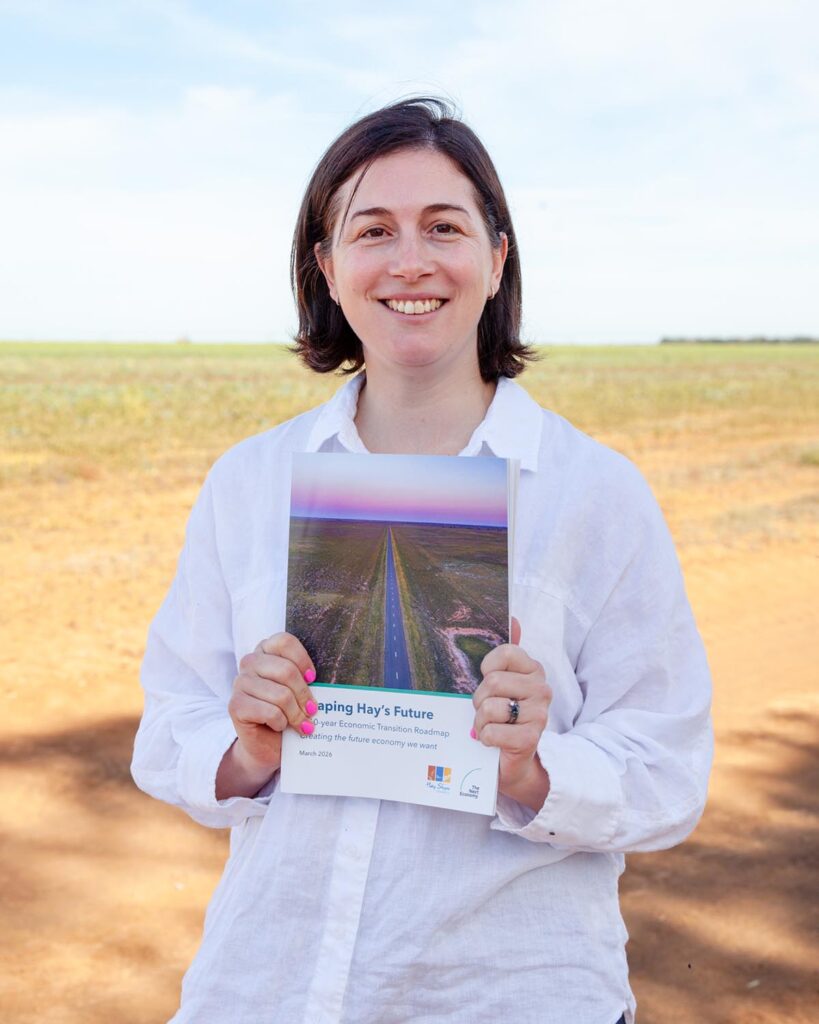
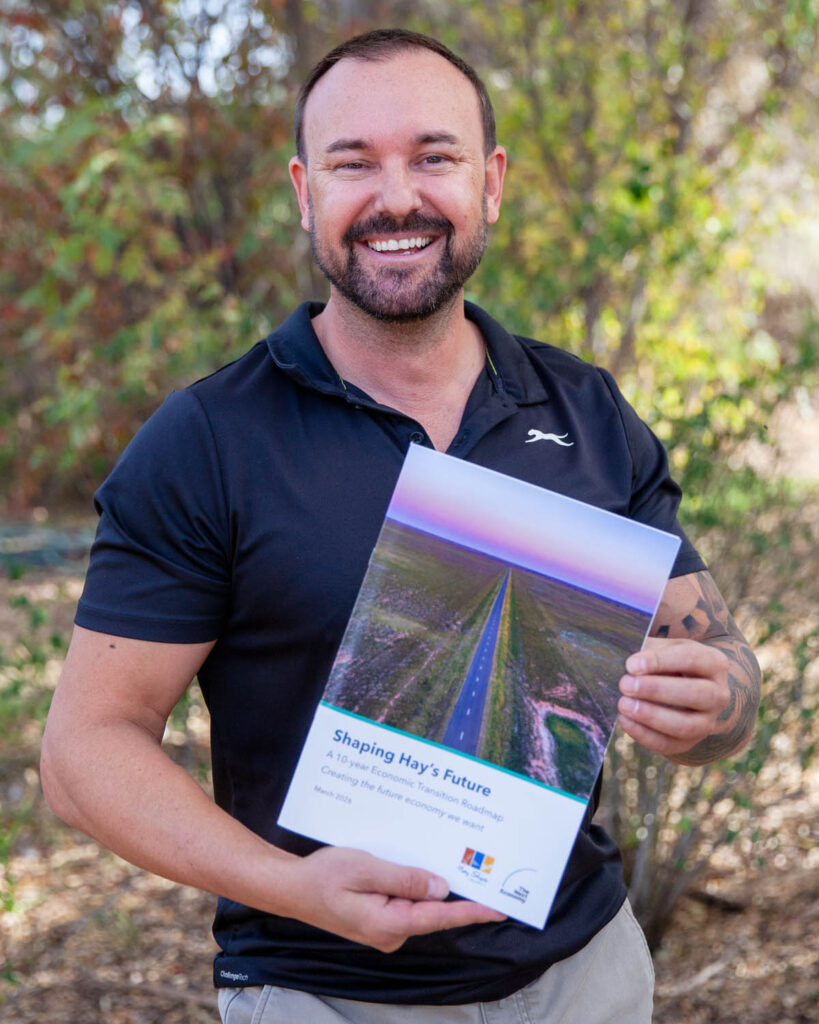
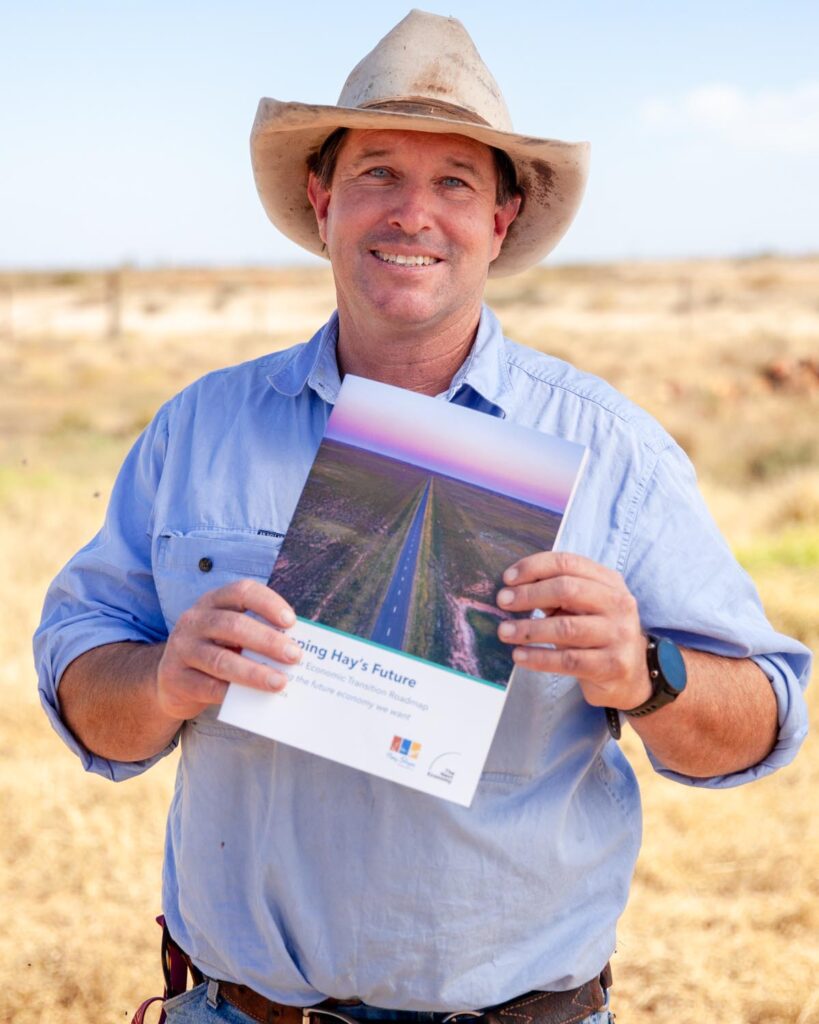
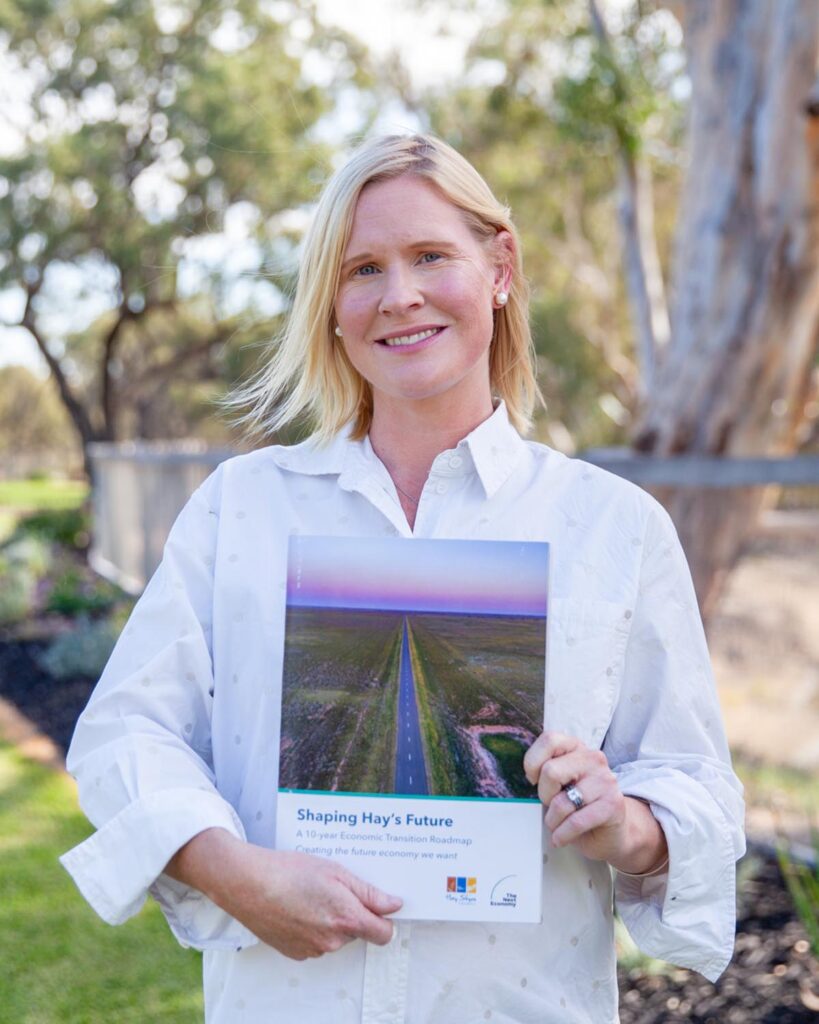
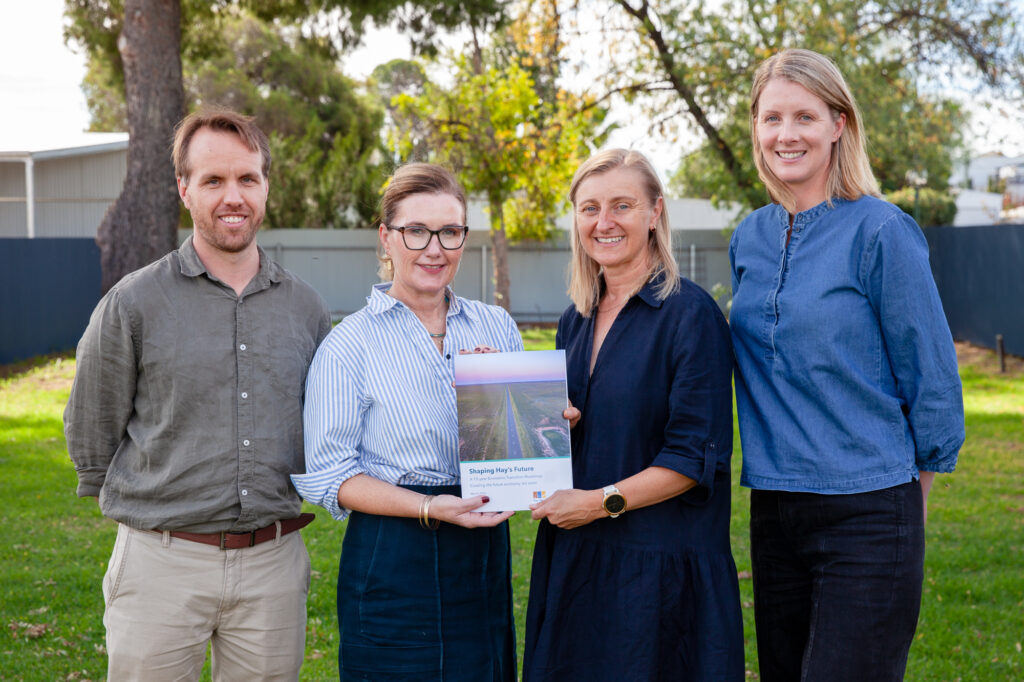
The Hay Economic Transition Roadmap is a practical, locally driven plan designed to strengthen the regional economy, build on agricultural and transport advantages and secure long-term local benefits from renewable energy developments underway.
Developed by the community and convened by Hay Shire Council with support from The Next Economy, it brings together community, business, industry and governments around a common direction for coordinated action.
In April, we got to catch up with a few of the Hay community members who contributed to the Roadmap, and to hear what they had to say about the opportunities, challenges and momentum already building on the ground.
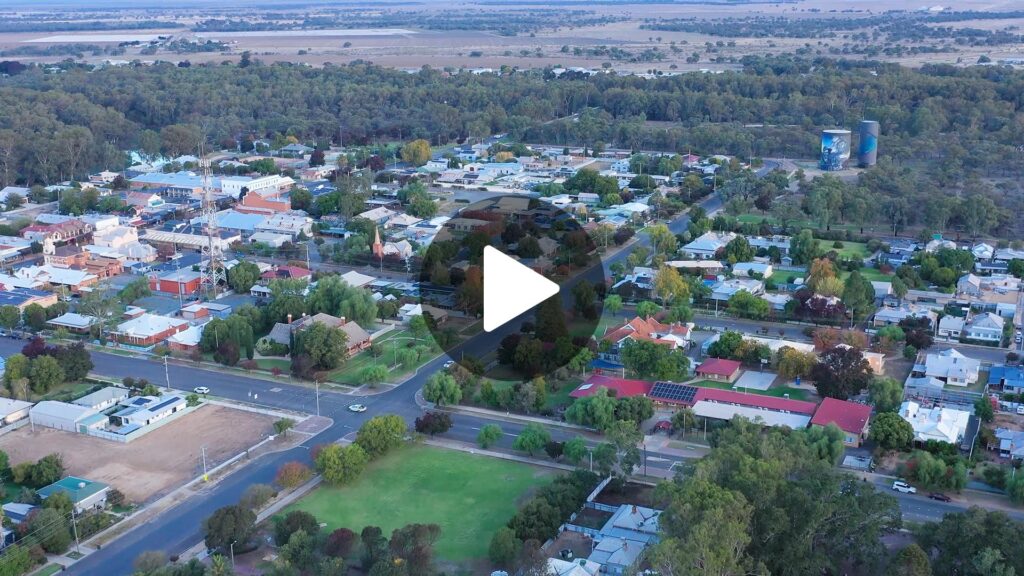
Check out our main Roadmap video, then dive into what members of the Hay community had to say below.
“We’re looking at what we can do that uses renewable energy to generate things that our farm and local industry need. A part of that is looking at a hydrogen plant.”
“The roadmap is important to Hay because it secures Hay’s future. Knowing that there’s jobs and opportunities for future generations. We’ve got to keep up with the times and Hay has to do that as well.”
– Gary Brown, business owner, Hay Newsagency and Alpha1 Property
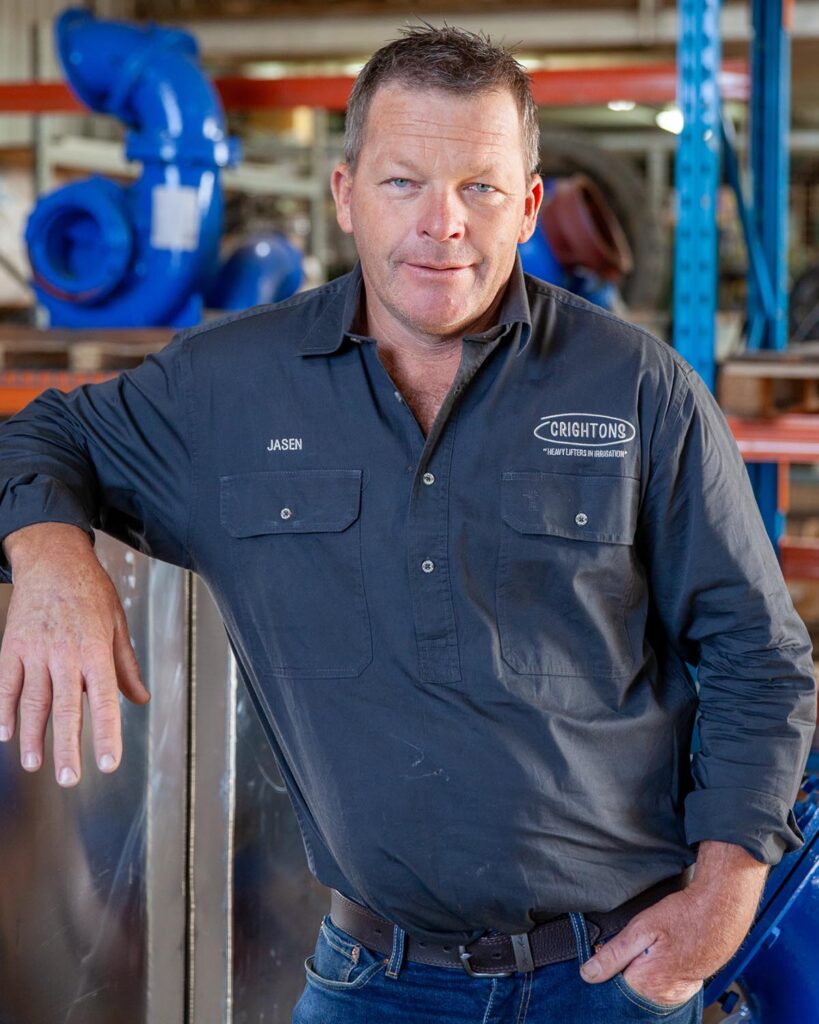
“The Roadmap will help support our endeavours in agriculture here, because if we can bring secondary income to a lot of these primary production properties it gives us the benefit of having a sound other income stream.”
“Hay’s history to date has been on predominately agriculture returns. Now going forward we’ve got that opportunity to pick up secondary industry … If the region wins, then we all win together and that’s a great outcome.”
– Jasen Crighton, Owner and Operator, Crighton Engineering
“The roadmap has been really important to see some of those opportunities in agriculture, and I think if we have another opportunity to embrace an industry that might be able to safeguard us from some of the highs and lows that the ag community faces then we should embrace it.”
Visit Hay Shire Council’s economic development page for more information about the region, the Roadmap and how to get in touch with Alison McLean, Executive Manager, Economic Development, Tourism and Energy for opportunities.
This instalment of ‘Building the economy we could have’ explores Community Wealth Building and how this approach can bring health and social benefits while building resilient communities to better weather turbulent times.
A decade ago, one in twenty Australians rated their life satisfaction as very low. Today it’s one in ten: nearly 2.2 million people now living below what statisticians call the “wellbeing poverty line. It happened while the economy, by its official scorecard, kept growing. But growing for who?
It’s clear Australians want healthy and thriving local economies that work for people and our environment, not profit alone and a different approach is needed to make sure wealth is shared and kept locally.
It’s in this environment that the economic development strategy of Community Wealth Building has started attracting increasing interest. But what is it? And what can it offer us here in Australia?
What is Community Wealth Building?
Community Wealth Building is an alternative to the trickle-down assumptions of a growth-first model of economic development. It puts people at the centre of the decisions made, with a focus on predistribution of wealth, ownership and resources, making sure it is designed from the start to genuinely work for people and provide long-term, lasting changes in the economy, addressing the root causes of inequality and poverty (See Predistribution).
Progressive procurement of goods and services 💸 (Spending): Using anchor institutions, such as local government and big employers like hospitals, universities and other public institutions, to harness their procurement to bolster local supply chains and support local business development, spending, and investment.
Fair employment and just labour markets 👷♀️(Workforce): Using these same anchor institutions and worker-owned cooperatives to ensure employment practices and wages are fair, pay a living wage and create more opportunities for equitable and local economic participation and control over work.
Socially productive use of land and property 🏡(Land and property): Public land and property assets are used to create shared wealth for people, bringing local land and development under community control.
Making financial power work for local places 🏦 (Finance): Wealth and savings are harnessed and reinvested for the local community using public and community banks and credit unions as well as targeting superannuation investments.
Plural ownership of the economy ♻️ (Inclusive ownership): The promotion of different business ownership models to build wealth for local communities, such as cooperatives, social enterprises, public ownership.
History
Community Wealth Building emerged as an economic development model in 2005, through the work of The Democracy Collaborative, who describe themselves as an ‘Action-oriented Think-Do Tank’ in Cleveland, USA and in the work of The Centre for Local Economic Strategies (CLES) in the UK.
In 2008, Evergreen Cooperatives was set up to bring Community Wealth Building from concept to reality in Cleveland, with Evergreen’s founders and local ‘anchor institutions’ helping to set up worker-owned cooperatives with the aim of creating high-quality jobs, making neighbourhoods vibrant and sharing economic ownership with the community.
Evergreen acquired small and mid-sized businesses, converting them to employee ownership, creating living wage jobs, training new employee owners and then providing ongoing business support to the worker cooperative. Evergreen Coops now include a commercial laundry, insulation services and a coffee roastery and cafes.
Across the Atlantic in the north of England, following the Global Financial Crisis of 2007/2008, Preston Council was facing severe cuts to the budget after the loss of over a billion pounds in government grants. The business-as-usual approach would have been to slash council services and supports, pushing more people into poverty and economic disadvantage without doing anything to support people to have employment and options for good quality jobs.
However, a Preston City Council representative attended an event in London with The Democracy Collaborative and one of their co-founders, Ted Howard. Ted was then invited to Preston to discuss Community Wealth Building, and from there, Preston worked to implement the pillars of Community Wealth Building via local anchor institutions.
In 2025, they celebrated ten years of the ‘Preston Model’, with outcomes that clearly demonstrated how aligning the economy with local need can be a mechanism to deal with other problems such as mental health, life satisfaction and wages.
In fact, The Lancet, the world-renowned medical journal, studied the model and found a reduced prevalence of depression, lowered antidepressant prescriptions, and improved life satisfaction. Plus, it raised the median wage 11 percent!
Preston proves something that most of us would have an idea about already: that a thriving local economy that keeps wealth flowing in the community provides economic improvements as well as health and wider societal benefits.
It also proves that an approach to mental health without addressing some of the root causes, such as economic insecurity and poverty, will simply be treating the symptoms, allowing the problems to continue (See Lifestyle Drift, The Economy We Could Have, Upstream Briefing)
Scotland brings the idea to life across a whole country
Scotland has recently passed a groundbreaking piece of legislation that introduces the benefits of Community Wealth Building across an entire country. The Community Wealth Building Act requires Ministers to publish a Community Wealth Building statement setting out the measures they intend to take to implement the pillars. Across Scotland, local authorities (local governments) will work with relevant public bodies to create and implement action plans for their area.
Neil McInroy, a leading expert working with CLES and The Democracy Collective who has also been an advisor to the Scottish Government on Community Wealth Building, states that the power of this is that it moves Community Wealth Building from something that is optional or opt-in, to something that is system-wide.
What is the potential for Australia?
Many regions in Australia are starting to ask how they can look at economic development differently, including those in which we have worked such as Hay in NSW and south west Queensland. The economic blueprint we worked on with the South West Queensland Regional Organisation of Councils, includes a possible first Community Wealth Building step: meeting with key anchor institutions in Roma to identify spending or contracts they could commit to prioritising local suppliers or First Nations organisations.
In Geelong, Annie Smits and Bill Mithen from Neighbourhood Economics are working to bring the concept to life in a place hit hard by previous waves of economic change where resources left. Norlane and Corio, two suburbs of Geelong, were once home to the Ford factory and auto industry, and today are two of the most disadvantaged communities in Australia.
Neighbourhood Economics joined with SGS Economics & Planning to launch a suite of new reports in May this year, including Community Wealth Building: What will it take? This report explores what’s standing in the way of adopting Community Wealth Building as a model of local economic development in Australia.
Other Australian Community Wealth Building activity includes:
The City of Sydney, which released a discussion paper at the end of 2021 as a first step in the policy development process
SGS Economics & Planning prepared a working paper on how Community Wealth Building could benefit Melbourne’s eastern region or the Victorian Government and the Eastern Region Group of Councils in 2024.
Our next instalment in this series will be an interview with Bill and Annie from Neighbourhood Economics on their work in Geelong and what is needed to bring Community Wealth Building to life in Australia.
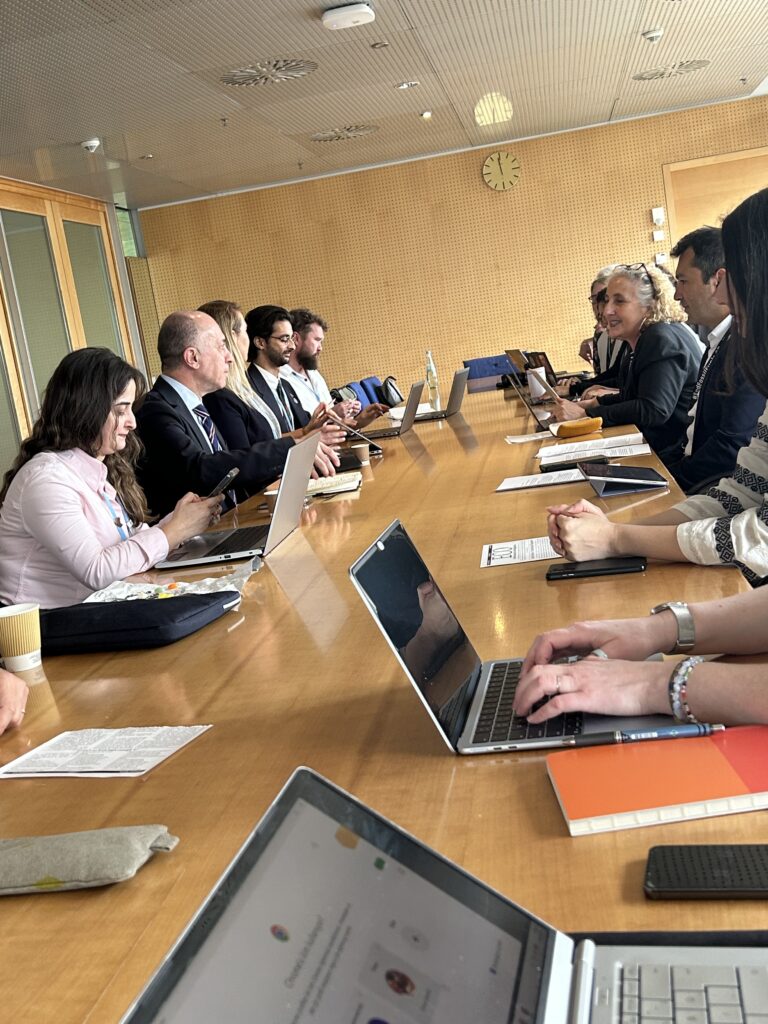
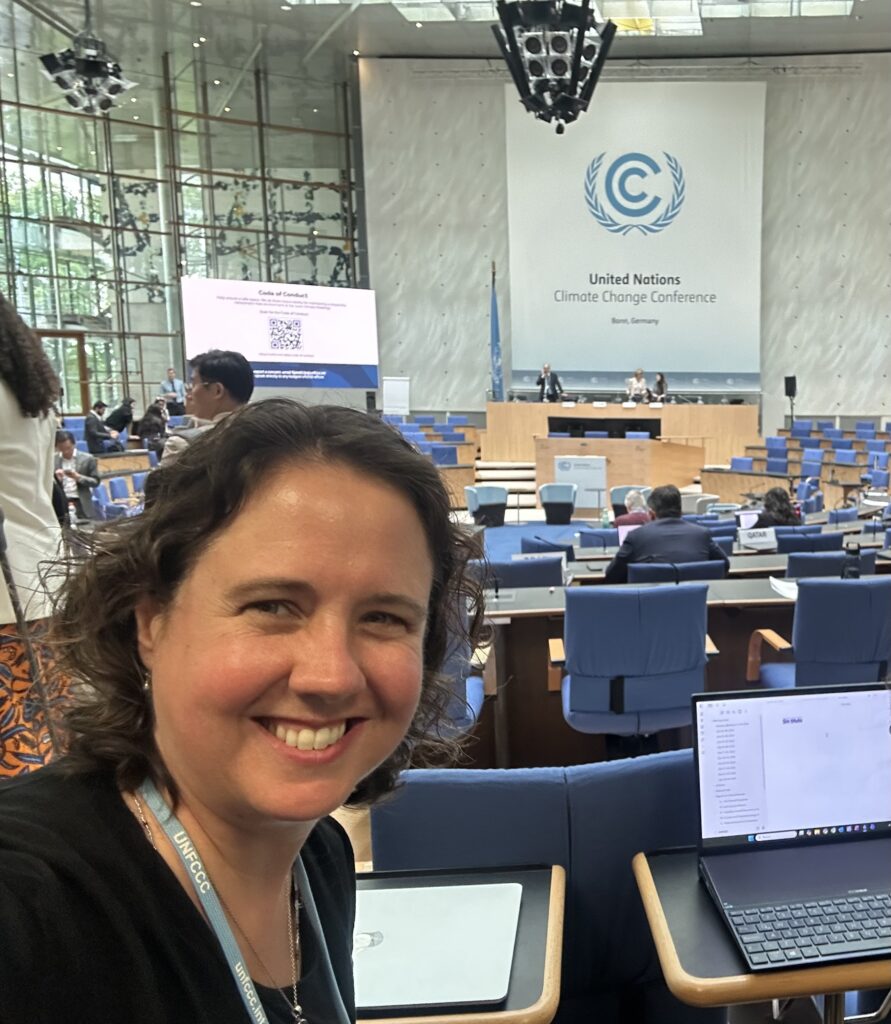
Negotiations continued to shape the global approach to just transition ahead of COP31 at the recent Bonn climate talks, attended by The Next Economy’s founder Amanda Cahill.
Amanda’s time on the ground working closely with negotiators, country delegations, and civil society groups offers a timely window into both the progress being made, and the challenges that remain, in turning the Just Transition agenda into something tangible and actionable.
“There’s been steady, if cautious, progress on the proposed Just Transition Mechanism, which is a body proposed to support nations to manage the transition to net zero,” says Amanda. “It’s still on track to be further developed and potentially operationalised later this year, but there’s clearly more work needed to build a shared understanding of what it should deliver in practice.”
Alignment was a priority moving forward, she added: “Countries are supportive in principle, but there isn’t yet a clear, common view of what a ‘mechanism’ actually looks like or how it functions.
“A big part of the conversation now must move from broad commitments to something that is structured, resourced and implementable, for regions around the world who are already navigating the transition and dealing with the impacts of change.”
There was a packed agenda at Bonn, with discussions focussed on mitigation, adaptation, trade rules, and finance to support climate action. In particular, there was significant interest and debate about how the Transitioning Away from Fossil Fuel agenda spearheaded by Colombia, The Netherlands and Brazil could be integrated into the COP agenda.
“Being on the ground highlighted how important coordination is across governments, business, unions, research institutions, and a wide range of civil society groups, including Indigenous and youth representatives. So much is happening around the world and yet for this to be effective, efforts need to be better connected and resourced.”
“There is a lot of work to do before COP31 is held in Türkiye, with success highly dependent on how well parties can translate ambition into a clear framework with defined purpose, governance, and support behind it.”
Earlier this year, The Next Economy made a submission on how a Just Transition Mechanism could be operationalised to the United Arab Emirates Just Transition Work Programme.
Read our summary of the submission to find out more about what a Just Transition Mechanism is, why it’s needed and how we think it can be made a reality.
To build the economy we could have in Australia, changes must be made to the housing market as access to and ownership of housing is a huge driver of inequality. Currently the way the housing system operates seems to be a far cry from one designed to provide housing that is socially and environmentally friendly, at affordable or accessible prices. Instead, Australia has become a place where ‘investors’ look to make a profit.
Melbourne’s Nightingale Housing offers a different model. As a not-for-profit, Nightingale doesn’t add a profit margin, delivering homes ‘at cost’. Apartments are sold not to investors, but to residents and housing providers, and caps are set on resale prices. One-fifth of apartments are prioritised for key workers, people with disabilities, First Nations people, and single women.
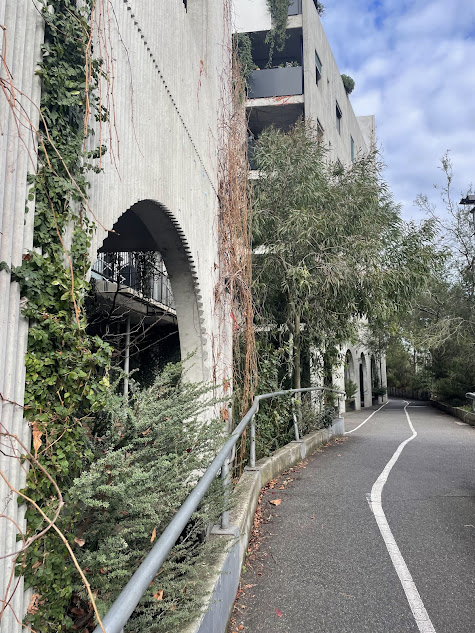
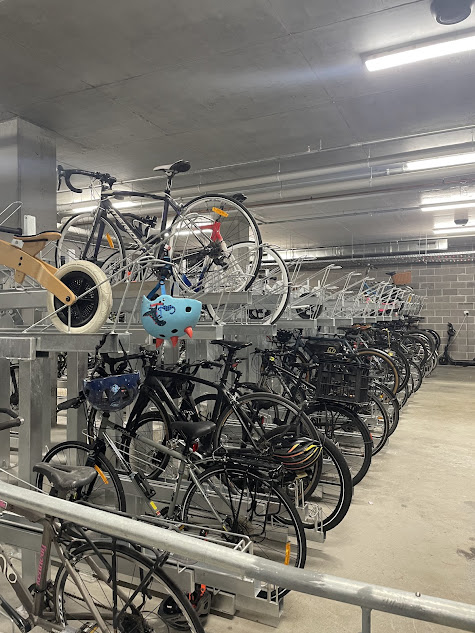
They also have a focus on minimising resource use and building strong community ties. Social connection is fostered via shared spaces, such as rooftop gardens, BBQs, and laundries. Recycled, natural, and local materials are used where possible, with energy-efficient features, like double glazing and insulation. Rooftop solar and water harvesting support the gardens, while the complex includes bike parking and are deliberately based near public transport to avoid the need for a car.
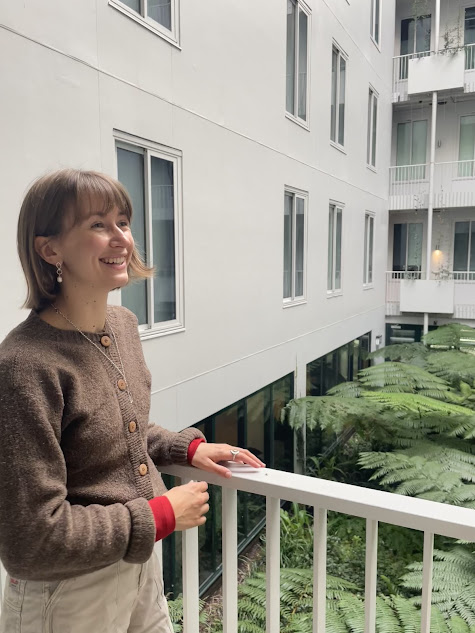
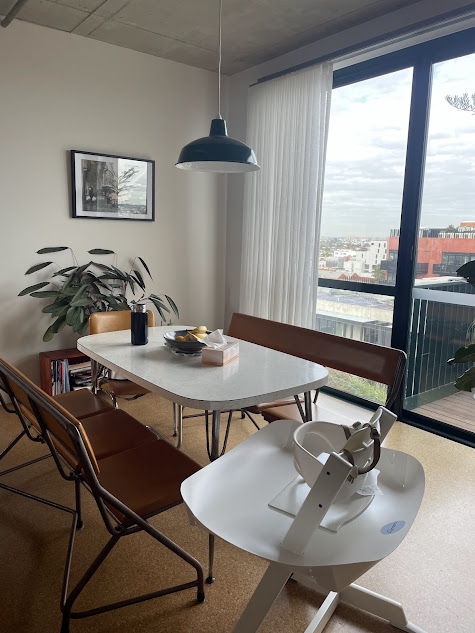
Our Economic Change Project Officer Josie toured one of the Nightingale apartments in Brunswick, then sat down with Toby Dean, the Head of Community at Nightingale Housing.
Toby works to ensure there are foundations for friendly relationships with existing and future residents. He also focuses on engagement with Community Housing Providers to help more people access to quality and secure housing. The conversation covered what Nightingale does and changes we need in the housing market in Australia to build the economy we could have.
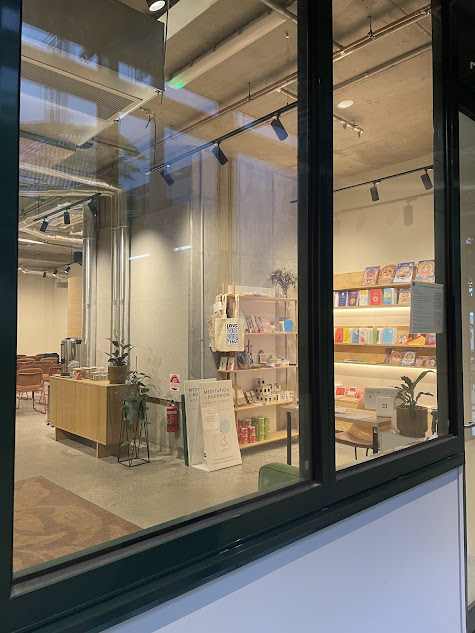
Our Economic Change officer Josie, touring NightingaleThe interior of a 2 bedroom apartmentIntegration is a priority, with plants and trees planted and cafes and retail.
Can you tell me a little bit about who Nightingale is and what you are trying to do?
We’re a developer, essentially, so we operate in a system that’s primarily driven by profit, but we’re a registered charity and a not-for-profit. We buy blocks of land and build housing that puts community and environment first.
What are some of the ways that you put community and environment first?
At the core of our project, we typically sell to owner occupiers, we sell at cost, and we sell a portion of our building to community housing providers to have affordable housing mixed into the building. We care about everyone that’s living in the community, and we hope it’s a mix. We typically build small footprint homes, which is one of the first steps to a more sustainable living system, to have smaller homes and more efficient homes as well, with things like solar panels, 100% green power, and well insulated.
What are the sorts of ways that Nightingale aims to create more of a connection between neighbours?
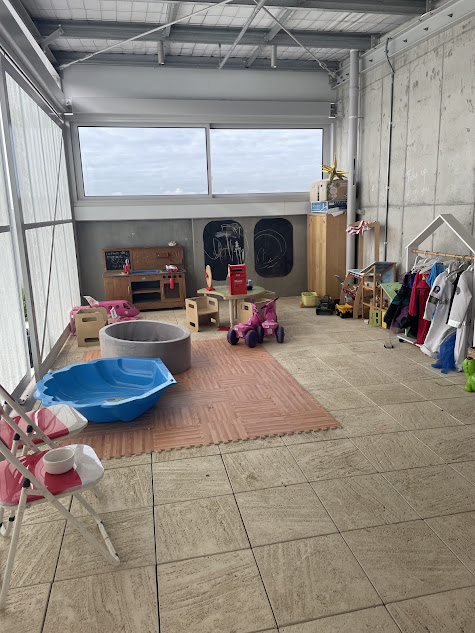
In a typical Nightingale apartment building, there are studios, and one-, two-, or three-bedroom apartments, and then on top of that, there are shared spaces that are designed to have both a practical function and a community driven function. So, bike parking, laundries, sometimes a guest house, a bath house, and rooftop garden spaces. All those areas are designed for people to do their washing or to garden, but also to get to know their neighbours and share resources as well.
Bathhouse that can be booked by residentsCommunal bike parkingShared play area for children
Where are the Nightingale projects? There are lots around Brunswick in Melbourne, but where else?
We have a rental project in Sydney, projects in Fremantle, Adelaide, Ballarat, Melbourne. Our next few projects are local, one in Preston [Melbourne]. We’re also continuing to do some townhouse projects in Alphington and other suburbs. We hope to do another project in Adelaide, and then it’s uncertain what will happen after that.
We are Melbourne-focused but hope to expand that out, not only to capital cities, but typically we target areas that have good transport infrastructure, so that people can live without a car, like Wollongong or Newcastle. We aim to build close to public transport, close to amenities, and close to things like schools and education and jobs and infrastructure as well.
What are the things that are core to Nightingale?
We always use 100% green power, we prioritise shared spaces, good internet, sustainable buildings. And then on car parking; we just don’t believe we’re in a car parking crisis, we’re in a housing crisis, and for us to build homes and then add a private car park onto it, it adds a considerable cost. For us, we think the biggest barrier is getting people into home ownership.
What do you think is the hardest thing about being a developer in the housing market that we have in Australia? What are the barriers that Nightingale faces?
I think it’s always tricky to challenge the status quo. Typically, development is a profit-driven industry, which we’re obviously kind of sitting outside of that.
We want our buildings to perform well, and for it to be sustainable financially and environmentally, but it is tricky. There’s limited access to concessional finance in Australia, and there are a lot of barriers that can make development tricky. And construction costs are expensive, land is expensive.
Have things gotten easier or harder since you’ve started in 2013?
I think it’s probably been a mix. We’re still a small organization, there’s only five or six people that work here full time, and we’ve been through the ups and downs of the development industry. I think in some ways it’s got easier, people know who we are, people understand what we’re trying to do. There’s also been a big shift in planning laws that encourage medium-density or high-density developments and understand that not every home has to have a car. We’ve got past some of those battles. I think conversely, construction costs have increased so that it’s hard to build homes that people can afford to buy. You can build luxury apartments, but to build apartments at cost, typically for first home buyers, it’s gotten expensive.
Absolutely, and when you’re in inner city suburbs as well, where the median house price is high, “affordable” for the area, might not be affordable for a lot of people.
Yes. And “affordable” is a tough metric. There are proper definitions of it, but I think it’s more important for a home to be affordable on a person’s income rather than relative to market, which is what some people use.
Diverse spaces built in like art studios and a meditation centreGrassy rooftop area for sittingVeggie gardens on the roof and BBQ space
Do you see the not-for-profit developer space getting better in Australia, or do you see a lot of examples of ‘ethical washing’?
I think it’s gone both ways. There has been a shift to appreciate good development, and to appreciate good density, with the rise of kind of the YIMBY movement, and the changes to planning laws, and everything like that, which encourage development. I think, conversely, there’s still a lot of poor development, or density that’s not appropriate for the place. I think the general population now have greater expectation around sustainability requirements, about insulation, about acoustics, and comfort, and non-flammable cladding.
What else has changed for the better since you first started out?
The building codes have changed for the better, the energy requirements have changed for better. I think in general, we’re moving in a better direction, I just wish people would be more concerned about sustainability, affordability, and making respectful places to live where people enjoy living there. I also live in a Nightingale project, you get to know your neighbours, you feel cared for, and there’s a sense of connection that is important.
What do you think about the situation in general in housing in Australia?
I think it’s about acknowledging that it is tough for a lot of people; for renters, for first home buyers, even for those downsizing. I think that a lot of Australians are kind of wary or cautious of change, but I think it’s important to acknowledge that you can make changes in the housing system. Nightingale still finds it difficult, we’re not just cruising through as an organisation, things aren’t easy. I wish we had greater access to concessional finance and there were more not-for-profit developers operating in our space, so we weren’t one of the few.
What do you see needing to change from a government approach?
People talk about housing affordability, I think that’s a good term, but it’s relatively abstract for a lot of people. I think that housing in Australia is too expensive, and the cost of housing needs to decrease, or our wages need to increase. I think that the recent changes by the federal government were supportive.
The changes to capital gains tax, and other changes that they’re bringing forward, I think are positive. I think that they will see housing perhaps get closer to wage growth, not increase as exponentially as it has, and for property not to be seen or viewed as a tool for wealth creation. We always wish for more, but I’m super appreciative of those changes. I think it was brave to do some potentially not popular decisions.
I think there needs to be a strengthening of tenancy laws, for renters and anyone out there in the housing market, and I think there should be support for first home buyers. I also wish there was an increase in public and community housing funding.
Thanks for your time, Toby. And thanks for showing me around!
Thanks for coming. It’s nice to share with people what we do here at Nightingale Housing!
As the ALGA National General Assembly wraps up in Canberra this Thursday, more than 1,000 local government leaders are heading home with a clearer sense of the scale of what is being asked of their communities and their councils, and what support they need to get the job done.
It is a timely moment to reflect on the critical role local governments play not just in delivering services, but in shaping the economic transitions that will define regional Australia and our macro-economy for decades to come…
Regional local governments are central to Australia’s economic transition and critical to ensuring change benefits their communities. Strengthening their capacity to plan, collaborate and create new opportunities will support transformational change in their regions for generations.
Councils do far more than deliver infrastructure and essential services. Across Australia, local governments:
Underpin local economies and community wellbeing
Bring people together and advocate for their communities
Support local development and represent community interests
They also remain on the frontline of compounding pressures. Alongside communities, households and businesses they are feeling the impact of a range of moving pressures including but not limited to:
More frequent extreme weather events
Housing pressures and global market volatility
National industry transitions and economic disruption
Local government is often left acting as a ‘service provider of last resort’ ALGA noted in their Adapting Together Report in 2025, absorbing the consequences of forces largely outside their control.
We hear from councils that the ask keeps growing, but the tools and resources haven’t kept pace. Outdated funding models and legislative frameworks mean councils are expected to do more with less, requiring new capabilities to:
Manage change and reduce risks to services
Respond early to forces shaping local growth and productivity
Build resilience across their communities
“Supporting locally designed solutions to complex problems is increasingly vital,” says The Next Economy’s Jacqui Bell.
“While small rural local governments do not control all factors, they play a key role alongside other governments, community organisations, volunteers and local businesses in shaping a strong, sustainable future.
“There is an imperative for local governments to continue to evolve into capable, collaborative and future-ready institutions. This means moving beyond traditional service delivery to deeper partnership with residents, businesses and institutions.
“It also looks like developing strategic foresight capabilities, fostering innovation, making decisions based in evidence, acting early to mitigate and minimise impacts to services. Also, doing economic development differently in ways that build local wealth as well as respond to trends and pressures that impact growth, markets and productivity across the local economy.
“Continued advocacy, attracting aligned investment and partnerships, and using policy and regulation to support a resilient, low-emissions economy will also be critical, alongside clear mandates and as we’ve seen today with ALGA’s emergency motion – adequate funding from state and national governments.”
There are many examples of the wide ranging and evolving roles and needs of councils across Australia – all are leading on regional collaboration, engaging with business and community early, undertaking climate resilience planning and co-designing place-based solutions.
“All of these show that local government can be both a stabilising force and a catalyst for transformation,” Jacqui notes.
A few recent examples from the work The Next Economy has engaged with include:
South West Queensland launches economic blueprint for future
South West Queensland is thinking differently about future opportunities and how the region participates in a future economy, launching a Future Economy Strategy.
What if economic development starts with the wrong question?
Community insights for Uralla Shire’s energy future
Working with Uralla Shire Council, The Next Economy engaged more than 150 residents to understand what matters most to them as large-scale renewable energy development takes shape in NSW’s New England region. The insights paper sets priorities for housing, services, jobs and nature to ensure fair outcomes as change accelerates.
Too much focus on individual action and change puts responsibility for change at the feet of individuals, as if they were separate and not touched by the wider dynamics wrought by policy and economic dynamics.
In public health this is called ‘lifestyle drift’.
This lets the economy – and those who shape it – off the hook, while individuals bear the brunt of wider economic trends.
Rather than blaming individuals for ‘wilting’ when the conditions around them don’t enable them to thrive, it is those economic trends are where change is most urgent: including decent work; businesses that harness profitability is a means, rather than a goal in its own right; and economic activity generated from the local up via community wealth building.
The economy is a major upstream cause of many of the problems Australians face downstream. The economy creates the causes that compel certain behaviours, invoke certain reactions, and deliver harmful impacts.
Yet often the emphasis of policies and programs is choices and changes individuals needs to make. In the public health sphere, this shift in emphasis from the wider context to individual lifestyle choices has been referred to as ‘lifestyle drift’. Here Dr Katherine Trebeck shares her thoughts on the need to move beyond it.
What lifestyle drift means
Firstly, let’s look at what lifestyle drift actually means. It’s a term used by public health scholars and, as you may have suspected, it’s not as fun as it might sound. It’s what happens when those designing policies might understand the external conditions (upstream factors) that drive health inequalities, such as the quality of work and access to decent housing. However, when it comes to action, the focus drifts downstream to questions of lifestyle, where the individual is in the frame, rather than the economy.
Another way to think about the problem with such an approach is ‘wilting-plant-syndrome’, a concept described by poet and clinical psychologist Dr Sanah Ahsan.
Ahsan wrote: ‘If a plant were wilting, we wouldn’t diagnose it with “wilting-plant-syndrome”; we would change its conditions’.
‘Wilting-plant-syndrome’ is seen all too often in policy and economic thinking today, where downstream individual action is seen as the problem, not the wider conditions causing the problems. The consequence of the thinking inherent in both lifestyle drift and wilting-plant-syndrome is that the onus of action is placed on individuals, as if they were separate and not touched by the wider dynamics wrought by policy and economic systems.
What lifestyle drift looks like
Health is an area where it is hard to avoid seeing the lifestyle drift phenomenon play out.
As Kriznnik et al say ‘the main assumptions underpinning interventions to address health inequalities … remain focussed on individual responsibility’. For example, when people are struggling with their mental health, they are offered therapy or antidepressants. This might help someone manage, but it won’t address the challenges they face in their lives such as poverty, a hostile workplace, the stress of being unable to pay bills, or the anxiety of precarious housing. You can see a focus on individual action in a recent briefing about tackling obesity, where the suggested changes mostly revolved around mechanisms that supported or compelled individuals to act differently.
Lifestyle drift is also evident in a 2025 Australian Productivity Commission report calling for a National Prevention Investment Strategy. In all 95 pages of the report, the word “poverty” appeared only twice (once in a reference), and the word “inequality” only three times. To its credit, its list of primary prevention measures included economic support for families (while important, arguably transfers are also an after-the-fact response downstream). But in the same vein, it also described parenting education (where the onus is on the individual parents to change).
We Aussies aren’t the only ones at risk of wilting plant syndrome and lifestyle drift:
A few years ago, the World Health Organisation published a list of ‘best buy’ interventions on non-communicable disease, which positioned the individual as the unit where change needs to happen (through education, taxes on unhealthy food etc). Poverty was mentioned only in passing and inequality ostensibly ignored.
These individualised framings cut through. For example, poor diets are often attributed to bad individual choices. Research found that in the UK Victorian-era notions of deserving and undeserving poor prevail, with the researcher observing that some providers of foodbanks depicted food charity as a ‘choice’, seeming to endorse ‘the classic deserving/undeserving divide while individualising food insecurity and obscuring the systemic issues’.
Shifting the blame for environmental harm
Shifting of responsibility to individuals, often by large corporations, is rife in environmental issues, from litter to the concept of a personal ‘carbon footprint’. For example:
An ad launched in the US a few years ago showed an actor canoeing through polluted water, then walking toward a highway, only to see someone throwing rubbish out of their car window. The end of the ad states that ‘People start pollution. People can stop it’. This was part of the Keep America Beautiful campaign, an initiative designed and funded by packaging business, such as American Can Co, Owens-Illinois Glass Co, Coca-Cola and Dixie Cup.
The problem with all this focus on individuals is that overly emphasising individual action lets the real culprit off the hook: the economic system itself and the rules and players within it that create a misalignment with what people and planet need. It ignores the political decisions and deep-seated assumptions that have carved out the shape of the economy of today.
Well-known epidemiologist Professor Michael Marmot and colleagues warn that:
an ‘individualistic approach to health … is a convenient mechanism for those in and with power, and wider society, to abrogate responsibility for creating the conditions for a healthy society’.
Time to put the spotlight on the economy
The reality is that it is the economy that drives many of the challenges Australia confronts today, from people’s sense of grievance and lack of hope for the future to species loss; from homelessness to increasingly chaotic weather. The economy is a major upstream cause of the many problems Australians face downstream. The economy creates the causes that compel certain behaviours, invoke certain reactions, and generate harmful impacts.
Take the unhealthy behaviours, such as lack of exercise or reaching for processed food. Many are not so much a matter of free choice, but options taken when agency is bounded and curtailed. Sometimes people simply do not have the extent of autonomy and choice that the prevailing economic discourse, with its emphasis on individuals maximising their own self-interest, might imply.
‘Causes of the causes’ is how Professor Michael Marmot describes the social pressures that drive harmful behaviours: such as reduced physical activity due to safety concerns, or stress leading to smoking or overeating.
A leading authority on the social and economic determinants of health, Professor Sharon Friel, documents the various evidence of how and to what extent the economy matters to health. Socio-economic inequalities are critical factors: it was recently reported by health scholars Dr Sarah Hill and Dr Edward Jegasothy that one-fifth of ill-health in Australia could be avoided if everyone had the same socio-economic conditions as the top 20 per cent.
So, where to from here?
The story that needs to be told is how many economic policies are deepening inequality, and how deliberate policy choices – like tax concessions for the wealthy, weakened unions, and the emergence of precarious work – have shifted wealth upward and eroded protection for workers, while increasing insecurity and instability for many.
When policy and decision makers are discussing outcomes, they need to take account of how market logic and profit motives have reshaped access to basic needs in areas such as housing, education, and often health and care provision. This transfers risk from institutions to individuals and undermines collective support, and spurs an understandable response: people turning to personal insurance for support when sick and to their homes and share markets to provide a decent livelihood in their old age.
Conclusion: what would be better?
‘An indigenous analysis of the same thing would look more at the context to try and find out what actually happened’ – Tyson Yunkaporta, Indigenous scholar
The alternative to lifestyle drift and wilting plant syndrome is looking upstream to how the economy operates: the terrain of jobs, what sort of work is paid for, ownership of firms, costs of goods and services, and provision of core services. Instead of just instructing and coaxing individuals to change, it means turning to the realm of the economy as a critical arena for prevention. It is the economy where risks such as poverty, precarious work, and homelessness, can be truly addressed, as opposed to simply patched up.
The economy we could have means implementing policy instruments that ensure, for example:
People are paid enough, have job security and conditions that support a healthy life
Profitability is a means, rather than a goal in its own right
Economic activity is generated from the local up via community wealth building, rather than hoping in vain for it to trickle down
Basic needs such as food, shelter, education, and health care are affordable
Sources of unearned wealth, such as inheritance and rent and land values, are taxed more than income
Economic activities which make money from people’s struggles or profit as a result of doing harm to the planet are, if not banned, at least minimised
Prices of goods and services reflect their true cost in terms of what it took to make them, both in environmental terms and via people involved being compensated for their efforts
Success is measured in ways that reflect what people and planet need.
The economy we could have means grappling with the purpose, design, and delivery of the economy and resisting lifestyle drift.
Fortunately, there is no shortage of ideas and practices that show what is possible.
At The Next Economy, we are excited to team up with Erinch Sahan for his Australian tour to share ideas, provocations, and proof of what is possible in the world of business and investment.
Businesses and investment matter in Australia. They have a significant role in shaping economic, ecological, and social outcomes – for good, and sometimes for ill.So how can business and investment ensure that their activities and ways of working contribute to an Australia that future generations will be proud of?
Erinch is a globally renowned thought leader with expertise in business design and investment. Join us to hear from Erinch and widen the discussion about the critical role of business and investment in building the economy we could have.
Who is Erinch Sahan?
Growing up in Sydney in the 1980s and 1990s to Turkish immigrant parents, he began his professional life in the corporate sector, and from there, has increasingly focused on making businesses a positive force in the world.
His experience is varied: he has been CEO of the World Fair Trade Organization, a senior associate at the Cambridge Institute for Sustainability Leadership, and recently the Business and Enterprise Lead at Doughnut Economics Action Lab. He is currently leading the investment portfolio at the UK’s Joseph Rowntree Foundation (JRF), driving its move to mission-related investing.
TNE’s Economic Change Program Director, Dr Katherine Trebeck, has worked with Erinch over the years and is constantly inspired by his ability to question what business can do and how it needs to change to enhance its positive impact. She describes him as “not just one of the boldest thinkers in business design, but someone who shares incredible case studies and stories of innovative business leaders delivering tangible impact”.
To build the better economy we could have in Australia, we need to think differently. Dr Katherine Trebeck, economist and Economic Change lead, is a big fan of predistribution. Here she explains why.
I often use a ‘jigsaw puzzle’ as a metaphor to explain the array of shifts in policy and practice needed to build an economy in service of people and planet. No single piece is sufficient on its own, but together, enough changes have potential to build towards to an economic system that gets things right for people and planet first time around.
To grapple with this array of actions, it can help to loosely cluster the pieces into the four corners of that jigsaw puzzle: the ‘4Ps’ of purpose, prevention, predistribution, and people power.
Here, I want to offer a few notes on the predistribution corner as it is so often missing from the conversation about the economy, with focus instead on taxation and how to better fund programs for those who are impacted by the inequalities built into our current system (‘compensating the losers’ as a report from a US think tank rather bluntly puts it).
Australia used to do fairly well in terms of predistribution (that is, for white, able-bodied males). But no longer; we’ve become an ‘assetocracy’ where access to assets tends to be what shapes peoples’ life chances and life choices.
‘It is not enough to…try to balance the inequalities generated in the market through retrospective tax and transfer. It is necessary to transform and democratise the institutional content of the market economy, rather than just compensate for its inequalities.’ – Gabriella Ramos et al
Origin story
The term predistribution was coined by the American scholar Jacob Hacker who describes it as ‘market reforms that encourage a more equal distribution of economic power and rewards even before government collects taxes or pays out benefits’.
Predistribution’s political moment in the sun came in 2011 when Ed Miliband, then leader of the UK opposition Labour party, was in the audience for a speech that Hacker gave in Oslo. Miliband returned to the UK and – briefly – championed the idea.
But predistribution is one of the most important ideas that should be high on the political agenda. Let’s look at why it matters, what it is, how it plays out in practice, and the implications for policy.
What does predistribution mean?
The essence of the idea of predistribution is ensuring that the market economy does more of the heavy lifting in delivering a more balanced divvying-up of resources. British scholar Martin O’Neill explains it as ‘the particular ways in which the economy can be shaped to disempower the privileged and to empower the disadvantaged’. Its focus is on market mechanisms that determine the distribution of wages, profits, and other flows and stocks of money.
Government comes into the predistribution story via its role in creating and shaping markets so that the results are aligned with public goals: using rules, incentives and other levers to shape market outcomes. This includes boosting (or curtailing) the bargaining power of market players such as workers, employers, and wealth holders.
Therefore, it differs from government using tax and benefits to shape the distribution of economic resources after market outcomes have emerged: this is redistribution.
We’ll come to some specifics in a moment, but you could expect to see predistribution in the form of:
Strong standards for workers (such as regulation, procurement, support for unions, and living wages).
Regulation of the financial system and corporate governance; including provisions to stop harmful activities.
Ensuring more people have a share of capital ownership, including owning businesses via worker or commubity cooperatives.
Spending to bolster people’s opportunities and bargaining power in the labour market (think education and other public services: so they are not dependent on someone’s income) and groups like unions who can stand up for workers.
Addressing how affordable certain goods and services are (for example, via price caps, subsidies, or direct provision): rather than only focusing on how much money is in people’s pockets; also being concerned with how far it stretches.
Why it matters
Inequality arises in and can be addressed via two realms. Firstly, what is sometimes called the ‘primary’ realm of work, wages and occupational pensions, and then in the secondary realm comprising taxes and benefits. Predistribution is about action in the primary realm. Here the wages that workers earn are the outcome of ‘a complex process of implicit and explicit bargaining between workers, employers, and (where they exist) unions’: the influence of each compared to the others matters, and is a function of various rules and regulations.
This is of interest to anyone interested in economic inequality because this realm is where the bulk of the balance or imbalance of economic resources arises: the ‘biggest single factor in determining the distribution of market income is the relative shares going to wages on the one hand and to capital incomes (rent, interest, dividends, and capital gains) on the other’.
Evidence from around the world bears this out too: in global terms, four fifths of inequality stems from what was going on prior to the government getting involved via tax and transfers, with only one fifth being the result of tax and transfers. The lower levels of inequality in Europe ‘cannot be explained by more equalizing tax and transfer systems… “Predistribution”, not “redistribution,” explains why Europe is less unequal than the United States’, according to Blanchet, Chancel and Gethin.
So, there are a range of reasons which mean that predistribution is worth focusing when thinking about how to achieve a more balanced distribution of economic resources:
Redistribution is not enough. As Hacker says, taxation and benefit payments ‘cannot do the work on their own’.
Predistribution, in contrast, does not require government to spend substantial quantities of public money. Instead, in reducing inequality at source governments can generate fiscal savings by reducing the need for spending downstream (on benefits), thus freeing resources to spend elsewhere.
There are a range of real politik reasons why redistribution is harder to pull off:
Policies that are about spending (for example welfare payments) are challenging politically given concerns (reasonable or otherwise) about budget deficits and overall debt.
Governments that do seek to be proactive on the redistribution front often face resistance and even backlash, as Hacker describes. He explains that the wealthiest have a tendency to complain – loudly – about increased taxes on their income and wealth.
On the other hand, it is often easier to harness the ‘political space’ for action on predistribution measures than it is for taxing and benefits provision.
Finally, although not noted by its original proponents, predistribution also matters because of the growing recognition that economic growth-based agendas are incompatible with keeping the world’s environment within planetary boundaries. Redistribution tends to rely on the economic growth: grow, tax, and spend back via welfare. So taking the science around the environmental limits to growth seriously compels consideration of mechanisms to ensure a good life for more people without having to rely on the grow and redistribute recipe.
Implications for action
Convinced that predistribution is worth getting behind? Superb. What might you want to think about encouraging – or, if you happen to work in the right place in government, actually implementing?
Actions that policy makers need to be prepared to implement to promote predistribution include:
Support for worker owned cooperatives (for example, via reduced taxes, simplified legislation, and education of ancillary services so they are more supportive of cooperatives).
Legislation for worker rights and conditions (such as job security, being able to request flexible schedules and access to paid leave for family care).
Regulations to strengthen the position of trade unions (what Hacker describes as a ‘countervailing power’) and corporate governance that puts workers on company boards.
Enactment, and enforcement of minimum wages set at the level of living wages.
Curbing extremes of high pay (for example, increased taxes when CEO to median pay exceeds a certain ratio).
Broad based service provision that bolsters people’s endowment of human capital (such as decent education, vocational training, and health services).
Addressing affordability of basic needs (for example, via provision of affordable housing, price caps on important services, and competition policy).
Support for people who would otherwise struggle in the labour market to access good jobs (perhaps even a job guarantee).
Regulation of financial markets and promotion of financial stability: for example, of how financial institutions behave (reducing high frequency trades, for instance); shifts in corporate governance; and ensuring capital flows to productive activities (rather than subsidising harmful activities and products).
Public procurement with social goals in contracts.
Conclusion
Predistribution is a critical lever for generating a more balanced distribution of wealth. It’s an upstream mechanism that heads off inequality before it arises by shaping market outcomes to be fairer, rather than depending on government to even things up once inequality has emerged. There are a range of actions governments and other economic players can take to predistribute economic resources. Now it’s time to start talking about it more and putting the changes in place to make the most of its potential to create the economy we could have!
Six councils spanning one of Queensland’s most distinctive outback regions have launched a Future Economy Strategy: a practical, community-led plan to diversify local economies and manage change on their own terms.
Developed by the South West Queensland Regional Organisation of Councils (SWQROC) in partnership with economic development agency The Next Economy (TNE), the Strategy covers the Maranoa, Balonne, Murweh, Quilpie, Paroo and Bulloo local government areas – a vast region defined by deep community resilience, extreme weather events and a changing agriculture and gas sector.
The Strategy was shaped by more than 77 contributors – council staff, producers, First Nations organisations, local businesses and community members – and identifies seven opportunity areas tailored to how the South West Queensland economy actually works.
View from the Cunnamulla hot spring. Credit: The Next Economy
From converting waste to energy at the Roma saleyards, to green ammonia feasibility in Balonne to stabilise fertiliser costs, to the Cunnamulla Aboriginal Corporation for Health coordinating 33 visiting services for remote residents – the plan is grounded in what is already working and what communities say needs to come next.
“This region has capable communities that pride themselves on practical problem solving.” Simone Talbot, SWQROC Executive Officer, says. “Global changes such as geopolitics, weather extremes and the cost of living are prompting us to consider what does ‘transition’ mean for our region. Our vast distances mean we are at the very limits of energy infrastructure and are heavily reliant on road transport and so we need to think differently about future opportunities and how we participate in a future economy.”
The Strategy includes a tailored roadmap for each of the six councils, scaled to real staff and budget constraints. In Quilpie, that means exploring microgrids and back-freight opportunities to cut costs. In Murweh, it means expanding on tourism assets like the Cosmos Centre and WWII heritage sites. In Maranoa, it means managing the coexistence of wind, gas and agriculture through early community engagement on the Bottle Tree Energy Park.
“What struck us most was how much is already happening here,” says Saideh Kent, project lead at The Next Economy. “These communities are progressing local solutions that suit their context. Our job was to listen carefully about their experience of transition and change, connect the dots, and build a plan that reflects the unique assets of South West Queensland and reflects what the community actually wants and needs. Not what someone from outside thinks transition should look like.”
The publication of the Future Economy Strategy follows a significant milestone earlier this year, when a delegation of SWQROC mayors travelled to Canberra to present key messages directly to federal politicians and agencies. There, they made the case for coordinated investment in local solutions to housing, digital connectivity, freight infrastructure and workforce transition for fossil-fuel-exposed regions.
“We went to Canberra because we wanted decision-makers to hear directly from us, to understand our context and consider an approach to change that is appropriate to our economic, social and climatic environment,” Simone says, adding: “This region has always contributed to the national economy. Now we’re asking for support to back our own solutions so we can keep contributing into the future.”
Where to from here
SWQROC will now move into implementation, with councils progressing priority actions from their individual roadmaps while coordinating on regional challenges too large for any single council to tackle alone. This includes on waste recovery, energy advocacy, freight and logistics, housing and workforce initiatives.
The Strategy also sets out clear asks of industry, the Queensland Government and the Federal Government: from proactive planning for gas expansion and contraction and transparent local procurement, to rural grid upgrades, regional waste solutions, improved telecommunications and co-investment in worker housing.
“This region is already managing change and transition, adopting innovative approaches that build on their local strengths,” Saideh says. “This Strategy brings together and builds on this ingenuity looking at the opportunities to create a resilient future.”
The South West Queensland Future Economy Strategy is available here:
TNE program director Jacqui Bell joined economic development practitioners from across NSW this week to explore what a wellbeing economy looks like in practice – and what the Hay community’s approach to transition can teach the rest of us.
Earlier this week, TNE program director Jacqui Bell presented to economic development practitioners from across NSW local and state government at the Department of Primary Industries and Regional Development’s 2026 Regional Economic Development and Investment Attraction event.
Her session took a slightly sideways look at the economy: exploring what a wellbeing economy looks like and grounding this big-picture conversation in the practical work Hay Shire Council and the Hay community have been doing to think differently about economic change.
Across the broader event, a clear theme emerged: councils and regions are navigating increasingly complex conditions, from renewable energy development and industrial growth to shifting investment patterns, housing pressures, workforce demands, infrastructure constraints, planning system challenges and community cohesion. The scale, pace and constant state of flux are making it increasingly difficult for regions to manage change, plan strategically and act with confidence.
Local government is deep in the trenches of this work – trying to govern and lead through overlapping economic transitions, often with limited resources, unreasonable timeframes and imperfect information.
For us, this points to the need to rethink approaches to economic development: to redefine what “good” looks like, work with regions rather than doing development to them, and build from each place’s unique strengths, local economic system dynamics and advantages.
As Jacqui noted: “For many regions, maybe the question is no longer ‘how do we get certainty?’ or ‘how do we attract investment?’ but instead: ‘how do we organise early enough to manage the downstream impacts of our current economic system, while addressing upstream drivers and shaping new opportunities to create value?’”
“In a world where certainty is harder to come by, the challenge is not waiting for perfect conditions. It is building the local knowledge, capability and confidence to navigate uncertainty – and shape development in ways that leave regions stronger for the long term.
“As we shared in our session, the economy is not fixed. It is shaped by decisions, values, institutions and power – and it can be redesigned.”
There were many bright sparks and wonderful examples of “Lego wins” shared across the two days, says Jacqui. With the right support, local governments are well placed to do this reimagining and drive the change we need to see – building economies that better serve people, places and planet.
Australia is currently navigating a fundamental transformation of its energy system, shifting from a fossil fuel past toward a renewable future. Our regional communities are at the frontline of this change, hosting the infrastructure, resources and workforce that will determine our national success.
Our In Brief: Investing in regions, unlocking the transition series offers financial decision-makers across government, investment and philanthropy a high-level entry point into regional investment and its role in Australia’s transition to a climate-safe, regenerative and socially just economy.
The series grew from an investor experience in Gladstone in 2024 and has since expanded – in geography and subject matter – drawing on work across regional Australia, desktop research and expert contributions.
Each brief provides a bird’s-eye view of a focus area, including key barriers and where support is most needed. Current topics include:
Decarbonising and increasing the capacity of the grid
Developing green export industries
Regional investor insights from Gladstone
These briefs are a starting point – designed to spark conversation, build shared understanding and support deeper discovery. Because these topics are interconnected, effective progress requires a whole-of-system approach and close coordination across sectors.
As this space evolves rapidly, we welcome your feedback to keep the series current and useful.
Decarbonising and increasing the capacity of the grid
Australia’s electricity power system or “grid” is the vast transmission and distribution network that transports electricity from generators to consumers. Right now it is undergoing a fundamental transformation from its fossil fuel origins toward a renewable future.
Industrial regions are central to Australia’s net zero ambitions. They host the resources, infrastructure and workforce that will determine whether the energy transition succeeds. Gladstone, an industrial heartland with exposure to emissions-intensive and trade-exposed industries, is on the frontline of the global energy transition.
The global shift to net zero emissions is the defining economic and industrial transition for Australia this century. While the value of Australia’s emissions-intensive exports will decline with global demand for fossil fuel, the global energy transition also creates enormous potential for new industrial growth. Early and coordinated investment can position Australia as a leading global supplier of green commodities and advanced manufacturing components.
Earlier this year, The Next Economy made a submission on how a Just Transition Mechanism could be operationalised to the United Arab Emirates Just Transition Work Programme at the United Nations Framework Convention on Climate Change.
Here we explain what a Just Transition Mechanism is, why it’s needed and how we think it can be made a reality.
A Just Transition Mechanism and why we need it
The world has entered the implementation phase of the transition to net zero. While countries face different challenges, all are grappling with the multiple technical, social and economic complexities of one of the biggest transformations of the global economy since the Second World War. While national and international bodies can set climate targets, for these to be properly realised, additional support is needed to translate ambition into action in ways that will generate rapid, positive and lasting transition outcomes.
Enter the Just Transition Mechanism, a key initiative proposed under theUnited Arab Emirates Just Transition Work Programme at the UNFCCC. It’s intended to ensure that it’s someone’s job to guide, support and sustain transition activities to address the climate crisis while protecting and even enhancing the wellbeing of people and the environment.
At The Next Economy, we think this is critical. It is beyond the capacity of individual nations to manage the transition alone. If countries are to have any chance of achieving their climate goals, the focus needs to shift from setting targets to supporting countries in figuring out how to transform their economies to accelerate the transition to net-zero emissions in ways that reduce harm and maximise benefits.
Without this support, not only will the world fail to reduce emissions to the extent needed to tackle the climate crisis, but transition efforts may exacerbate inequality and poverty.
If designed well, the Just Transition Mechanism could facilitate the integration of just transition principles and approaches across different levels of government and global agencies, each responsible for different aspects of the transition. Not only would this help generate broader acceptance of the transition, but it would also increase the confidence of governments and investors in taking meaningful climate action at all levels.
How a Just Transition Mechanism can be operationalised
While bodies already exist both within and outside the UNFCCC to support transition efforts, more needs to be done to build the capacity of those needing support to know what they need and how to manage all elements of the transition to a decarbonised economy in a just and equitable way, and to ensure that those offering expertise and resources incorporate justice principles and a rights-based framework to their programs.
The Just Transition Mechanism can meet this challenge by ensuring that climate mitigation and adaptation efforts are managed in a just and equitable way and improve social, economic and environmental outcomes by:
Mapping existing resources, funds, expertise and institutions.
Undertaking assessments to ascertain what countries, regions, economic sectors and key actors need to support just transition efforts.
Matchmaking to deploy technical and financial assistance in a responsive and appropriate manner.
Synthesising, sharing and generating knowledge.
Developing measurement, monitoring and reporting frameworks to support accountability.
Turning to the design of the mechanism, the priority areas to be worked out are:
Scope,including whether it’s holistic and broad enough to consider justice and equity issues related to mitigation and adaptation efforts across all economic sectors, and able to offer practical and tangible support to integrate just transition considerations into existing plans and programs.
Governance structure and work plan, including whether it’s overseen by a committee or advisory board,secretariat, host institutions or a pool of experts.
Staffing, including ensuring that it is sufficiently resourced by staff with the expertise to direct resources and effectively liaise with institutions and those requiring support.
Funding, including whether a new Just Transition Fund is needed to channel new grant-based and highly concessional finance.
‘Building the economy we could have’ – A series of ideas, case studies and concepts exploring how we move to an economy that works for people and planet.
Australia’s future depends on whether we can move beyond piecemeal reforms to embrace systemic change.
Last year, we released The Economy We Could Have – a paper that looks under the bonnet of Australia’s economy: rising inequality, the erosion of the ‘fair go’, but also a story of hope. Of momentum growing across the country, and of enterprises and communities already leading the way.
The response was one of excitement, speaking to a deep desire for transformative economic change rather than the same old, tired recipes. Now, with Australia facing new economic pressures including an oil crisis, the impetus to act is greater.
So, we are doubling down. The ideas that politicians and decision makers reach for in a crisis matter. We want those ideas to be the ones that put wellbeing at the centre: dignity, purpose, participation, fairness, and nature. As a foundation, rather than an afterthought.
That’s where our new series comes in.
Building The Economy We Could Have explores the ideas, case studies and concepts that show how we get there. Right now, there are many isolated or ‘Lego wins’, the examples that show what can be done better, yet scattered and disconnected. We are turning our focus to see these as building blocks: things worth doing more of, and connecting across the country.
We’ll share examples that show another way is possible and outline the potential of wellbeing economic concepts in practice, with case studies, explainers, interviews, and of course drawing on our work in regional communities looking to build resilient and thriving communities through times of change. ‘
The series includes:
Explainers on wellbeing economy concepts and how they are showing up in Australia
Case studies of enterprises, communities and policy makers doing differently
Australian history showing we have charted different approaches before
Interviews with people bringing fresh ideas and approaches.
We are excited to uplift the work that is steadily charting the way forward, drawing on Australian’s strengths as people who back their neighbours, champion local ideas, and have a long track record of showing the world what policies that work for people and planet can look like.
This series is a starting point for deeper thinking and conversation. We’d love to hear what resonates, or what we are missing. Contact us here.
Earthworker Cooperative Network gives us a glance into a wellbeing economy in action, where workers build the things we need in a worker-owned factory in Morwell.
When writing ‘The economy we could have’, our Economic Change lead Dr Katherine Trebeck came across countless ‘Lego wins’. These were the examples of a wellbeing economy in action in Australia that we could look to for inspiration on the way forward, even if there aren’t enough of them yet to add up to complete system change.
A great example is in Victoria’s Latrobe Valley, where Earthworker Cooperative, Australia’s first worker-owned factory, operates several enterprises. This includes the Earthworker Energy Manufacturing Coop, which produces heat pumps and solar hot water systems – its function first and foremost: to serve its worker owners.
Earthworker has a vision that brings a wellbeing economy into practice:
“…a world in which people everywhere are able to democratically determine the means of their existence, collectively meeting their needs while recognising our interconnection with each other, other species, and the environment in which we exist.”
Earthworker has expanded to become a network of cooperatives that are committed to sustainability, both in social and environmental terms given the link between environmental harm and social injustice.
Inside the worker-owned Morwell Factory (Photo contributed by Earthworker for our report)
What co-ops make up the Earthworker network?
Earthworker Energy Manufacturing Coop: produces new energy technology in Australia’s first worker-owned and run factory in the Latrobe Valley. Based in the Earthworker Morwell factory, it manufactures quality and high-performing stainless steel storage tanks for heat pump and solar hot water systems.
Earthworker Smart Energy Cooperative helps households improve their home’s thermal efficiency and so their family’s comfort through assessments and draught-proofing. This in turn helps households save money and have more control over their energy use.
The Earthworker Construction Cooperative provides residential construction, landscaping and maintenance services such as cabinet making, plumbing, pergola building, decking and more. Their motto is ‘Another world is being built’!
Cooperative Power (CoPower) is an energy retailer jointly created by unions, environmental NGOs, community groups and Earthworker.
There is clearly purpose behind what is being delivered by these cooperatives. Worker ownership is a mechanism of predistribution (as financial wealth goes either to workers or to the enterprise) and of economic democracy that enhances people power. By enhancing energy efficiency and being part of the renewable energy roll out, Earthworker is also helping prevent environmental challenges getting worse. In providing job opportunities to those who might otherwise face unemployment, they prevent the harm of job loss.
So Earthworker speaks to all the ‘4Ps’ of a wellbeing economy in practice: purpose, prevention, predistribution, and people power. It demonstrates what we need more of to build an economy that serves people and planet.
Earthworker’s logo, showing symbols of the Australian environmental and labour movements.
What makes Co-ops part of a wellbeing economy?
A wellbeing economy requires a substantial shift in how the economy is thought about and approached, looking for ways to benefit people and planet rather than profit for the few.
Cooperatives (whether worker-owned co-ops, consumer co-ops such as groceries, or agricultural co-ops) are a great way to do this as they are owned, controlled and run by and for their members, creating economic democracy and a people-powered economy. They are democratically managed by ‘one member, one vote’, meaning everyone has an equal vote.
Co-ops enhance predistribution because surpluses go back to members or the enterprise, so community wealth that stays in the community.
Why Latrobe Valley
The Valley has largely powered Victoria with brown coal for a century. When the coal power stations and State Electricity Commission (SEC) were privatised* in the 1990s, thousands of people lost their jobs and Victorians lost ownership of this essential infrastructure. (*Although since 2024, the SEC has been partially revived as a government-owned renewable energy company, with legislation that specifically protects it from privatisation).
Since then, the Valley has experienced high rates of disadvantage. In 2017 French-owned corporation Engie, announced the closure of Hazelwood mine and power station and roughly another 750 jobs were lost.
How did Earthworker seek to address this economic injustice?
The founders of Earthworker could see that the apparent conflict around jobs versus the environment wasn’t the full story and reflected a narrow lens. They recognised that there was a need to work together for just transition in the La Trobe Valley, and there was a dire need to create jobs that were better for workers and jobs that could contribute positively to the local community.
Latrobe is one region where this is necessary, many other regions are also on the frontlines of economic transition that must include solutions that put wellbeing at the core, and the principles of prevention, predistribution, people power and purpose.
Australians are dissatisfied with the status quo and open to rethinking economic priorities that put people first. Earthworker shows a different model of business that can build an economy that works for people and for planet as a foundation, rather than an afterthought.
Last week the Hay Economic Transition Roadmap was launched in Hay with the people who brought it to life – Hay Shire Council and around 30 of the 250 community members who contributed in one way or another over three years of deep engagement. This roadmap isn’t just a document; it’s a genuine expression of what the community wants for its future, and we’re so excited to have supported its development and have it out in the world.
Led by Hay Shire Council with support from The Next Economy, the Roadmap brings together local knowledge, priorities and practical actions to guide the next decade of economic change – building on Hay’s strengths and preparing for what’s coming. It is designed to align investment with community aspirations and catalyse coordinated, collective action for change – with the community in the driver’s seat.
We sat down with our Land Program Director Jacqui Bell to talk about what she’s learned over the past couple of years and what this means for how we think about regional economic transitions.
Why are region-wide economic transition plans needed?
Communities like Hay are navigating compounding pressures all at once – things like housing shortages, workforce gaps, industry shifts and climate exposure. Band-aids on broken systems won’t cut it. We need upstream change that builds on local strengths and focuses on practical solutions that respond to the unique characteristics of a place. That is, change that generates value locally – not simply chasing narrow national targets or technology mandates.
Working at the regional level connects the dots between sectors and industries to tackle challenges and create new opportunities in ways no single farm, business or government agency can do alone. In agricultural regions like Hay for example, regional planning and coordination creates the enabling environment for local businesses and farmers to ‘move’ and explore new partnerships, de-risk innovation and diversify on-farm income.
For new industry proponents, a regional plan signals where opportunity exists and how shared value can be created – and in many cases, collaboration with regional stakeholders is what makes the business case for investment stack up. For farmers, it enables economies of scale, de-risked investment, opportunities to lower external inputs and new business activities that simply aren’t viable farm by farm. We see examples of this already in efforts to get good outcomes for nature – where working at a regional level, not a farm level sometimes makes a lot more sense.
Regional collaboration isn’t always straightforward – but there are organisations working out how to do it well, helping landholders, residents and Councils find the mechanisms and models to sustain this work over the long term.
So, what does this look like in practice?
Hay sits in the South West Renewable Energy Zone, a real opportunity for the region if managed well. The Roadmap process is already delivering results. From housing solutions, new agricultural industries, expanded childcare, and two renewable energy projects progressing with broad community support.
There are many more opportunities emerging. For example, offtake industries – businesses that take locally-produced energy and use it productively – preferably for the benefit of local industries and businesses. Think freight, fuel, and fertilisers. A sustainable fertiliser business using renewable energy is already under establishment, with regional producers committed to buying at the scale needed to make it viable.
And it’s not just new businesses. Existing ones are adapting too. A local engineering firm is moving into water infrastructure for energy projects – a specialisation with applications well beyond Hay.
This isn’t just aspiration –the momentum is real and work is happening already on the ground.
Jacqui shares the final Roadmap with community members at the launch in late April.
What’s the role of Local Government in all this?
Council plays an important role – facilitation, convening, connecting the dots, building the appetite for change, countering misinformation etc. Support for renewable energy development in a region like Hay didn’t happen because of some national campaign – it was because of the rigorous and ongoing communication and engagement that Council facilitated, the discussions they brought together, the open door they had to proponents, community, businesses.
Why is community involvement important?
When local people are involved and are part of a group behind a vision and supported to be champions of economic change, momentum builds. We could see this in real time last week, when one of our working group members shared how they’ve been talking to a local organisation about progressing an action in the Roadmap. This is where the magic happens – community starts to talk, and action is sparked.
Why is regional work like the Hay Roadmap important?
Regional work matters – it is the connective tissue that holds the regional economic system together and helps each individual component move in the right direction. It’s also critical for sectoral transitions – to understand how characteristics of a place shape or hinder the big shifts that are needed, such as the decarbonisation of agriculture, for instance.
The work in Hay is important because it tells a strong and compelling story about what good regional development and economic transitions can look like across Australia. Communities facing big shifts – new energy, industry change, climate pressure and workforce gaps are increasingly deciding to shape their own futures rather than wait. The ones doing it well are planning ahead, building on local strengths, and asking the right questions: What are we transitioning to? What does good development look like here? How do we make sure benefits flow locally?
Hay is one of the clearest examples of what this looks like when it’s done well, and the lessons here matter well beyond one town
But a Roadmap is just a document, isn’t it?
People sometimes roll their eyes at the thought of another planning document, but for The Next Economy, the document is simply the artefact – the process, the engagement, the coordination and local capacity building is what creates change and builds momentum for new partnerships, new opportunities and community leadership of the future.
That said, the pride that the Hay community feel for the Roadmap, and the value they see it provides them is huge. This was again demonstrated by the conversations we were part of and feedback we received from local people during our visit to Hay last week when we launched the Roadmap with the community. Having a document like this provides a strong signal to investors, collaborators and government. It’s something that everyone in the region can point to demonstrate the work they’ve done, the direction they’re heading, their priorities and what doing business in Hay looks like.
The number of queries we and the region have had even after the soft launch of the Roadmap last week is testimony to its power. The Roadmap sends a signal that Hay is a strategic partner to change with people that have the mindsets and willingness to explore opportunities and create shared value.
So, what should we take out of all of this?
Hay has and is doing something genuinely impressive – a community of this size taking the initiative to plan ahead, build consensus, and deliver real outcomes. It’s a clear example of what responsible development and economic transitions managed well can looks like across Australia. For other regions to go the distance, they need the same meaningful engagement and real backing, including funded local coordination roles that turn good plans into lasting outcomes.
Jacqui (far right) celebrating the launch with (from left) TNE Senior Project Officer Doug Ruuska, Hay Shire Council Economic Development Officer Alison McLean and Hay Shire Council Youth and Economic Development Officer Kylie Brettschneider.
The Hay Region Economic Transition Roadmap demonstrate how regional Australian communities can shape their own economic futures. The Next Economy has been proud to work with the Hay Shire Council and the local community to develop a sequenced, practical pathway for economic growth.
Why Hay is leading the way
Located at a strategic intersection of renewable energy zones and key transport routes, Hay is acting early to ensure change happens with the community, not to it. The Roadmap focuses on:
Local leadership: Building on rural enterprise and natural resources.
Strategic levers: Seven accelerator actions to increase regional capacity, including dedicated coordinators for housing and workforce development.
Shared value: Creating conditions for industry and government to align with community-defined priorities.
This project demonstrates what is possible when local insights are backed by strong collaboration. Hay is ready, the momentum is real, and the invitation is open for collaborators to join us in unlocking the full impact of this vision.
Energy lead Saideh Kent appeared before the NSW Parliamentary Inquiry into the impact of renewable energy zones on rural and regional communities and industries in late March. It was an opportunity to highlight the great work communities in renewable energy zones are progressing and reinforce the critical role regions play in the development of renewable energy, says Saideh.
The Next Economy has been working alongside Hay Shire Council in the South West REZ and Uralla Shire Council in the New England REZ for the past two years, and both councils endorsed reports of our work in the fortnight before Saideh appeared. Working closely with councils,Saideh says “you see how they are getting on with development, managing challenges and seeking the best outcomes for their communities”.
Here Saideh shares some of her reflections…
What we’re hearing on the ground
The picture is more positive than the headlines often suggest. Communities are getting on with it, working alongside developers, EnergyCo and government departments to plan for what is coming and find solutions that work for them. We have seen genuine improvements in the NSW planning framework over the past two years, with greater clarity emerging around community engagement, landholder payments and benefit sharing, and EnergyCo’s funding support for local government has made a real difference to what councils can actually do – though they do remain very overstretched.
Housing is a good example of communities turning a challenge into an opportunity. Both Hay and Uralla are progressing innovative housing solutions with developers and private investors, where short-term workforce demand creates the market conditions for investment in housing that will benefit the community long after construction is complete.
Community engagement needs to be genuine
Communities in REZ areas are not short of opportunities to be consulted, but the quality of that engagement matters enormously. People do not want to be asked by eight different project developers how they would like to spend community benefit funds. What they need more of is real involvement in decisions about transport routes, housing and workforce planning, all things that will affect their lives.
Working in place provides the opportunity to bring all parties to the table to work through challenges and determine what is the best solution for local communities. In some areas local employment targets are effective, in others, they can add stress to existing workforce shortfalls, so engaging communities in local solutions is so important.
Local government belongs at the table
Councils in REZ areas are doing an enormous amount of work. Coordinating across agencies, planning for cumulative impacts, facilitating community engagement, often holding the process together in ways that are not always visible. The Next Economy supports Hay Shire Council’s call for councils to be recognised as strategic partners in the REZ planning framework, with concurrence required from councils in the development of conditions of consent. This would allow councils’ requirements and policies to be incorporated into the general terms of approval and give communities greater certainty. Continued and enhanced funding for council capability through the development and construction phases will also be essential.
EnergyCo’s mandate and development outside the REZs
EnergyCo’s coordination role has been valuable, but its broader authority rests on changeable footing under the current legislation. We would like to see that role clarified and reinforced so it has the ongoing mandate and funding to support communities across the full life of each REZ. I also raised the situation facing councils dealing with development outside the REZ access schemes, where cumulative impacts are just as real, but coordination support is much thinner and called for the REZ access merit criteria to be extended more broadly.
Nature and local knowledge
Reflecting on my evidence, an issue I did not get to raise at the inquiry but sees as critical: communities we have engaged with care deeply about the land and want to see nature-positive outcomes from these developments, which is entirely compatible with renewable energy. The University of New England is already undertaking research on biodiversity in solar farms, local farmers are keen to participate in biodiversity offset programs, and there is deep environmental expertise in the region that should be drawn on actively. We support the inquiry’s earlier recommendation calling on the NSW Government to identify ecological protection and restoration priorities for each REZ and encourage developers to contribute to positive regional environmental outcomes.
What gives me confidence
What stays with me after two years of this work is how capable these communities are., . Councils are coordinating across agencies, planning for large incoming construction workforces, facilitating community engagement across multiple projects, and doing most of it with constrained resources and a planning framework that has not always kept pace with what is happening on the ground.
The opportunity on the other side of all this is significant. Better housing, lasting infrastructure, stronger local economies, nature-positive outcomes from development that is done well. But those things do not happen automatically. They take resourcing, coordination, and a framework that treats councils as partners who need support to get the best outcomes for their communities.
That is ultimately what I wanted to leave the committee with, examples where the real challenges are being addressed by communities, that have done the hard work of showing up, engaging honestly and pushing for something better.
Saideh at the inquiry with fellow speakers Chris O’Keefe and William Churchill from the Clean Energy Council.
Australia’s economy may appear strong on the surface, but beneath the bonnet lie deep structural challenges: from rising inequality and insecure work to ecological breakdown. These demand more than piecemeal fixes; they need upstream economic transformation.
Our Economic Change lead, Dr Katherine Trebeck, alongside Josh Devine from Regen Melbourne, hosted a workshop at Progress 2026 on going upstream for this economic transformation. Progress is the largest social justice conference in Australia, with more than 1,500 people attendees, 140 speakers from across the world and 60 sessions on how to win the change we need for people and planet. Here are some insights from the workshop.
Katherine Trebeck and Josh Devine from Regen Melbourne at Progress 2026.
The roots of the problems
The workshop opened with a provocative question from Frances Moore Lappé: “Why are we collectively creating a world that none of us as individuals actually want?”
Using upstream thinking, which is where attendees traced these symptoms to deeper economic roots rather than just looking downstream at the problems this system creates, they came up with the causes of these issues. These included corporate capture, extractive production systems, property as investment rather than shelter, deunionisation, and incentives that prioritise profits over social benefits.
The vision: naming the world we want
Rather than spending all our time on the problems of today, the group also imagined alternatives to our current economic system. Drawing inspiration from Regen Melbourne, Indigenous wisdom, and The Next Economy’s regional research, participants named what a better economy needed to deliver: dignity, fairness, connection, and ecological care.
“Lego wins” as glimmers of light
The workshop celebrated existing examples of positive change, what we refer to as ‘Lego wins’, the instances of what we need more of to build the economy we could have. Examples of these wins pointed to by the participants included:
Community ownership: Hepburn Wind, energy co-ops, housing cooperatives
Food systems: Oz Harvest, food co-ops, farmers markets, Buy Nothing groups
Environmental action: Kelp farming, native nurseries, rooftop solar uptake
Social infrastructure: Community gardens, third spaces, community toy and tool libraries
Policy wins: Social procurement policies, minimum rental standards, Medicare
These examples demonstrate that alternative economic models are already emerging across Australia.
Dominant mindsets
Yet these ‘Lego wins’ are not yet adding up to systemic change at the scale and pace needed. Pervasive myths and assumptions lock policy into inadequate downstream efforts. Some of these myths and assumptions called out by workshop participants include:
Productivity leading to higher living standards for everyone
Fiscal responsibility being more important than environmental stewardship
Humans are primarily selfish and competitive (homo economicus)
Welfare as a ‘burden’ rather than social good
Economics is a science with hard, unchangeable rules
Rising inequality, insecure work and ecological breakdown reveal deep structural problems in Australia’s economy that demand more than piecemeal fixes. ‘The economy we could have’ workshop showed that these issues are not inevitable — they’re the result of choices shaped by power and values — and that alternative economic models are already emerging across the country.
Read the report‘The economy we could have’ for more details on where we can go to from here.
📢 Stay tuned: In the coming months, we’ll be releasing a series that dives deeper into the glimmers of light we see in Australia for building ‘The economy we could have’.
Land Sector Program Lead Jacqui Bell ponders what freight decarbonisation means for regional Australia off the back of a commercial vehicle decarbonisation summit at Parliament House.
Our Land Sector Program Lead Jacqui Bell attended Freight Forward summit on commercial vehicle decarbonisation at Parliament House on 30 March 2026, hosted by Energy Futures Foundation. This event could not have been timelier, as we grapple with fuel security as a nation. It’s also deeply relevant to our work with regional communities here at The Next Economy.
Jacqui heard how Australia imports 90% of our transportation fuel and moves more freight per person than any other country. She also learnt that 98% of businesses in Australia’s freight transport system are owned by small to medium businesses, 2% by owned by large corporate freight and logistics operators. Those big businesses have the power to send signals down the supply chains to make the transition work, but those signals must be backed by investment, education and support to shift.
Jacqui at Parliament House on Monday
Here are some more of Jacqui’s reflections post-summit about what she heard and what this might mean for our work with regional communities.
I’m really curious about the “lopsided economics of transport” (to quote Transport Workers Union National Secretary Michael Kaine). While large logistics companies move a significant share of Australia’s freight through linehaul networks, the system relies heavily on small and medium operators (think local businesses and independent drivers) to complete last-mile delivery and provide regional coverage from depot to door/gate. They make up around 98% of freight businesses in Australia and are critical to how the freight system actually functions. These businesses are embedded within large supply chains, not separate from them. Additionally in many regions there are more unlikely suspects that will be affected by the sector transition – think the farmer who owns machinery and trucks or the locally owned and managed service station which plays a role similar but different to the local pub.
Australia’s freight and logistics system in Australia is important for regional Australia and communities. Australia’s freight system in many cases keep regional economies moving, and are critical to the viability of local industries and businesses and local spend. Changes in this sector aren’t going to just impact the trucks we see on the road or how and where they charge to ‘refuel’, sectoral change in technology, ownership, power and system design have the potential to create a ripple effect or more likely a tsunami of impacts for other regional communities, local businesses and industries, regional economies and serviceability across more rural and remote parts of Australia. Not to mention have significant implications for other sectors in transition such as energy.
There are practical challenges for freight decarbonisation in regional Australia. Much of our local infrastructure, like roads and bridges, are no longer fit-for purpose for the future transport and freight system we need to transition well. There’s also questions about energy access including poles and wire infrastructure, which is not reliable or extensive enough to provide energy where it is going to be needed. There’s the fragmentation of the industry between technologies, ownership, scale and size. And that’s not to mention the practicalities of dealing with digitisation of machinery, and their serviceability etc. We hear of farmers who are stockpiling trucks and machinery because malfunctioning digital systems in machines are too disruptive for day-to-day operations.
While there are challenges, there are also opportunities. Regions like Hay in NSW could be partners for investment; they have space for microgrids, potential for their own energy production (e.g., wind turbines) and the region is already strategically located on major trucking routes. How do we support a region like Hay to establish its own charging and servicing infrastructure and move away from providers just ‘coming in over’, doing their own thing and taking spend out of the local economy?
We need regional voices. They need to be in the room and around the table of these conversations to make sure that workers, and small to medium business owners and regional agencies are part of the process and involved in shaping the solutions.
This conversation goes beyond reducing emissions. Freight is one of the biggest vulnerabilities to our nation’s economy, and its decarbonisation is also about building resilience.
The transition of the sector is probably going to require a mix of technologies. It’s not just electrification of vehicles, but there may also be discrete roles for green hydrogen and biofuels in some cases (although the jury seems still a bit out on this). It is a question of the right mix – the right trucks for the right segments.
Ultimately, this is not a technical challenge; this is a socioecological challenge. The technology is here for decarbonisation of freight and many commercial vehicles are due to be changed over. This is an implementation challenge. Some stats suggest we are in a ‘window of opportunity’ where a large number of vehicles are due to be upgraded in the next 5 years; the push is to shift from diesel to EV now. While there is a high upfront capital price, ongoing fuel prices make the shift favourable. Panels from Woolworths, Fortescue, and IKEA, for instance, noted that the business case (for transition) stacked up even with pre-crisis prices. But how do we support this to happen? There was a lot of talk about misinformation, knowledge, and understanding.
There’s a big question around the overall design of the system. Air Vice-Marshal John Blackburn, former Deputy Chief of the Air Force, current Chair, Institute for Integrated Economic Research Australia made this point, noting we appear to be arguing the components. There was also much discussion about charging infrastructure, the need for it, how to roll it out and who owns and accesses it. What will this mean for the majority of small to medium businesses that need to use that infrastructure?
My final take home is that there is different work that needs to be done in this moment. We need to navigate through this crisis, making sure that we don’t lock ourselves into something we can’t easily undo. And then we need to get realistic about a ‘funded’ transition that is fair, sustainable, keeps people safe, keeps the industry viable, and supports regional communities and economies.
Questions I’m still thinking about:
What happens to small ‘Ma and Pa’ independent fuel stations who play such an important role in regional communities?
How do we take care of society of our people and places as we transition so we continue to be a place that we want to live, where prosperity is shared?
How are people in the sector thinking about these social elements of this challenge and transition?
How can regions whose economies rely a large part on freight and logistics to keep their economy going, be a part of this conversation about enabling infrastructure and system redesign?
If transport comes to a standstill and/or if it shifts into a totally different system that locks out local businesses and operators, how do we prepare communities and build the socioeconomic conditions and capacity required to endure and adapt?
If most freight and logistics companies are run and owned by small to medium business owners around Australia, how do we support that system to move in a way that doesn’t involve carrying the cost burden of change without having a share in the rewards of moving?
Jacqui Bell leads The Next Economy’s land sector work. In this Q&A, she shares her reflections on a pivotal year for agriculture and land use change, how climate risk, investment and policy began to converge in 2025, and what this means for building fair, resilient and regenerative landbased economies.
Why is the land sector important to Australia’s economic transition?
The land sector sits right at the intersection of Australia’s biggest transitions. It’s where climate risk is already being felt most acutely, where adaptation and mitigation must happen together, and where decisions about land use directly shape regional economies, food systems, biodiversity, and community wellbeing.
Unlike energy or industry, the land sector isn’t one thing. It’s a bundle of economic activities – agriculture, forestry, conservation, carbon, water, mining, infrastructure – all competing for the same finite resources. How land is owned, valued, used and governed determines what’s possible economically, socially, culturally and environmentally.
As climate impacts intensify and global markets shift, how we use land, as well as value and manage the ecosystem services it provides will increasingly inform whether Australia builds resilience and shared value – or locks in deeper inequities and long-term risk.
Looking back on 2025, what were the defining points for Australia’s land sector?
2025 felt like a year where multiple threads finally came together. There was a sense of catch‑up across policy, investment and public conversation about the role the land sector plays in Australia’s transition to net zero and nature‑positive outcomes. Long‑awaited strategies and initiatives began to land, and programs like the CRC for Net Zero Agriculture started to gain more traction, signalling that agriculture and land use were no longer being treated as peripheral to the transition.
One of the most significant shifts we have seen through our work, is a growing readiness to mainstream more regenerative and climate‑resilient approaches into farming. Twenty years ago, farmers experimenting with regenerative practices were often working against the system. In 2025, we saw the enabling conditions begin to stack up: policy drivers, market signals, climate realities and finance are pointing in the same direction. That alignment as well as other broader socioeconomic factors is creating a real tipping point in willingness to rethink how production systems work across different landscapes.
At the same time, the year exposed just how slow and fragmented our economic systems still are. There is a lot of innovation happening on farms, in communities and in pockets of investment, but it’s uneven and difficult to scale. Capabilities, ownership structures, planning frameworks and institutional inertia continue to lock in existing patterns of land use, even as the need for change becomes more urgent.
Climate risk also became much harder to ignore. The National Climate Risk Assessment brought sharper visibility to the conditions landholders and regions will need to endure in coming decades – and, in some parts of Australia, where certain land uses and farming systems may not even be viable long-term.
Overall, 2025 wasn’t a year of resolution, but it was a year of these shifts (and many others) coming to the surface. The challenges facing the land sector became more visible, the stakes more explicit, and the imperative for coordinated, place‑based and just approaches to land use change much harder to push aside.
What are the biggest challenges facing Australia’s land sector right now?
Complexity and cumulative pressure are the defining challenges.
Landholders and regional communities are dealing with climate impacts, market volatility, policy uncertainty, workforce shortages, rising costs, and rapid land use change – all at the same time. These pressures aren’t additive; they’re compounding.
Climate risk is no longer theoretical. We’re seeing clearer projections of extreme heat, water scarcity, flood and drought cycles that fundamentally question the long-term viability of some farming systems and, in some places, human habitation. In northern Australia, for example, the growing number of extreme heat days raises real questions about labour, productivity, liveability and safety.
At the same time, investment and ownership structures are shifting. Institutional investors are becoming more sophisticated about climate risk and land value, enabled by digital technologies and data. That has the potential to drive innovation – but it can also accelerate consolidation, change land use rapidly, and create unintended consequences for regional economies and communities.
Jacqui talking nature and land use trade-offs at the Better Futures Forum in 2024.
What does a climate-safe, regenerative and socially-just land sector look like in practice?
In practice, it’s not a single model – it’s place specific.
A climate safe land sector integrates mitigation and adaptation, rather than treating them as separate goals. It supports farming systems that are resilient to heat, water variability and extreme events, while restoring soils, biodiversity and natural capital over time. In practice, that looks like more diverse and resilient farm systems, healthier landscapes, and multiple income streams that reward stewardship as well as production.
A regenerative approach becomes mainstream not just because it’s ‘better’, but because the conditions finally stack up: policy settings, market signals, climate realities and finance are aligning in ways they weren’t 20 years ago. Back then, early adopters were pushing uphill. Today, there’s a genuine tipping point in readiness and willingness to do things differently.
This isn’t just a shift at the farm level – it’s a broader system transition across supply chains, finance and policy that makes different choices viable at scale.
Social justice means recognising power and equity: who owns land, who benefits from new markets, who carries risk, and who gets left behind. In the Australian context, it also means recognising and partnering with First Nations land stewards and cultural knowledge. It means designing transitions that support producers to continue producing good food – rather than pushing risk down the supply chain or hollowing out regional communities.
There are real trade-offs and tensions to navigate, but the direction of travel is now much clearer (albeit still looking very messy)!
How are farmers, landholders and Traditional Owners already leading this transition?
A lot of leadership is already happening on the ground, often ahead of policy.
Farmers have been experimenting with regenerative practices, climate smart production, on-farm business diversification and new business models for decades. What’s changed is the visibility and validation of that work – as well as the growing recognition that adaptation is an economic necessity, not just an environmental choice, and that there are some challenges that are better addressed at a region or landscape scale than at the farm level.
Traditional Owners are also leading innovation, particularly where land management, cultural knowledge and economic development intersect. Land and Country are the foundations for First Nations economic sovereignty, and there’s huge potential for Indigenousled approaches to land stewardship to deliver economic, cultural and ecological outcomes – if the right structures and capital are in place.
What we often see, though, is fragmentation: great practice, limited coordination, and insufficient system level support to scale what’s working.
What policy changes would help speed up the shift to fair and sustainable land use?
One of the biggest gaps is in planning and coordination.
Our land use planning systems are no longer fit for purpose. They weren’t designed to manage cumulative impacts, rapid transitions, or competing demands like renewable energy, conservation, food production, infrastructure and critical minerals – all at once.
The EPBC Act reforms late last year signalled a stronger role for environmental protection and nature positive outcomes through development, which is important. A big question will be how these changes interact with land use, regional economies and cumulative development pressures.
On their own, regulatory reforms won’t deliver good outcomes. Without integrated planning, clear pathways for development, and genuine engagement with communities, we risk creating more friction and uncertainty on the ground.
Integrated regional planning could be transformative if done well – bringing these competing uses together in a coordinated way, identifying clear priorities, managing trade-offs deliberately, and setting upfront rules about where development should and shouldn’t occur. Done poorly, it risks entrenching conflict or shifting impacts onto communities without their input. The decisions made – from zoning and go/no go areas to approval pathways – will determine who benefits and who bears the cost of transition.
More broadly, we need policy that recognises climate adaptation as a core economic function, not an afterthought which aligns investment, land use and community outcomes over the long term. Good policy will require this work to happen with communities, not to them – with early and meaningful involvement in shaping land use decisions.
Finally, what excites you about this work?
What excites me is that we’re at a moment where the questions are finally shifting.
There’s growing recognition that climate risk is a socio-economic issue, that adaptation matters as much as transition, that technology and innovation on farm is just one part of the Ag sectors transition, and that finance and climate investment decisions are driving change across Australia.
All of these and more are creating greater opportunity and imperative to explore and demonstrate what good economic transitions looks like – and how getting it right in regions and on the ground can support the land sector to shift in a way that helps Australia navigate uncertainty, restores nature, and builds an economy that genuinely serve communities – not just markets.
The ISP runs to hundreds of pages and helps guide energy decisions across the country, yet few people read it. We chatted with climate and energy specialist Franzika Curran to break down its importance.
The Australian Energy Market Operator’s Integrated System Plan, usually shortened to the “ISP”, is not the kind of document most people would pick up for a casual read. It is a large technical report full of modelling, forecasts and system planning – and it quietly shapes decisions that play out across the country.
To help unpack what it is and why it matters, we caught up with climate and energy specialist Franziska Curran, who helped contribute to our recent ISP submission and who has spent time sifting through the hundreds of pages of the draft plan.
Franziska, for people who have never heard of it – what is the Integrated System Plan?
At its core, the ISP is a very large piece of analysis that asks a fairly simple question: what is the lowest cost way for Australia to meet its future energy needs while also meeting government policy goals?
To answer that question, the Australian Energy Market Operator draws on years of data, modelling and consultation. It considers how demand might change, what kinds of energy generation are likely to be built, how much transmission will be needed, and how all of that fits together as coal power stations retire and new energy sources come online.
The result is a long-term plan that outlines what the electricity system could look like over the next two decades, and what infrastructure would likely be needed to support it.
It does not directly approve or build projects. Instead, it acts more like a map. It shows the pathway that planners, investors and governments are expected to follow when making decisions about new infrastructure.
If it is a technical planning document, how does it shape what happens in real places?
A successful energy transition requires a significant amount of new infrastructure. That includes new generation such as wind and solar, as well as the transmission lines that move electricity across the system.
AEMO has a responsibility to plan for the transmission network needed to support that system and the ISP helps fulfil that role.
By setting out the direction the system is expected to take, the plan sends signals to investors, network companies and planners about where new infrastructure will likely be required. Those signals then flow through into more detailed planning and investment decisions.
Over time, those decisions shape what gets built and where.
What changes when a project is labelled “actionable”?
Within the ISP, some transmission projects are labelled as “actionable”.
That label matters as transmission projects cannot progress through the regulatory approvals process unless they are identified as actionable within the plan. In that sense, the ISP acts as a gatekeeper.
Once a project receives that designation, the project proponent can move into the next stages of regulatory approval and planning. Future versions of the ISP then continue to check that those projects still align with what the electricity system needs.
Why do regional areas tend to host so much of this infrastructure?
Much of the renewable energy Australia needs will be built in regional areas, and this is for a number of reasons.
One reason is the quality of renewable resources. Wind and solar generation tends to be strongest in specific geographic areas. Building projects in places with strong resources allows the system to generate more energy more efficiently.
Another factor is scale. Large renewable energy projects require significant land and are often built in clusters that make the most of existing or planned transmission infrastructure.
Concentrating development in areas with strong renewable resources and suitable space can make better use of the network that connects them. If large projects were spread thinly across the entire country, significantly more transmission infrastructure would be needed to connect them all.
What tends to determine whether this development benefits a community?
For me, one of the most important factors is supporting local leadership.
Where communities are actively planning for the future they want and organising around that vision, they are often better placed to shape the opportunities that come with new infrastructure.
That kind of leadership can help ensure projects align with local development goals and that benefits are captured locally.
That is also why I think the work of The Next Economy is so important. Taking the time to understand what communities want – and do not want – in their future, making sure people have access to clear information about what is coming and how decisions are made, and helping communities articulate their priorities. This is so important in ensuring development supports local aspirations rather than working against them.
What is often misunderstood about the ISP?
For many people, the ISP can feel quite distant or abstract. It is a large technical document, and it can be easy to dismiss it or criticise it without looking closely at what sits behind it.
But the plan represents years of analysis, modelling and consultation. It attempts to map out a pathway for a very complex transition, bringing together data about energy demand, infrastructure, technology and policy.
It may not always make for easy reading, but it is a significant piece of work that plays an important role in shaping how the electricity system evolves over time.
The final AEMO ISP 2026 is expected to be released in June this year.
In November, The Next Economy travelled through South West Queensland, meeting councils, industry and local leaders to explore what transition means for the region. In this piece, our energy project officer Lyndsay Walsh reflects on the trip and how planning can reflect its realities, strengths and priorities.
We’re working alongside the South West Queensland Regional Organisation of Councils (SWQROC) – a collaboration of six councils – to identify practical, locally driven opportunities that can help guide investment, attract funding, and support the region to manage change on its own terms.
We talk a lot about transition needing to be locally defined and nowhere is that clearer than here. South West Queensland is vast, roughly the size of Malaysia, but home to around 25,000 people. That scale and spread brings unique challenges, from maintaining road and energy networks across long distances, to adapting to an increasingly variable climate.
Reanna, Lyndsay and Saideh visiting Roma saleyards, in Maranoa.
As many of the people we spoke to pointed out: a policy written in Canberra or Brisbane simply can’t be copied and pasted here. It needs to be grounded in these local conditions, build on regional strengths, and help communities shape change in ways that work for them.
The drivers of change affecting us all
Right across the country, people and businesses are feeling the effects of changes happening globally. Climate extremes, shifting markets, new supply chain requirements and changing investment decisions are all influencing how regions grow and plan.
There’s growing attention on things like food security, clean energy, land stewardship and infrastructure. Net zero targets, geopolitical uncertainty, and the push for secure, sustainable supply chains are shaping decisions about what gets built, where industries invest, and who they partner with.
These aren’t abstract issues for South West Queensland. They are already showing up in tangible ways – from how weather affects freight and crops, to pressure on local infrastructure, or in rising insurance costs and supply chain expectations. This all points to the need for forward planning, not only to manage risk, but to actively shape the region’s future based on its own strengths and aspirations.
Listening to how people are making sense of change
That’s what we set out to support. Driving further west, the bitumen fading to gravel and the soil deepening from orange to red, we sat down with people in council chambers, on farms, in paddocks and over café counters.
We workshopped with councillors grappling with long-term planning in the face of immediate pressures. We stood in the dust at Roma Saleyards, witnessing the operations of the largest cattle market in the southern hemisphere. We toured cotton farms and vegetable farms, seeing how water, land, climate and policy meet in complex ways. And we spoke with business owners and community leaders in main street shops and offices, talking through the changes they are seeing on their streets, their challenges, and what they’re excited about for the future.
Everywhere we went, people were already doing the work of thinking ahead, weighing up risks and testing new ideas. The questions they’re asking are practical, grounded, and focused on one thing: how to make sure their communities stay strong, whatever lies ahead.
Reanna facilitating discussion at one of our council workshops, in Balonne.
Local perspectives on transition, and our insights on managing change well
Throughout our conversations, we heard a wide range of views about transition: what it means, why it matters, and whether it’s even the right word.
We often hear these kinds of questions and reflections in our work. They’re thoughtful, valid, and worth taking seriously, so we felt it might be helpful to share how we responded in this context.
“Transition will happen whether we like it or not, and we need to capture the benefits that relate to our shire.”
Transition is often not a choice – it’s happening. But how it plays out locally is up to the region. With a clear strategy, communities can position themselves to attract investment, support existing industries to adapt, and pursue new opportunities that reflect their priorities. Doing nothing risks those benefits being missed altogether and exposing yourself and your community to the risks of an unmanaged transition.
“Why do we need to manage change? Why can’t we just let it happen ‘organically’?”
Change is already underway and often driven by forces outside of local control. Letting it play out without planning usually means responding late, after the impacts have already landed. Planning isn’t about forcing change. It’s about getting ahead of it, understanding what’s coming, and shaping outcomes in a way that benefits the region.
“If it isn’t broke, don’t fix it.”
Things might be holding up for now, but many people are already feeling the cracks – whether it’s rising energy costs, workforce shortages or the loss of services. Waiting until it breaks makes it harder and more expensive to respond. Planning now protects what’s working and helps steer change in ways that make the region stronger.
“Don’t kill the patient by solving the issue.”
This is a valid concern – sometimes well-meaning solutions do more harm than good. That’s why local and meaningful participation is critical. This work is not about imposing answers from outside. It’s about working with people who know the place best, to find the right balance between protecting what matters and evolving where needed. A careful, practical approach can manage change without causing harm.
“We don’t fully understand what our opportunities are. What are we even transitioning to?”
There’s no single answer to this. The drivers of change – from climate and markets to policy shifts – are largely global and national. But how a region responds is deeply local, and depends on its industries, people, landscape and goals. The goal isn’t to meet someone else’s definition of transition, but planning for change in a way that’s practical, grounded and focused on managing it well. Or, in other words, transition to a future state where planning is informed by an understanding of the risks and opportunities being created by change, appropriate to local conditions, and deliberate about the outcomes the region wants to achieve.
The Cunnamulla fella taking in the sunset, in Paroo.
Developing the South West Queensland Regional Transition Strategy
This Strategy, due out in March 2026, is about helping the region plan for change on its own terms. It will set shared priorities, highlights local strengths and constraints, and identify practical actions to guide investment, shape policy and build collaboration across the region.
We recognise the real limitations that scale and distance create out west, the scale of change communities are being asked to navigate, and the limits of doing so without the right support. This strategy will aim to ease that challenge by setting clear regional priorities, identifying practical opportunities, and helping councils and communities advocate for the resources, partnerships and investment they need to respond in ways that work for them.
Watch this space for further updates on the project.
Australia’s economy has delivered prosperity for some, but left many behind. The divides in housing, health, income and opportunity are widening — and they’re not inevitable. They’re the result of decisions, shaped by values and power.
It doesn’t have to be this way.
Across Australia and around the world, communities are already building alternatives — from cooperative energy projects and regenerative food systems to new legal frameworks and circular design. These examples show that change is not only possible: it’s already happening.
In this one-hour session, The Next Economy CEO Lizzie Webb joins lead author Katherine Trebeck to unpack insights from The Economy We Could Have — a new paper that looks under the bonnet of the Australian economy and reveals how we can move beyond isolated ‘Lego wins’ toward a wellbeing economy that prioritises dignity, fairness, connection and ecological care.
📅 Date: Thursday, 12pm AEST (1PM AEDT), 4 December 2025
📍 Location: Online
🎟 Tickets: This event has already happened – watch the video below!
🎤 Speakers: The Next Economy CEO Lizzie Webb in conversation with lead author Katherine Trebeck.
Between December 2024 and June 2025, The Next Economy and Uralla Shire Council engaged more than 150 residents through workshops, interviews and surveys. People shared what matters most to them, and what ‘good development’ should look like for their Shire in NSW’s New England region, in light of the large-scale renewable energy development planned.
This has culminated in an Insights Paper: a summary of what we heard and what it means for Uralla’s energy future.
What we heard
Residents’ perspectives grouped under six overarching themes, ranging from nature and land use to healthcare. Across these, the following came through clearly:
There is support for a transition that is transparent, coordinated and grounded in local values.
People need early, honest communication and real opportunities to participate in decisions.
The renewables opportunity should be used as an opportunity for investment in lasting infrastructure and services that keep pace with growth.
It is important to people that farmland, biodiversity and the rural character of the Shire be protected.
Affordable housing and inclusive growth should be a priority, especially to maintain community cohesion as workers and new residents arrive.
Stable jobs and training pathways linked to these developments were seen by many as a way to keep and attract young people in the area.
A shared desire to preserve community cohesion and heritage so that change enhances, more than erodes, what makes Uralla special.
These insights inform Uralla Shire Council’s Renewable Energy Strategic Plan, due out at the end of 2025. The plan sets out strategies and actions to address challenges and realise opportunities, so that benefits are shared fairly and value endures.
What is the Striking a New Deal (SaND) project?
SaND supports regional communities as they navigate renewable energy development in their area. Together with Foundation for Rural and Regional Renewal, RE-Alliance and Projects JSA, The Next Economy supports a peer-to-peer network of regional leaders sharing insights with government and industry. Read more about the partnership: Driving better community outcomes from renewable projects