Between February and June 2023, The Next Economy explored a range of perspectives among Latrobe Valley community leaders with regards to the energy transition.
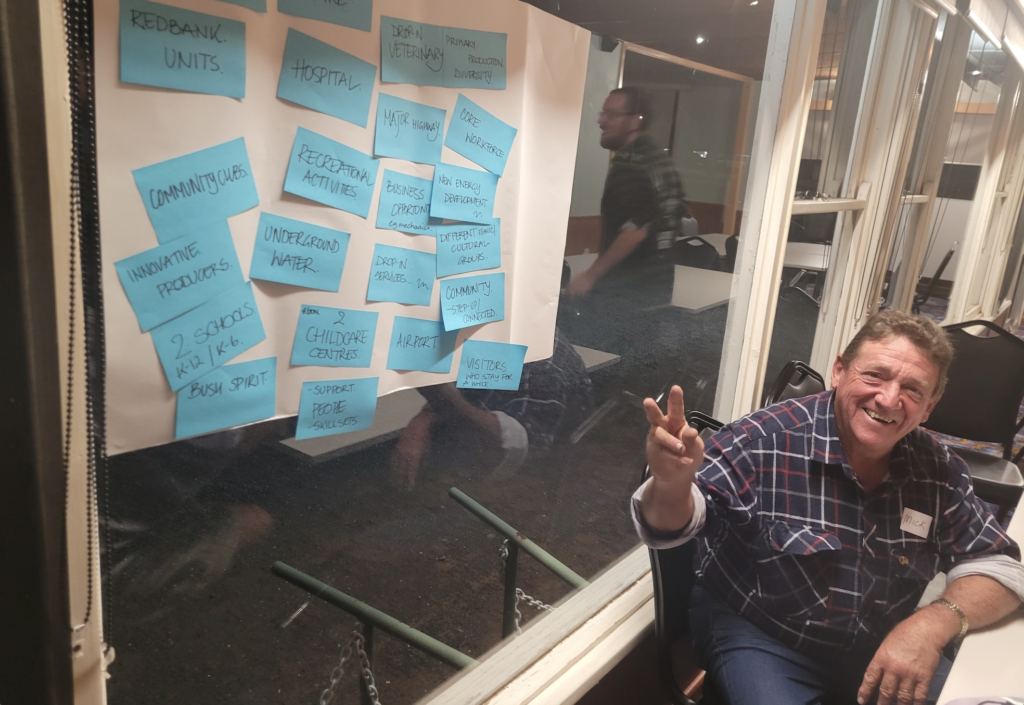
The project involved hosting a series of interviews and workshops that engaged 31 community members, including First Nations people and young people, people from the multicultural community, grassroots environment groups, small businesses and the social service sector.
The report makes visible the wealth of experiences, insights and knowledge that exists in communities across the region and demonstrates how the local community can be a valuable partner in working towards good transition outcomes for the Latrobe Valley region.
The main project finding is that community members see a range of potential benefits from the energy transition, beyond job creation and Australia’s national decarbonisation agenda. If managed well, the transition could provide opportunities to transform the systems that underpin society, the regional economy, and people’s relationship with the local environment.
The key themes presented in the report are:
Socio-economic disadvantage, equity issues and liveability
Community Participation
Institutional capacity and good governance
Environmental protection, remediation and rehabilitation
First Nations leadership
New energy development
Regional economic development
Workforce development
To find out more, download a copy of the What Next? Community Perspectives on the Energy Transition in the Latrobe Valley.
Gladstone Regional Council launched its 10-year economic transition roadmap to support and guide Queensland’s industrial capital to becoming a renewable energy superpower in 2022.
The roadmap sees the region in prime position to respond to once-in-a-generation changes in the energy sector.
The Next Economy collaborated with Gladstone Regional Council to develop the detailed roadmap, which is the result of two years of research and extensive engagement involving 220 community, government and industry stakeholders. This included industry representatives, First Nations people, energy workers, environment groups and education and training institutions.
The Gladstone Region Economic Transition Roadmap guides Council on what is required to adapt to a rapidly changing energy sector and support a positive economic transition for its community over the next 10 years. Key themes of the roadmap include:
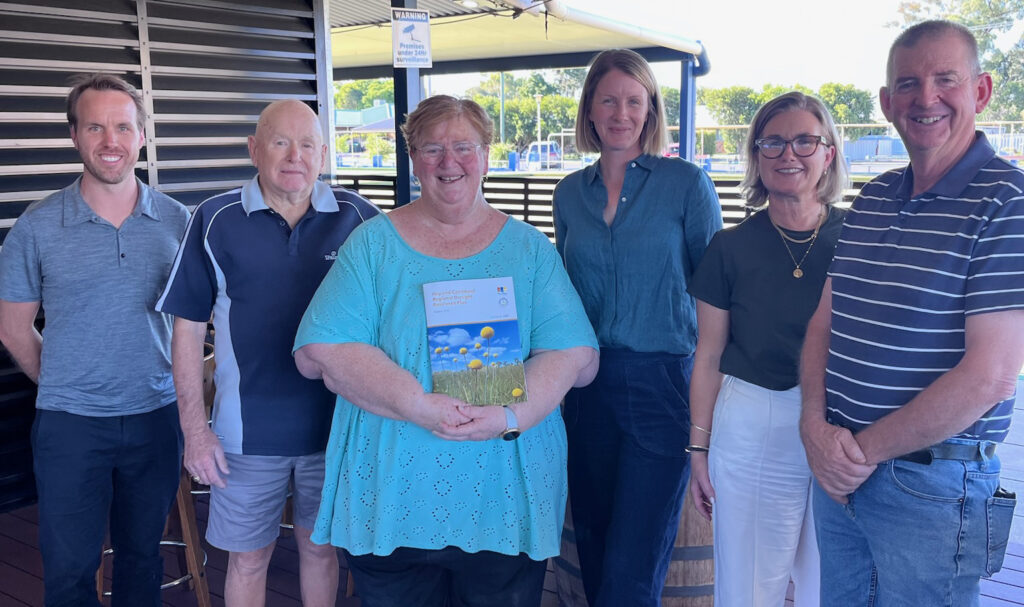
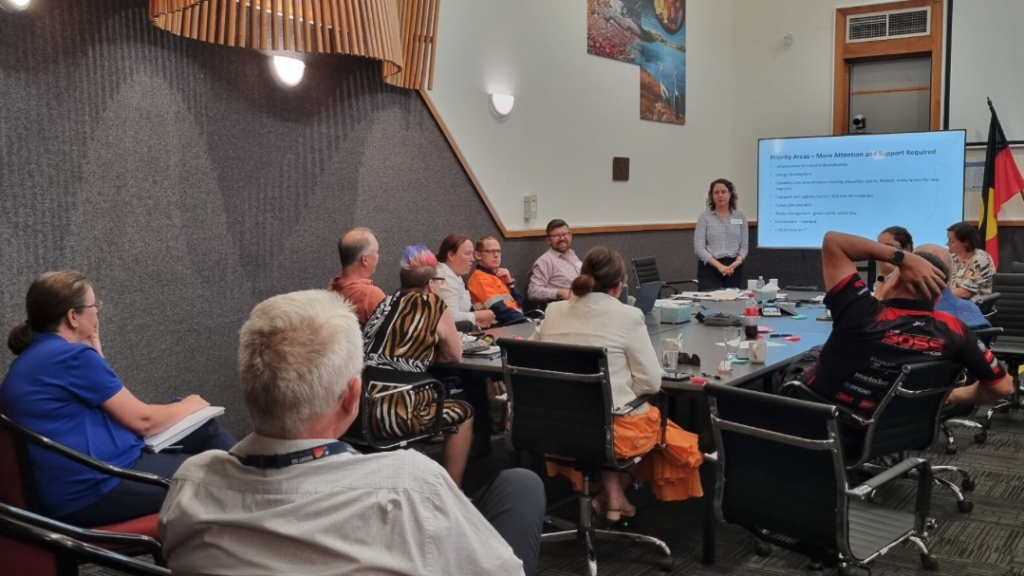
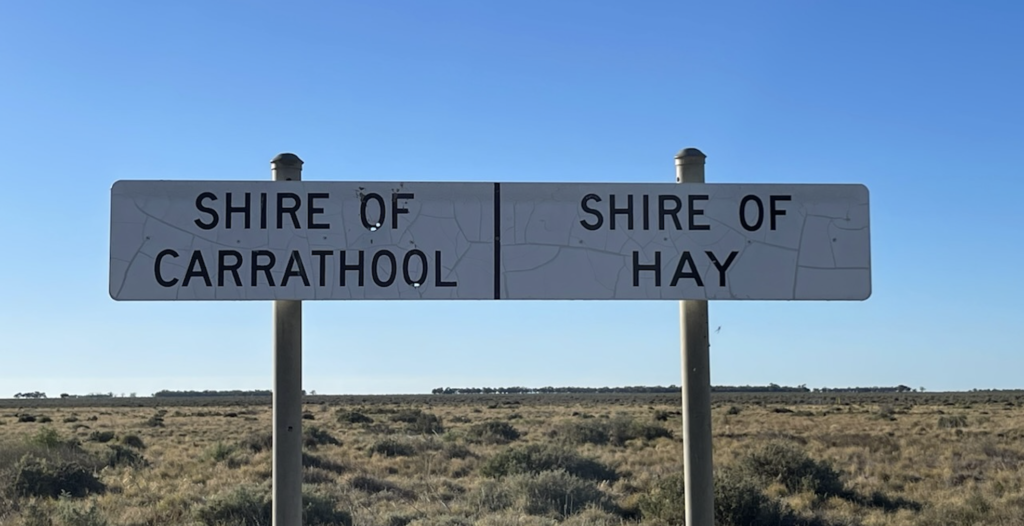
The Hay and Carrathool Regional Drought Resilience Plan (‘The Plan’) is a strategic framework shaping the future of the region through 2035. It is due for official release later this year.
This summary paper outlines the key elements of The Plan we are currently seeking feedback on, including our 2035 vision, resilience strategies, and priority actions.
The summary paper can be downloaded in PDF format below:
Have your say in online survey about ‘Energising the Future Economy of the Gladstone Region’.
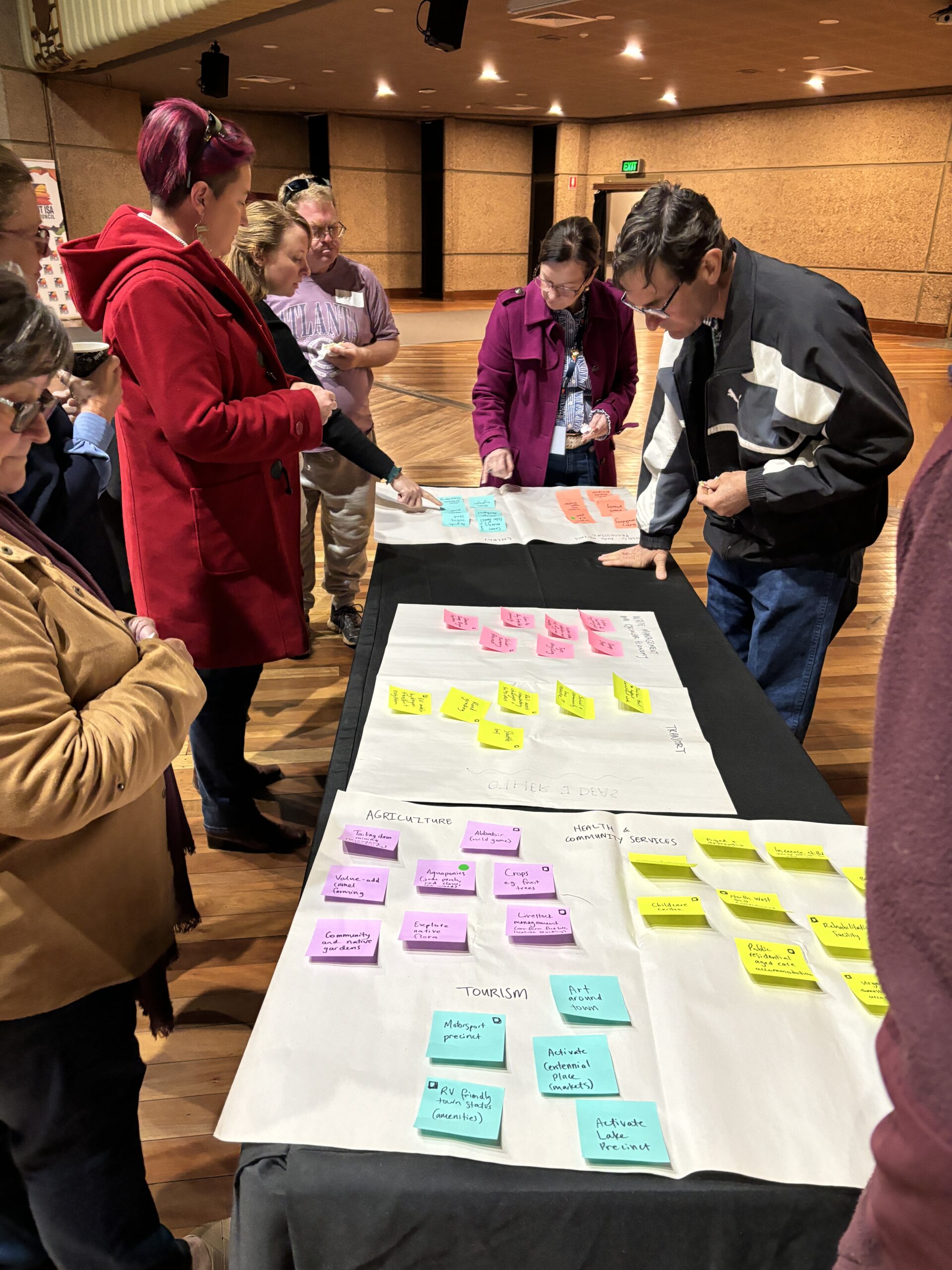
Locals across the Gladstone Region are invited to participate in an online survey to share their thoughts on the future changes to the energy sector and how the region can take advantage of emerging changes to generate new economic opportunities.
The survey content has been generated following a series of in-depth community and industry forums involving people from across the region.
Acting Gladstone Region Mayor Kahn Goodluck says Council would like to know if other residents share these views.
“Council recognises that the unfolding changes in the energy sector pose both challenges and opportunities for the Gladstone Region and people working in industry,” Councillor Goodluck said.
“This online survey is part of our joint initiative with The Next Economy – Energising the Gladstone Region Future Economy.
“Feedback from community, government, industry and other stakeholder groups will guide us on what is required to adapt to a changing energy sector and to support our region over the next 10 years.”
The Queensland economy is being transformed as the world embraces the challenge to phase out fossil fuels and rapidly expand renewable energy generation in pursuit of net zero emissions goals. As one of the world’s biggest exporters of coal and gas, and with an ongoing reliance on coal fired electricity generation, these changes pose huge risks to the Queensland economy. They also present us with massive economic opportunities, given the state’s abundance of solar, wind and mineral resources.
The experiences of other regions and countries demonstrates that change can be managed well, but it requires a high degree of leadership, resourcing and coordination from government. Transition authorities have proven a successful vehicle to support governments in this task by bringing together stakeholders from across government, industry and the community to plan and coordinate efforts to proactively manage the phase out of fossil fuels and expansion of renewable energy.
We recently made a submission to the senate enquiry into the closure of the Hazelwood and Yallourn power stations in Victoria. This submission responds to the three points listed in the inquiry Terms of Reference, outlined below:
(a) impact of the closure of the Hazelwood Power Station on the economy and jobs of the Latrobe Valley, and the success or otherwise of economic recovery efforts to date;
(b) expected economic impacts of the proposed closure of Yallourn Power Station in 2028 and options the State Government can pursue to offset the loss of more than 1,000 direct jobs from the plant, as well as associated contractors;
(c) success or otherwise of the Latrobe Valley Authority (LVA) to help the region transition, in light of the decline of funding made available to the LVA over successive State Budgets.
We worked with the Queensland government’s Just Transitions Group to develop transition related policies and programs, including the Energy Transition Roadshow (in Rockhampton, Gladstone, Townsville and Cairns) funded by the Queensland Government in 2019/20. The TNE team brought together all levels of government, industry, unions, universities, environment and community groups together to explore how the energy transition was impacting on regions and how it could generate new economic opportunities.
We worked with Stanwell in the development of their corporate strategy, which has led to the company not only integrating transition planning into their five-year strategy but has also led to the development of a workforce and community engagement plan to enable the company to start talking about the inevitability of transition out of coal.
In the wake of the 2019 Federal Election, TNE was able to share the findings of previous transition strategy workshops undertaken in the Hunter Valley and Queensland to challenge the divisive rhetoric that all of regional Australia (especially Queensland) was actively opposed to and in denial of the energy transition. The results from the workshops were used in a widely-shared Guardian article written by CEO Amanda Cahill, that showed that many people were starting to accept that the transition is inevitable, and that there were a number of economic challenges across regional Australia that was exacerbating fear, uncertainty and division.
This article caught the attention of the Deputy Premier of Queensland, who was concerned about the growing division across the State. At the invitation of the Deputy Premier, Amanda participated in a community forum, where she challenged the government’s view that they should avoid talking about transition. Subsequent meetings led to Amanda convincing the State Government to fund the Energy Transitions Roadshow.
The Central Queensland Energy Futures Summit was a gathering of over 140 stakeholders, in Gladstone in April 2021, representing local and state government, energy companies and regulators, industrial sectors, unions, education and training institutions, Traditional Owners and environmental groups.
Amanda Cahill speaks at the summit
The Summit was hosted by The Next Economy and would not have been possible without the generous support of the sponsors Stanwell, CleanCo, Australian Conservation Foundation (ACF), CQUniversity and the Clean Energy Finance Corporation (CEFC).
This report by The Next Economy summarises the activities over the two days and the key messages that came out of audience participation.
Regional Perspectives on Building a Stronger Economy
By Dr Amanda Cahill
As the COVID pandemic hit, The Next Economy compiled the many economic stimulus ideas we’d collected from across Queensland into a report called “What Queensland Wants”. The report was well received by the State government, with a number of the recommendations being adopted as election promises.
The report also generated extensive media and public interest when it was released, garnering more than 62 media mentions, articles syndicated across 19 regional News Limited publications, 5 radio interviews and a regional television interview. The media attention in turn generated further interest from state and federal MPs.
The Next Economy has trained over 300 people working in environment, climate and social service organisations on how to work effectively with regional communities. This has included members of:
In recognition of the importance of the food and agriculture sector and its impact on the resilience of Queensland’s iconic Great Barrier Reef, Sustainable Table (funded by the Morris Family Foundation) commissioned The Next Economy to undertake the Mackay-Isaac-Whitsunday Reef Resilience Project. The project has three broad objectives, which are to:
Provide a deeper understanding of current challenges and enablers for the food, agriculture and land use transition in the Mackay-Isaac-Whitsunday region;
Establish a range of priorities to inform the Sustainable Table Fund (formerly Ripe for Change); and