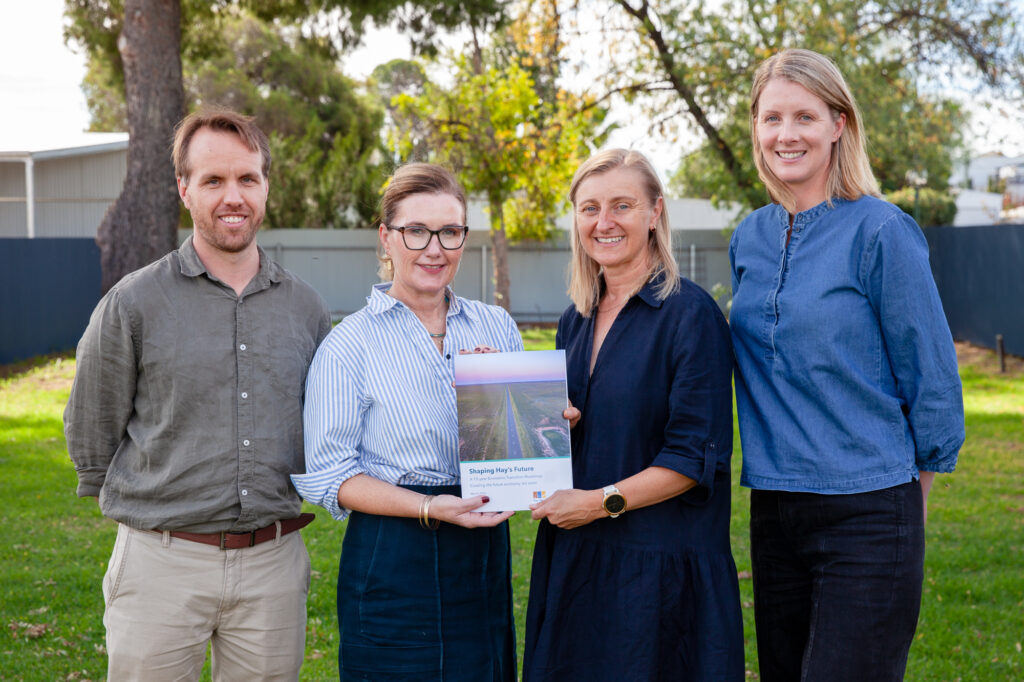
Last week the Hay Economic Transition Roadmap was launched in Hay with the people who brought it to life – Hay Shire Council and around 30 of the 250 community members who contributed in one way or another over three years of deep engagement. This roadmap isn’t just a document; it’s a genuine expression of what the community wants for its future, and we’re so excited to have supported its development and have it out in the world.
Led by Hay Shire Council with support from The Next Economy, the Roadmap brings together local knowledge, priorities and practical actions to guide the next decade of economic change – building on Hay’s strengths and preparing for what’s coming. It is designed to align investment with community aspirations and catalyse coordinated, collective action for change – with the community in the driver’s seat.
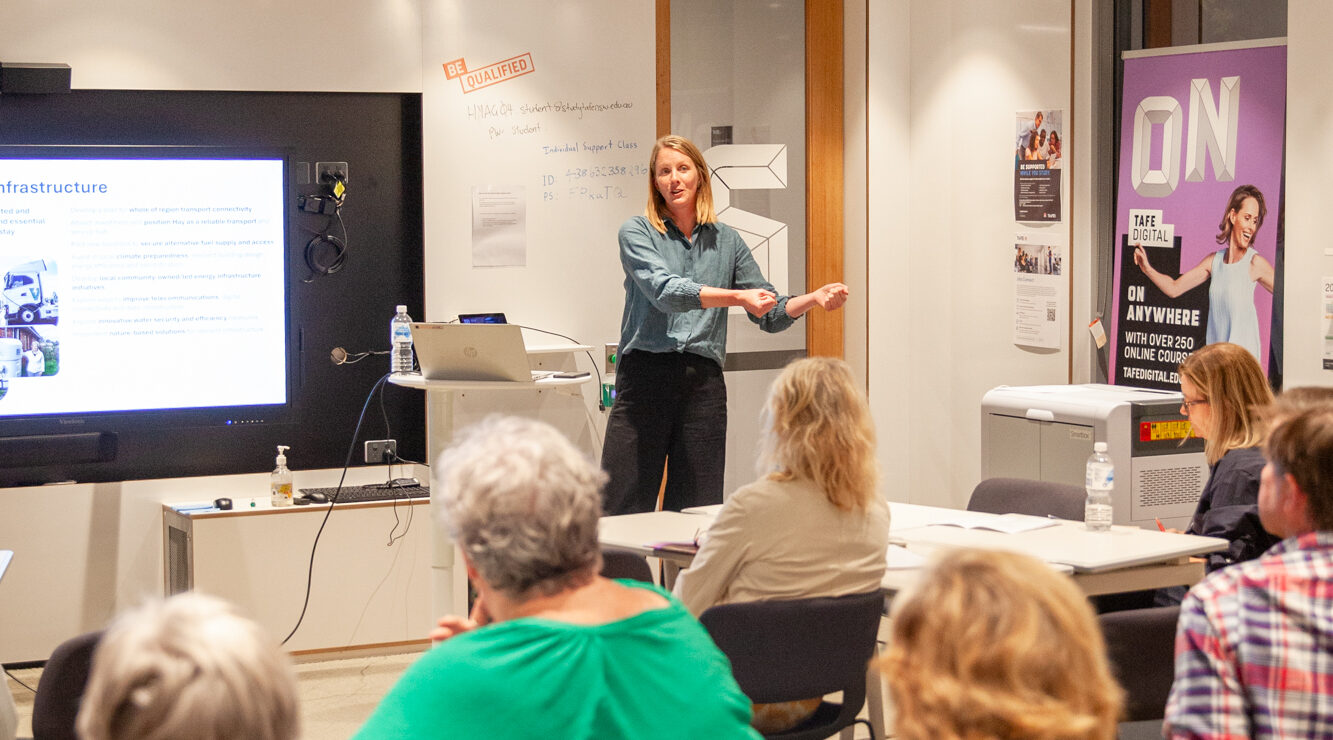
We sat down with our Land Program Director Jacqui Bell to talk about what she’s learned over the past couple of years and what this means for how we think about regional economic transitions.
Why are region-wide economic transition plans needed?
Communities like Hay are navigating compounding pressures all at once – things like housing shortages, workforce gaps, industry shifts and climate exposure. Band-aids on broken systems won’t cut it. We need upstream change that builds on local strengths and focuses on practical solutions that respond to the unique characteristics of a place. That is, change that generates value locally – not simply chasing narrow national targets or technology mandates.
Working at the regional level connects the dots between sectors and industries to tackle challenges and create new opportunities in ways no single farm, business or government agency can do alone. In agricultural regions like Hay for example, regional planning and coordination creates the enabling environment for local businesses and farmers to ‘move’ and explore new partnerships, de-risk innovation and diversify on-farm income.
For new industry proponents, a regional plan signals where opportunity exists and how shared value can be created – and in many cases, collaboration with regional stakeholders is what makes the business case for investment stack up. For farmers, it enables economies of scale, de-risked investment, opportunities to lower external inputs and new business activities that simply aren’t viable farm by farm. We see examples of this already in efforts to get good outcomes for nature – where working at a regional level, not a farm level sometimes makes a lot more sense.
Regional collaboration isn’t always straightforward – but there are organisations working out how to do it well, helping landholders, residents and Councils find the mechanisms and models to sustain this work over the long term.
So, what does this look like in practice?
Hay sits in the South West Renewable Energy Zone, a real opportunity for the region if managed well. The Roadmap process is already delivering results. From housing solutions, new agricultural industries, expanded childcare, and two renewable energy projects progressing with broad community support.
There are many more opportunities emerging. For example, offtake industries – businesses that take locally-produced energy and use it productively – preferably for the benefit of local industries and businesses. Think freight, fuel, and fertilisers. A sustainable fertiliser business using renewable energy is already under establishment, with regional producers committed to buying at the scale needed to make it viable.
And it’s not just new businesses. Existing ones are adapting too. A local engineering firm is moving into water infrastructure for energy projects – a specialisation with applications well beyond Hay.
This isn’t just aspiration –the momentum is real and work is happening already on the ground.
What’s the role of Local Government in all this?
Council plays an important role – facilitation, convening, connecting the dots, building the appetite for change, countering misinformation etc. Support for renewable energy development in a region like Hay didn’t happen because of some national campaign – it was because of the rigorous and ongoing communication and engagement that Council facilitated, the discussions they brought together, the open door they had to proponents, community, businesses.
Why is community involvement important?
When local people are involved and are part of a group behind a vision and supported to be champions of economic change, momentum builds. We could see this in real time last week, when one of our working group members shared how they’ve been talking to a local organisation about progressing an action in the Roadmap. This is where the magic happens – community starts to talk, and action is sparked.
Why is regional work like the Hay Roadmap important?
Regional work matters – it is the connective tissue that holds the regional economic system together and helps each individual component move in the right direction. It’s also critical for sectoral transitions – to understand how characteristics of a place shape or hinder the big shifts that are needed, such as the decarbonisation of agriculture, for instance.
The work in Hay is important because it tells a strong and compelling story about what good regional development and economic transitions can look like across Australia. Communities facing big shifts – new energy, industry change, climate pressure and workforce gaps are increasingly deciding to shape their own futures rather than wait. The ones doing it well are planning ahead, building on local strengths, and asking the right questions: What are we transitioning to? What does good development look like here? How do we make sure benefits flow locally?
Hay is one of the clearest examples of what this looks like when it’s done well, and the lessons here matter well beyond one town
But a Roadmap is just a document, isn’t it?
People sometimes roll their eyes at the thought of another planning document, but for The Next Economy, the document is simply the artefact – the process, the engagement, the coordination and local capacity building is what creates change and builds momentum for new partnerships, new opportunities and community leadership of the future.
That said, the pride that the Hay community feel for the Roadmap, and the value they see it provides them is huge. This was again demonstrated by the conversations we were part of and feedback we received from local people during our visit to Hay last week when we launched the Roadmap with the community. Having a document like this provides a strong signal to investors, collaborators and government. It’s something that everyone in the region can point to demonstrate the work they’ve done, the direction they’re heading, their priorities and what doing business in Hay looks like.
The number of queries we and the region have had even after the soft launch of the Roadmap last week is testimony to its power. The Roadmap sends a signal that Hay is a strategic partner to change with people that have the mindsets and willingness to explore opportunities and create shared value.
So, what should we take out of all of this?
Hay has and is doing something genuinely impressive – a community of this size taking the initiative to plan ahead, build consensus, and deliver real outcomes. It’s a clear example of what responsible development and economic transitions managed well can looks like across Australia. For other regions to go the distance, they need the same meaningful engagement and real backing, including funded local coordination roles that turn good plans into lasting outcomes.