
Uralla’s Renewable Energy Strategic Action Plan is here
Two years of listening, testing and co-design have led to this: a practical plan for how NSW’s Uralla Shire can host large-scale renewable energy development on its own terms – protecting what the community values while sharing the benefits of the transition fairly.
- Uralla’s Renewable Energy Strategic Action Plan is here
- Uralla Shire Council Future Plans and Strategies
- A Shire-wide Conversation About Change and Opportunity
Uralla’s RESAP was developed by Uralla Shire Council with the community with in-kind support from The Next Economy, as part of the national Striking a New Deal (SaND) collaboration.
Communities like Uralla in NSW are on the front line of Australia’s renewable energy transition – facing real opportunity alongside real disruption.
Two years ago, Uralla Shire Council and its community set out to shape the impacts of the New England Renewable Energy Zone (REZ) with a practical, community-informed Renewable Energy Strategic Action Plan (RESAP). The result of that process was endorsed last month.
As the New England Renewable Energy Zone develops around us, our region is entering a period of significant change. This will offer a once in a lifetime opportunity. However, how that change is managed will impact generations to come.
Uralla Mayor Robert Bell
Only just released, it’s already showing results: stronger community voices in decision-making, and improved trust between Uralla Shire Council, community and developers.
In May, councils across the REZ joined the University of New England, Regional Development Australia, Regional Economic Development NSW and EnergyCo to shape a REZ build that benefits the community and delivers lasting regional infrastructure.
The New England REZ forum, supported by The Next Economy (TNE), delivered on two of the actions identified in Uralla Shire Council’s RESAP: actively engaging in coordination forums to spot gaps in responsibility or sequencing; and convening the right parties to close those gaps.
Further afield, insights from RESAP are already feeding practical guidance to government and industry, including being shared by The Next Economy at the NSW Parliamentary Inquiry into the impact of renewable energy zones on rural and regional communities and industries.
During engagement, locals told us again and again that water was their biggest concern. ‘Improve Water Security’ is a key strategy in the RESAP. We needed all government and industry stakeholders to really appreciate that concern. And I think we achieved that. No one who attended the NE REZ forum left without a clear picture of the regional water security challenge. We now have strong and ongoing regional collaboration on water security.
Emily Sims, Strategic Planning Officer, Uralla Shire Council
There’s no shortage of toolkits for renewable energy development – what’s missing is a full picture that puts it into practice on the ground.
The Next Economy’s Saideh Kent, who led the work with Uralla Shire Council to build RESAP, shares her top six insights, developed with commentary from Uralla Shire Council Strategic Planning Officer Emily Sims and Group Manager Infrastructure Services Myles McLindin.
They contain valuable lessons on how communities, industries and governments can work together for shared value outcomes across the country.
1. Communities are partners, not stakeholders to manage
Good development is built with communities from the outset, not delivered to them. Done well, this doesn’t extend timelines or budgets but does improve outcomes all round. This means moving beyond social licence toward genuine, shared-value relationships – development done, as the nearby Hay community puts it in their Economic Transition Roadmap: “with the community, not to it”. In Uralla, that’s taken shape as a simple guiding principle: minimising impacts and maximising benefits.
The Renewable Energy Zone will offer a once in a lifetime opportunity, however how that change is managed will impact generations to come. We have a responsibility to help our community be ready for what is coming and to make sure local voices are heard
Mayor Robert Bell, Uralla Shire Council
A shared community vision is a good starting point, setting out what matters most, and where the opportunities for mutual benefit might lie. This could be attracting investment in roads and housing, or welcoming new people into the community to grow the town and the local economy.
Useful resource: Social Licence in Renewable Energy Toolkit for Local Government
2. Respect runs the whole way through
From the conduct of workers on the ground to policy, siting and land access negotiations, respectful engagement – backed by communities and councils with the capacity to engage as equals – builds trust. Its absence erodes it fast.
For example, land access is often a community’s first contact with a project, and openness – transparency, legal advice, free and informed consent – builds cohesion, whereas individual, non-disclosure agreement-bound deals, for example, breed suspicion between neighbours.
In Balala, landholders formed their own group to engage collectively with EnergyCo and a wind farm developer, rather than negotiating one-by-one. They worked collectively with a lawyer to review the terms of the agreement.
Legal advice should be as close to free as possible to landholders. This can be a real barrier for many and also stretches limited legal expertise in the region.
Myles McLindin, Group Manager Infrastructure Services, Uralla Shire Council
Useful resources: NSW Farmers Renewable Energy and Transmission Landholder Guide and Queensland Farming Federation’s Renewable Energy Landholder Toolkit
3. Benefit-sharing is collaborative, not transactional
Communities and developers work together across the full benefit spectrum, from community grants through to legacy infrastructure like housing to joint enterprises that create lasting shared value.
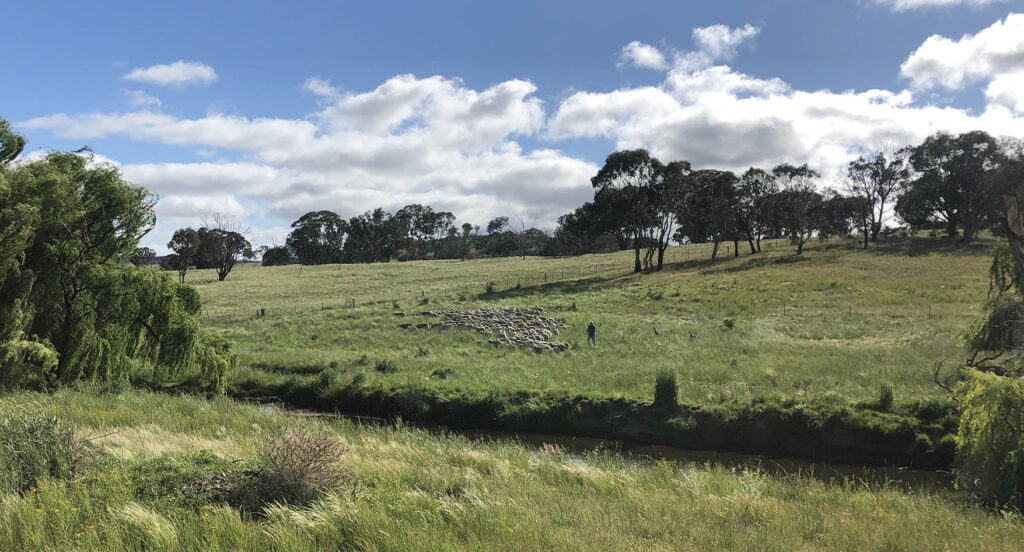
For example, the Armidale Regional Council and Uralla Shire Council have been working together to address the water needs of their communities. The Renewable Energy Zone infrastructure also requires large amounts of water for development. By working together to increase local water storage capacity and supply networks, the Renewable Energy Zone can improve the water security of the region.
We see it as a regional opportunity the REZ provides a chance to bring in those major infrastructure developments and provide a legacy outcome that gives our communities safe and secure water in the future.
Mayor Robert Bell Uralla Shire Council
Useful resources:
- Planning Victoria’s Community engagement and benefit sharing in renewable energy development
- CPA’s Guide to regional benefit sharing
- Tasmania’s Guideline for community engagement, benefit sharing and local procurement
- Community Power Agency’s Guide to Regional Benefit Sharing
4. Projects fit the land, not just the grid
Good siting supports multiple land uses and actively protects and enhances both farming operations and local ecology efforts.
In Uralla, a sixth-generation farming family is negotiating with EnergyCo and a developer to host solar on part of their land. They believe development around Uralla Shire must enhance the township’s character and deliver lasting local benefits. Construction-phase impacts are a key concern – particularly truck movements affecting road conditions and blocking highways used to move stock to market. Uralla Shire Council has already recommended alternative transport routes to protect local assets like the avenue and bridge near Gostwyck Church.
The Uralla Shire Council, is also working with local biodiversity experts to provide advice on how to protect and enhance biodiversity as new energy infrastructure is developed.
New England is a unique bioregion. Over the years of intensive grazing practices, tree clearing, drought and eucalypt die-back, the region’s woodland ecosystems have become increasingly threatened. Locals told us very clearly that what remains is precious. They want to see that, at the end of this renewable energy rollout, the environment is in a better place than before.
Emily Sims, Strategic Planning Officer, Uralla Shire Council
A pilot study undertaken by the University of New England on the ACEN New England Solar Farm is demonstrating ways to improve biodiversity within the region.
Useful resources:
- Hay Inc.’s Rural Education Program – a hands-on training initiative to provide pathways for young people including on the importance of food and fibre production co-existing with renewable energy production.
- University of New England’s pilot study into how renewable energy zones can double as valuable habitats for wildlife
- Community Power Agency’s Building better biodiversity on solar farms guide
5. Coordination is the multiplier
Strong governance – linking developers, government and community, managing benefit funds, and investing in enabling infrastructure like water, housing, transport and telecommunications – turns individual projects into regional benefit.
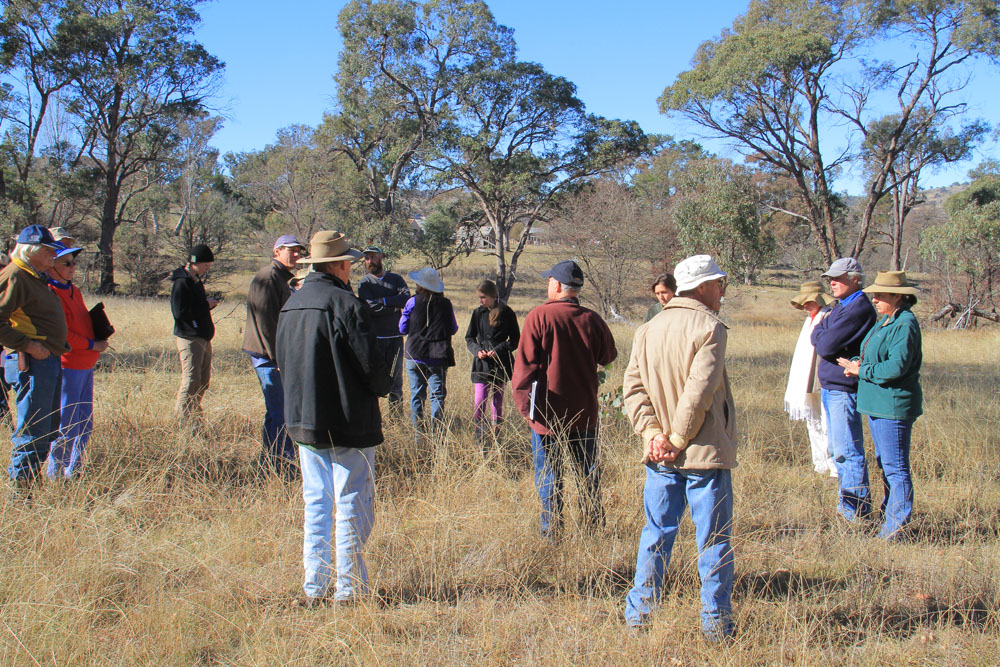
For example, the Uralla Shire Council Strategic Planner worked with the University of New England to host EnergyCo and the other councils to coordinate infrastructure planning and investment as part of the NE REZ Forum.
There is an understandable perception in the community that ‘the REZ’ is an entity that can be held accountable. We often hear things like ‘The REZ should pay for upgrades to local roads before they start construction’. In fact, the REZ is being shaped by multiple tiers of government, state functions, and private industry. EnergyCo doesn’t hold all the levers that need to be pulled. Collaboration is necessary to ensure that our community doesn’t fall through some of the cracks.
Emily Sims, Strategic Planning Officer, Uralla Shire Council
Useful resources:
- Planning Victoria’s Community engagement and benefit sharing in renewable energy development
- CPA’s Guide to regional benefit sharing
- Tasmania’s Guideline for community engagement, benefit sharing and local procurement
6. Council resourcing is key
Those Councils with expertise and more resources can engage developers on equal footing, they can spot where projects meet roads, water and housing, and negotiate collaboratively. Councils, often facing multiple projects at once, or without appropriate funding or governance structures, can quickly be outmatched.
In Uralla, a funding agreement with EnergyCo for $750k over three years has been used to fund a strategic planning role that lifted local capacity to coordinate and respond to activity associated with the renewable energy development in the Shire. This approach has been adopted by nearby Tamworth and Walcha councils.
There is no chance Uralla Shire Council would be in the position where we are able to advocate effectively for our community without this funding and support.
Myles McLindin, Uralla Shire Council’s Group Manager Infrastructure Services
7. Construction is an economic opportunity, not just a disruption
Managed well, construction builds local business capability, attracts and retains workforce, and strengthens social cohesion rather than straining it.
For example, in Uralla and across the surrounding region, local Aboriginal cultural heritage practitioners are working on the ground as renewable energy projects take shape. Steven Ahoy, a local Anaiwan man, carries out cultural heritage assessments for multiple solar, wind and transmission projects and manages a heritage maintenance crew at an operating solar farm. He has also helped set up an Aboriginal work crew that employs both Indigenous and non-Indigenous people.
Good renewable energy development is not theoretical – it’s already happening, in Uralla and elsewhere across the country. The task now is to learn from it and scale it.
To read more inspiring examples beyond Uralla, check out these recent projects The Next Economy has collaborated on including place-based, co-design projects over multiple years in nearby Hay (Economic Transition Roadmap) and the South West Queensland Regional Organisation of Councils’ Future Economy Strategy.