Community insights for Uralla Shire’s energy future 

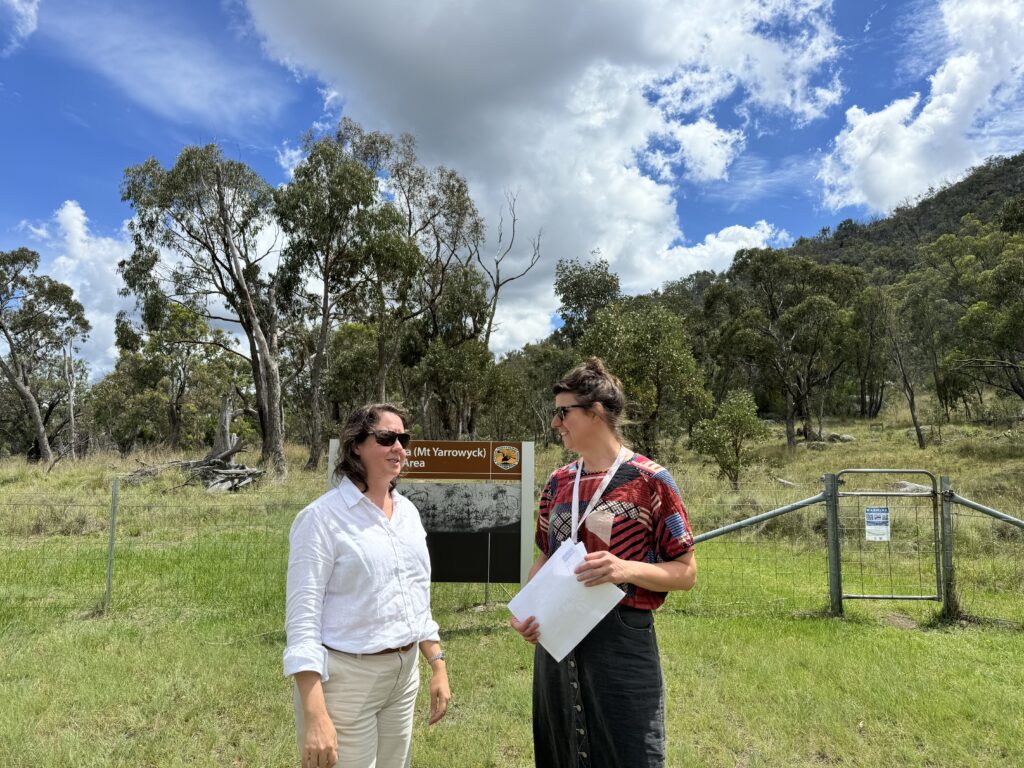
Between December 2024 and June 2025, The Next Economy and Uralla Shire Council engaged more than 150 residents through workshops, interviews and surveys. People shared what matters most to them, and what ‘good development’ should look like for their Shire in NSW’s New England region, in light of the large-scale renewable energy development planned. 

This has culminated in an Insights Paper: a summary of what we heard and what it means for Uralla’s energy future. 

What we heard 

Residents’ perspectives grouped under six overarching themes, ranging from nature and land use to healthcare. Across these, the following came through clearly: 

  • There is support for a transition that is transparent, coordinated and grounded in local values. 
  • People need early, honest communication and real opportunities to participate in decisions. 
  • The renewables opportunity should be used as an opportunity for investment in lasting infrastructure and services that keep pace with growth. 
  • It is important to people that farmland, biodiversity and the rural character of the Shire be protected. 
  • Affordable housing and inclusive growth should be a priority, especially to maintain community cohesion as workers and new residents arrive. 
  • Stable jobs and training pathways linked to these developments were seen by many as a way to keep and attract young people in the area. 
  • A shared desire to preserve community cohesion and heritage so that change enhances, more than erodes, what makes Uralla special. 
     
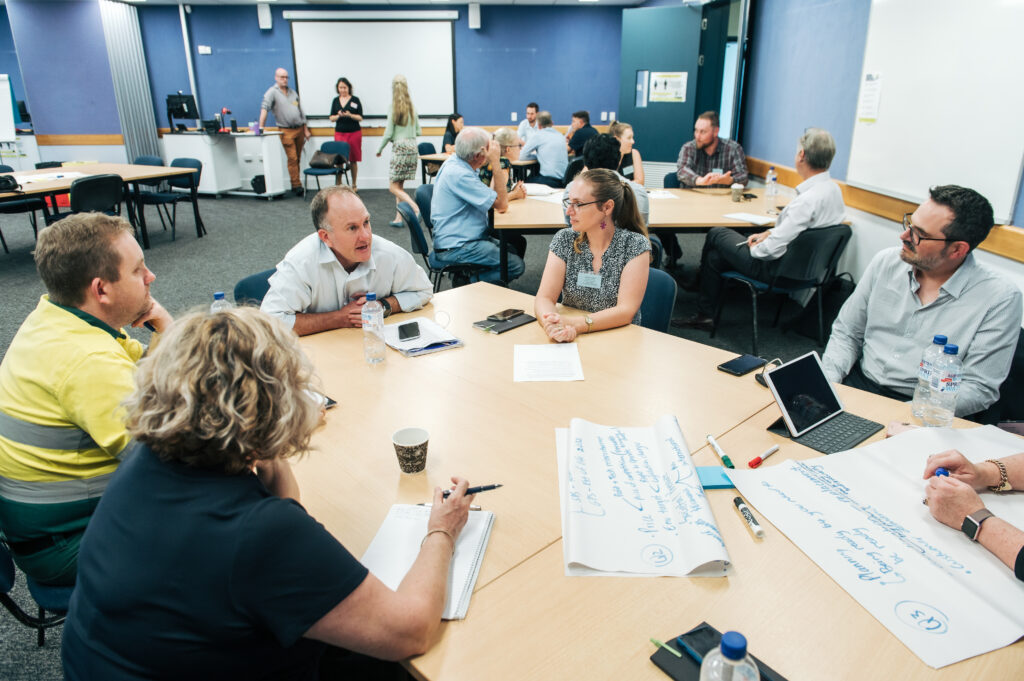
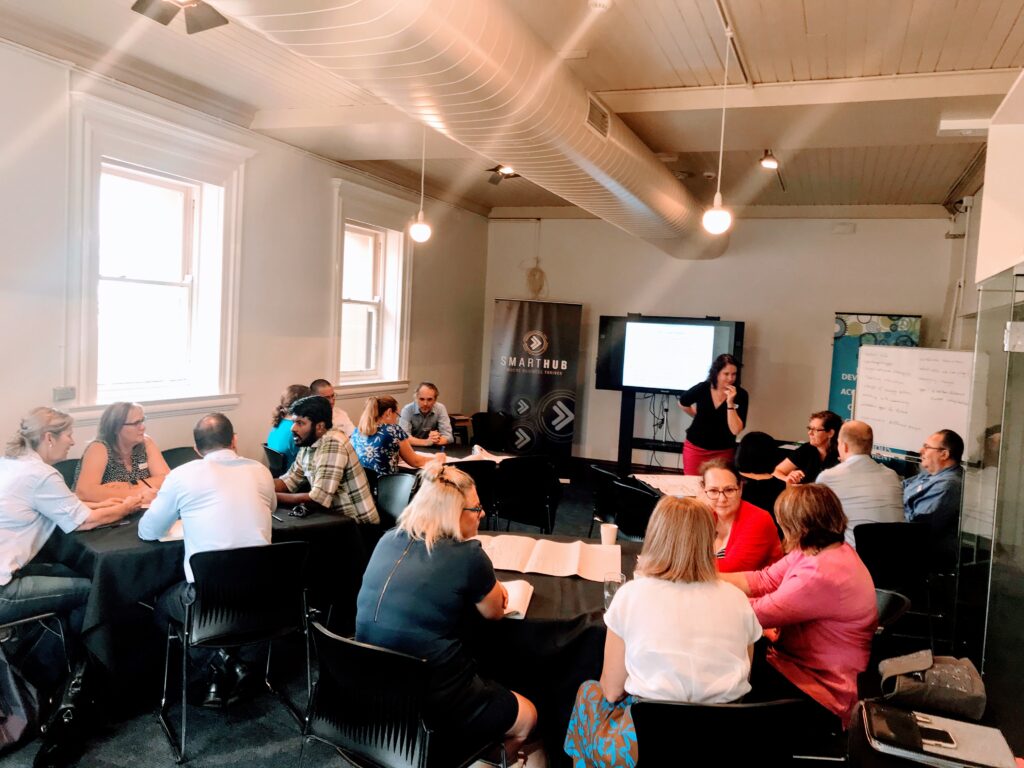
Inputs gathered from just one of TNE's Uralla community workshops.

Read more about what came across during community engagement via Council’s website: A shire-wide conversation: community insights for Uralla Shire’s energy future.
Read previous stories and updates:  

What happens next?

These insights inform Uralla Shire Council’s Renewable Energy Strategic Plan, due out at the end of 2025. The plan sets out strategies and actions to address challenges and realise opportunities, so that benefits are shared fairly and value endures. 

What is the Striking a New Deal (SaND) project? 

SaND supports regional communities as they navigate renewable energy development in their area. Together with Foundation for Rural and Regional Renewal, RE-Alliance and Projects JSA, The Next Economy supports a peer-to-peer network of regional leaders sharing insights with government and industry. Read more about the partnership: Driving better community outcomes from renewable projects

The Economy We Could Have: new paper out now

Australia’s economy looks strong on the surface, but behind the averages lie deep divides in housing, work, health and opportunity. Our new paper, The Economy We Could Have, asks what our economy is really designed to do, who it is working for, and how it can support people’s wellbeing.

Australia is at a pivotal moment. While headline statistics suggest strong performance, looking under the bonnet of these numbers reveals widening divides in housing, health, income, and opportunity. Rising inequality and climate disruption demand a closer look at our economic system: what is it designed to do – and who benefits?

The Economy We Could Have explores how Australia’s economic story has shifted over the decades, the divides created along the way, and the alternatives already being built. It sets out practical steps for governments, enterprises and communities to move beyond isolated “Lego wins” and instead embed a wellbeing economy – one that puts dignity, fairness, connection and ecological care at its centre.  

As lead author, Katherine Trebeck, puts it: 

Transformational change is possible. Australia has done it before – from Medicare to minimum wages – and we can do it again.  

The challenge

The paper traces Australia’s shift from predistribution – fair wages and public investment – to a model marked by precariousness, asset accumulation, and financial advantage for a few. It also highlights how system-compliant fixes and short-term crisis responses can stall deeper progress.

One in seven Australians live in poverty. Many face insecure work, unaffordable homes and stretched services that respond to crisis rather than prevent it. These outcomes are not inevitable. They are the result of decisions – shaped by values and power – that have concentrated advantage for some and shifted risks onto others. 

The alternatives

The good news that is change is possible. The economy is a human-made system, and it can be redesigned. Across the country, communities are already showing what that momentum for change is growing. Australians are increasingly dissatisfied with the status quo and open to rethinking economic priorities. 

One promising framework is the wellbeing economy, which according to the Wellbeing Economy Alliance can deliver the following needs: 

Nature, connection, dignity, fairness, participation

There are plenty of examples of these goals already being delivered in practice:

Earthworker Cooperative (Latrobe Valley, VIC)Australia’s first worker-owned factory, producing solar hot water systems to serve its worker-owners. 
Food Connect Shed (Brisbane, QLD): A cooperative food enterprise owned by 500+ ‘careholders’, rooted in equity and regeneration. 
Marlinja Power Project (NT): Community-installed solar panels and battery storage enabling near energy self-sufficiency – an example of climate resilience. 

Governments are beginning to respond. The Federal Government’s Measuring What Matters statement is expanding how national success is defined, incorporating indicators for health, sustainability, and social cohesion. In Victoria, the Early Intervention Investment Framework is embedding preventative health and social approaches into budget decisions, valuing long-term wellbeing over short-term fixes.

Australia’s future depends on whether we can move beyond piecemeal reforms to embrace systemic change. By learning from community-led initiatives and adopting frameworks like the wellbeing economy, we can build a more inclusive, resilient, and caring society – one that works for everyone. 

Read the full report here:

Building Hay’s future together: early insights from the economic transition roadmap

The Next Economy and Hay Shire Council have been working side by side with the local community to better understand how Hay’s economy works today and what it will take to secure a stronger future. Over the past year, more than 240 residents, businesses and stakeholders have shared their perspectives through workshops, interviews and conversations. 

The result is the newly published Early Insights Paper, which explores Hay’s unique economy, the challenges it faces, and the opportunities already emerging. 

A deeply connected local economy

What makes Hay distinctive is not just its agricultural base or strategic location on trade and tourism routes, but the way economic and social life is deeply interconnected. From local producers sharing transport runs, to volunteers stepping in where services are scarce, Hay’s resilience depends on people and relationships as much as dollars and cents. 

Turning pressure into opportunity

The final Roadmap will highlight clear areas where focused action can turn pressure into opportunity. Housing, for example, has emerged as one of the most urgent challenges. Council and partners are already exploring innovative approaches such as transitioning worker accommodation into permanent housing – a practical step that can help meet short-term needs while leaving a lasting benefit for the region. 

Grounded in local identity

Alison McLean, Executive Manager for Economic Development and Tourism at Hay Shire Council, puts it simply:  

Without this groundwork, there’s a risk of defaulting to what everyone else does. We are not Wagga, we are not Griffith – we have our very own unique economy, threats and opportunities.

From insights to action 

This paper is an important milestone, but it is also part of a broader process of engagement and real-time action being taken to manage change across the region. Over the coming months, Council and The Next Economy will continue to work with the community to refine priorities, test solutions and activate partnerships across housing, primary production innovation, workforce development and industry diversification. 

You can read the paper here:

Read the local media release for an expanded summary here:

Time to strike a good deal for communities hosting renewables 

4 August 2025: As Australia undergoes the shift to renewables, rural and regional communities are demonstrating new ways of securing a good deal from large-scale solar, wind and battery projects.  

This is the conclusion of a new report – Striking a New Deal for Renewables in Regions – authored by FRRR and Projects JSA, as part of the Striking a New Deal collaboration. It comes ahead of a first-of-its-kind national gathering of local government and regional development leaders at a Summit hosted by RE-Alliance in Newcastle this week. 

The report draws on insights from leaders in regions with significant renewable energy investments around Australia and outlines the common risks and opportunities facing their communities.  

While the majority of Australians living in regional communities generally support the nation’s shift to renewable energy (CSIRO, FCA, Porter Novelli), the report clearly shows that the first phase of this change has been challenging.  

Leaders have been grappling with significant uncertainty about what will actually be built and when; the local risks and opportunities of these developments for their economy, environment and community; and limited local agency to influence the development process. 

With the need to replace aging coal-fired power stations, state and federal governments have so far been ‘building the plane while flying it’. However, with clearer policies and more projects reaching the approval stage, solutions to common issues have emerged, creating more opportunities for regions to achieve meaningful and lasting benefits from investments. 

Sarah Matthee, Climate Solutions Portfolio Lead at FRRR, noted, “Communities simply want a good deal in return for hosting this new energy infrastructure. They want certainty, more clarity on the opportunities and risks of these projects, more resourcing and more agency in the decisions being made that will impact their regions for decades to come.” 

Lead author, Jack Archer, added, “Development at this scale will never be universally popular, but if locals can see they have been heard and clearly understand how their community will benefit, there can be enduring support for the energy shift in regions across Australia.” 

The report recommends government and industry collaborate to produce risk and opportunity accounts, to act as living ledgers, to make the terms of the local deal clearer. Currently information is fragmented and buried in planning documents, and with misinformation on social media and in local networks, it’s difficult for locals to understand what’s going to happen, if they will be better off and what issues need further work as development progresses. 

The report also recommends combining the transparency of these new accounts with upgrades to community services and housing, ongoing input from local leaders in the development process and genuine security that benefits will be delivered.  

“This set of actions is the key to unlocking the local social licence governments and industry are seeking. It’s a practical approach that can be implemented quickly and it will change the game,” Jack Archer said.  

To read more, access the report at frrr.org.au/reports/insights-reports/striking-a-new-deal

About the Striking a New Deal collaboration

Not-for-profit organisations the Foundation for Rural & Regional Renewal, RE Alliance and The Next Economy, and consultancy Projects JSA are working collaboratively on the Striking a New Deal project to support regional communities at the frontline of the energy transition. Striking a New Deal has worked with community leaders across Australia to share insights and supports initiatives that seek to find a better way to develop renewables in regions. 

About FRRR 
FRRR (Foundation for Rural & Regional Renewal) is the only national foundation specifically focussed on ensuring the social and economic strength of Australia’s remote, rural and regional communities. FRRR’s unique model of support is more than money – it connects common purposes and investment from government, business and philanthropy with the genuine needs of rural people and places.   

About RE-Alliance 
The Australian Renewable Energy Alliance, or RE-Alliance, is an independent not-for-profit working to secure a responsible and rapid shift to renewable energy that actively contributes to the strength and resilience of rural and regional Australia. 

About The Next Economy 
The Next Economy, TNE is a not-for-profit economic development agency, working across all economic sectors to support communities manage the transition to a climate-safe, socially just and regenerative economy.   

About Projects JSA 
Projects JSA – Regional Advisory, led by Jack Archer, provides specialised advice on regional development issues in Australia. Jack is one of Australia’s foremost experts on regional development, experienced in policy, strategy, stakeholder consultation and facilitation, leveraging extensive networks and detailed knowledge of each region in Australia. 

Powering the transition while championing diversity

March 5 2025: Reimagining Diversity in Clean Energy Careers launches today. 

The rapid expansion of clean energy development is driving demand for hundreds of thousands of workers with diverse skills but right now many of those roles remain unfilled. 

This shortfall presents an opportunity. The Next Economy’s Reimagining Diversity in Clean Energy Careers report shows that by removing barriers to workforce participation for people from marginalised groups and communities, Australia can achieve a faster and fairer energy transition.  

It finds that fostering greater diversity and inclusion in the clean energy workforce can improve outcomes for individuals and communities, all while generating benefits for businesses and regional economies and helping Australia meet its renewable energy targets.  

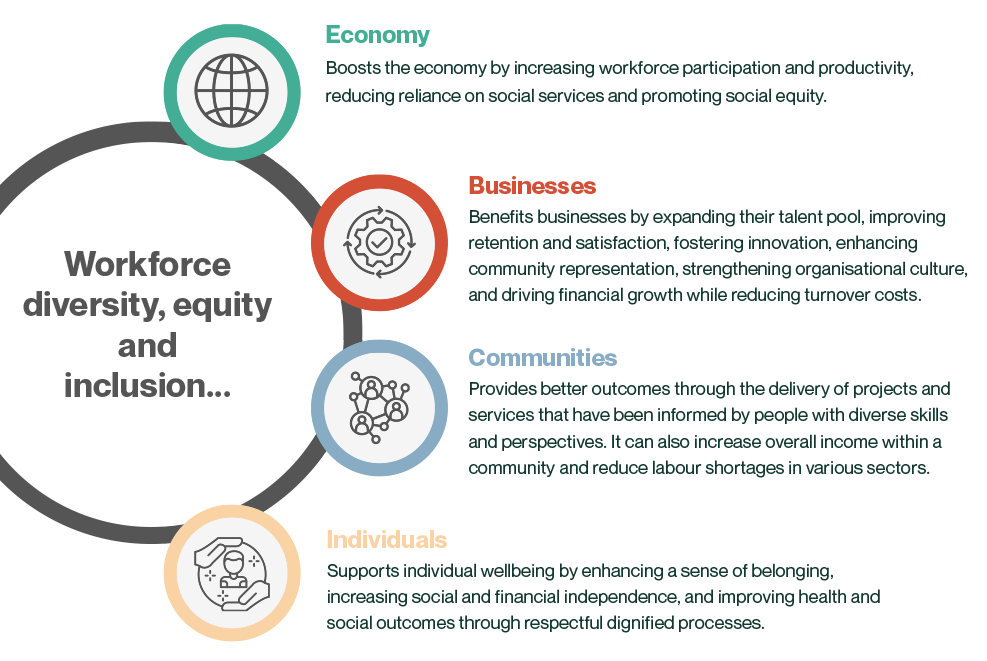
Fostering greater diversity, equity and inclusion (DEI) in the workforce can improve outcomes for individuals and communities, as well as generate benefits for businesses and the economy.

The task is significant, but there are practical actions that can be taken to remove barriers to participation and build a workforce that delivers a faster, fairer and more inclusive transition to net zero.  

The report outlines several opportunity areas to help drive this change:    

  1. Foster a thriving workforce development ecosystem: connecting diverse stakeholders, creating the conditions for collaboration while supporting marginalised individuals and regional economies 
  1. Strengthen inclusive career development pathways: providing equitable access and opportunities for all learners and workers 
  1. Create supportive and inclusive workplaces: ensuring employees from diverse backgrounds feel welcome, valued and supported at work 

The report shows these opportunity areas work best when underpinned by a core principle of putting people at the centre of all workforce development efforts.  

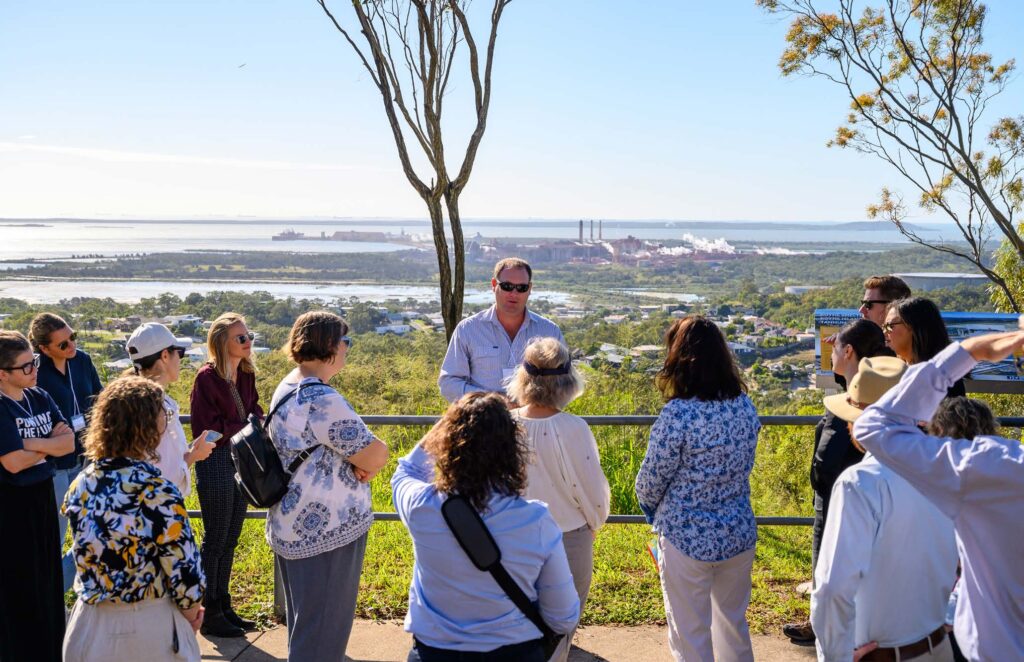
Stakeholders from different sectors across Gladstone have set directions for their future and are working together to manage the net zero transition. Pictured here is a representative of the Queensland Department of State Development and Infrastructure, explaining the history of Gladstone’s industrial transitions to visiting philanthropists and investors. Source: The Next Economy / William Debois.

Developed through research, interviews and workshops and drawing on insights from The Next Economy’s work with regional communities at the frontline of the energy transition, the Reimagining Diversity in Clean Energy Careers report is a resource to support stakeholders take a broader view of what diversity, equity and inclusion in the workplace can look like. It highlights actions that leads to workforce development in the clean energy sector that benefit everyone.  

To find out more, read the report here and share it among your networks.


Curious to learn more about the report? We’ll be hosting a briefing session in April 2025. Register your interest to be notified of upcoming dates by filling out this form:

Launching the Mount Isa Future Ready Economy Roadmap

The Next Economy, together with Mount Isa City Council and Climate-KIC Australia, is proud to launch the Mount Isa Future Ready Economy Roadmap.  

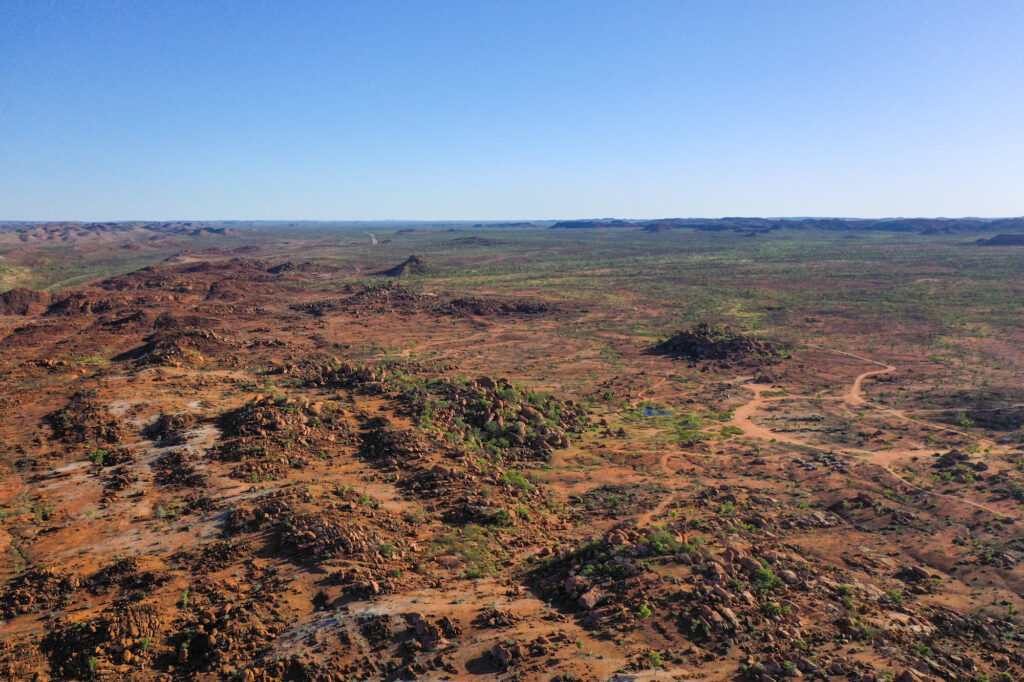
Mount Isa, like many other industrial regions, is at the crossroads of major economic change. The region has a rich asset base, including the North West Minerals Province, but faces the imminent closure of the Mount Isa Mine’s underground copper mine operations and copper concentrator.  

This closure will impact approximately 1,200 workers from mid-2025 and the future of the local copper industry, a change that needs to be managed alongside increasing demand for critical minerals, affordable and reliable energy generation and storage options, and innovative logistics solutions. Global trade uncertainty and climate impacts further complicate this picture. 

Whether Mount Isa successfully navigates these changes will be critical to the success of Australia’s net zero ambitions, and global decarbonisation goals. 

The Mount Isa Future Ready Economy Roadmap provides a clear and ambitious vision for the future of Mount Isa against this backdrop of regional change, global uncertainty, and new opportunities.  

In this future, Mount Isa thrives. The regional economy enables Australia’s net zero transformation, contributing to the next generation of clean energy and critical minerals exports and processing . Local industry and the community lead innovative solutions to long-standing and emerging challenges, benefiting from a focus on circular economy approaches, decarbonisation, environmental sustainability and regeneration, and social wellbeing.  

This vision is underpinned by the application of the Future Ready Economy Framework. This Framework has been designed by The Next Economy and Climate-KIC to assist decision-makers in regions like Mount Isa to assess economic opportunities against six key dimensions of positive and resilient development. 

Along with regional stakeholder engagements and expert input, the Framework has informed the development of future ready development pathways, strategies and potential actions for Mount Isa’s five key economic sectors—energy, mining, transport, agriculture and tourism—and the foundations of a thriving community. 

By adopting a future ready lens to regional economic development, Mount Isa is ensuring that today’s planning and investment decisions position the region for long-term success. 

With the right planning and investment from key partners, including the Queensland Government and Australian Government, and industry, Mount Isa can pursue these pathways and become a global player in a decarbonising world. 

To find out more, download the Mount Isa Future Ready Economy Roadmap.

Mount Isa has a proud history of innovation and mining excellence which can continue to thrive with the right investment and collaboration between industry, government and the community. Photo: Chris Grose.

What next? Community perspectives on Latrobe Valley’s energy transition

Between February and June 2023, The Next Economy explored a range of perspectives among Latrobe Valley community leaders with regards to the energy transition.

The project involved hosting a series of interviews and workshops that engaged 31 community members, including First Nations people and young people, people from the multicultural community, grassroots environment groups, small businesses and the social service sector.

The report makes visible the wealth of experiences, insights and knowledge that exists in communities across the region and demonstrates how the local community can be a valuable partner in working towards good transition outcomes for the Latrobe Valley region.

The main project finding is that community members see a range of potential benefits from the energy transition, beyond job creation and Australia’s national decarbonisation agenda. If managed well, the transition could provide opportunities to transform the systems that underpin society, the regional economy, and people’s relationship with the local environment.

The key themes presented in the report are:

  • Socio-economic disadvantage, equity issues and liveability
  • Community Participation
  • Institutional capacity and good governance
  • Environmental protection, remediation and rehabilitation
  • First Nations leadership
  • New energy development
  • Regional economic development
  • Workforce development

To find out more, download a copy of the What Next? Community Perspectives on the Energy Transition in the Latrobe Valley.

Gladstone’s 10-year Economic Transition Roadmap

Gladstone Regional Council launched its 10-year economic transition roadmap to support and guide Queensland’s industrial capital to becoming a renewable energy superpower in 2022.

The roadmap sees the region in prime position to respond to once-in-a-generation changes in the energy sector.

The Next Economy collaborated with Gladstone Regional Council to develop the detailed roadmap, which is the result of two years of research and extensive engagement involving 220 community, government and industry stakeholders. This included industry representatives, First Nations people, energy workers, environment groups and education and training institutions.

The Gladstone Region Economic Transition Roadmap guides Council on what is required to adapt to a rapidly changing energy sector and support a positive economic transition for its community over the next 10 years. Key themes of the roadmap include:

  • Energy security and affordability
  • Establishing a viable hydrogen industry
  • Diversifying the economy
  • Supporting and developing the local workforce
  • Capturing the community benefits
  • Protecting land and water resources.

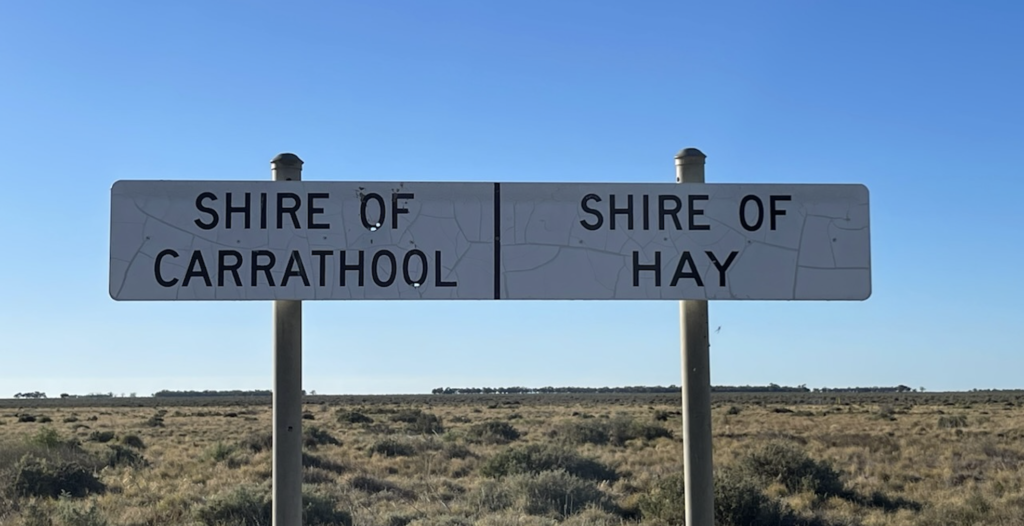
Consultation and feedback: Draft Hay and Carrathool Regional Drought Resilience Plan

The Hay and Carrathool Regional Drought Resilience Plan (‘The Plan’) is a strategic framework shaping the future of the region through 2035. It is due for official release later this year.

This summary paper outlines the key elements of The Plan we are currently seeking feedback on, including our 2035 vision, resilience strategies, and priority actions. 

The summary paper can be downloaded in PDF format below:

What Regions Need on the Path to Net Zero

Australia speaks in landmark report 

A major new report from The Next Economy released today has found that regional Australia is undergoing an economic transformation, with historical coal and gas heartlands like Central Queensland, The Hunter Valley and the Latrobe Valley in pole position to capitalise on the global shift to net zero emissions – with appropriate Federal Government leadership, investment and support.

For What regions need on the path to net zero’, The Next Economy engaged with over 500 people and organisations across regional Queensland, NSW, Victoria, WA and the NT to assess the support communities with close ties to fossil fuels need to manage the inevitable and accelerating transition to net zero emissions.

Participants included representatives of government, the energy sector, diverse industries, unions, economic development agencies, social services, universities and training institutions, Traditional Owners and First Nations groups, community members and environment organisations.

The research revealed a high level of consensus on a key theme – greater leadership is needed from the Federal Government, revolving around three key calls to action:

  1. An honest conversation: The Federal Government must be open and honest about what the changing energy system means for regional Australia.
  2. A clear, well resourced plan: The Federal Government needs to put in place the appropriate targets, policies and regulatory frameworks to guide investment, and to ensure that regional workers and communities are not left behind – such as a national transition authority.
  3. A strong democracy: The Federal Government must put in place measures to improve the health of our democracy – such as protection of public servants and decision-making from political interference, banning political donations, and a national corruption watchdog.

Dr Amanda Cahill, CEO of The Next Economy, said “The discussion about energy futures in regional Australia has changed dramatically since the federal election in 2019.

“When we started our consultations two and a half years ago, most people were questioning the whole concept of the energy transition. Now people see that things are changing quickly, with early closure announcements for coal plants, our trading partners increasing their climate ambitions and the rapid expansion of renewable energy projects across the country. They want to see a clear plan and support so they can manage these changes.

“If we want to take advantage of the wide range of new economic opportunities available – in renewable energy generation and storage, the mining and processing of critical minerals needed for renewable energy, and the manufacturing of projects like green hydrogen, batteries, renewable energy components, biofuels and other products –  we need to act now.

“Business has been leading the way in terms of investing in the new industries we need to develop to reduce our dependence on coal and gas export revenue. But it’s not enough and even industry players are now calling on the Federal Government for greater policy certainty and new regulatory frameworks to ensure that development is done well and actually benefits regions over the long term.”

“The new federal government has a lot of work to do”, Dr Cahill said. “I hope it shows the leadership and vision to grasp this once-in-a-generation opportunity, and to step up to the task of supporting our regions as the energy system changes.”

Contact us for a copy of the report.

To view our presentation of the report, click below to watch our webinar on Wednesday, 11 May where we were joined by Professor John Wiseman and Dr Gareth Edwards, followed by a Q&A session with participants.

Transforming Queensland: The Case for a Transition Authority

The Queensland economy is being transformed as the world embraces the challenge to phase out fossil fuels and rapidly expand renewable energy generation in pursuit of net zero emissions goals. As one of the world’s biggest exporters of coal and gas, and with an ongoing reliance on coal fired electricity generation, these changes pose huge risks to the Queensland economy. They also present us with massive economic opportunities, given the state’s abundance of solar, wind and mineral resources.

The experiences of other regions and countries demonstrates that change can be managed well, but it requires a high degree of leadership, resourcing and coordination from government. Transition authorities have proven a successful vehicle to support governments in this task by bringing together stakeholders from across government, industry and the community to plan and coordinate efforts to proactively manage the phase out of fossil fuels and expansion of renewable energy.

Central Queensland Energy Futures Summit

By Dr Emma Whittlesea

The Central Queensland Energy Futures Summit was a gathering of over 140 stakeholders, in Gladstone in April 2021, representing local and state government, energy companies and regulators, industrial sectors, unions, education and training institutions, Traditional Owners and environmental groups.

Amanda Cahill speaks at the Energy Future Summit
Amanda Cahill speaks at the summit

The Summit was hosted by The Next Economy and would not have been possible without the generous support of the sponsors Stanwell, CleanCo, Australian Conservation Foundation (ACF), CQUniversity and the Clean Energy Finance Corporation (CEFC).

This report by The Next Economy summarises the activities over the two days and the key messages that came out of audience participation.

What Queensland Wants Report

Regional Perspectives on Building a Stronger Economy

By Dr Amanda Cahill

As the COVID pandemic hit, The Next Economy compiled the many economic stimulus ideas we’d collected from across Queensland into a report called “What Queensland Wants”. The report was well received by the State government, with a number of the recommendations being adopted as election promises.

The report also generated extensive media and public interest when it was released, garnering more than 62 media mentions, articles syndicated across 19 regional News Limited publications, 5 radio interviews and a regional television interview. The media attention in turn generated further interest from state and federal MPs.

MIW Reef Resilience Project

In recognition of the importance of the food and agriculture sector and its impact on the resilience of Queensland’s iconic Great Barrier Reef, Sustainable Table (funded by the Morris Family Foundation) commissioned The Next Economy to undertake the Mackay-Isaac-Whitsunday Reef Resilience Project. The project has three broad objectives, which are to: 

  1. Provide a deeper understanding of current challenges and enablers for the food, agriculture and land use transition in the Mackay-Isaac-Whitsunday region; 
  2. Establish a range of priorities to inform the Sustainable Table Fund (formerly Ripe for Change); and
  3. Identify broader investment opportunities.