Mount Isa’s Future Ready Economy Roadmap: A stronger, more resilient future 

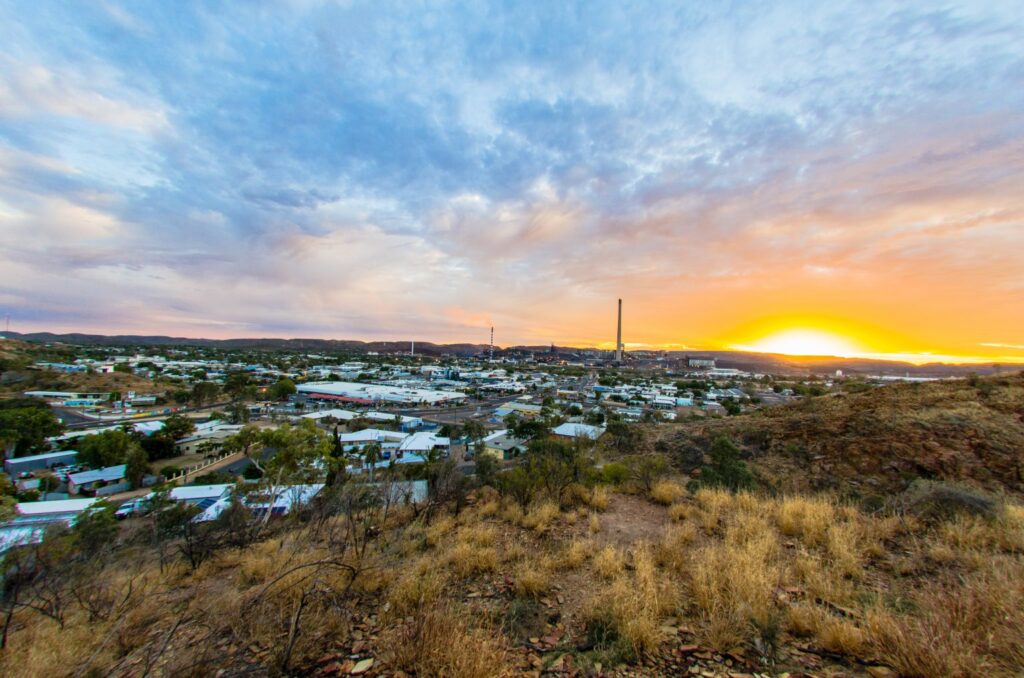
Mount Isa in Queensland’s Gulf Country region is preparing for a critical decade with the development of its Future Ready Economy Roadmap.

Mount Isa is preparing for a critical decade with the development of its Future Ready Economy Roadmap. Stakeholders across government, industry, and the community have already contributed to shaping this crucial work, highlighting its significance to the region’s future. The Roadmap, set for release in February 2025, will outline simple and practical steps to diversify and decarbonise the local economy, build resilience, and improve social wellbeing. 

The Roadmap is an initiative between the Mount Isa City Council, who commissioned and funded the project, and The Next Economy with support from Climate-KIC. 

Mount Isa Mayor Peta MacRae said: “This initiative unites the voices of the community, industry, and government to create a strategy that addresses current challenges as well as harnesses new opportunities. As Mount Isa looks ahead, the Roadmap will serve as a vital guide, ensuring the region remains a vibrant, resilient place to live and work for years to come.” 

A region facing increasing challenges and emerging opportunities 

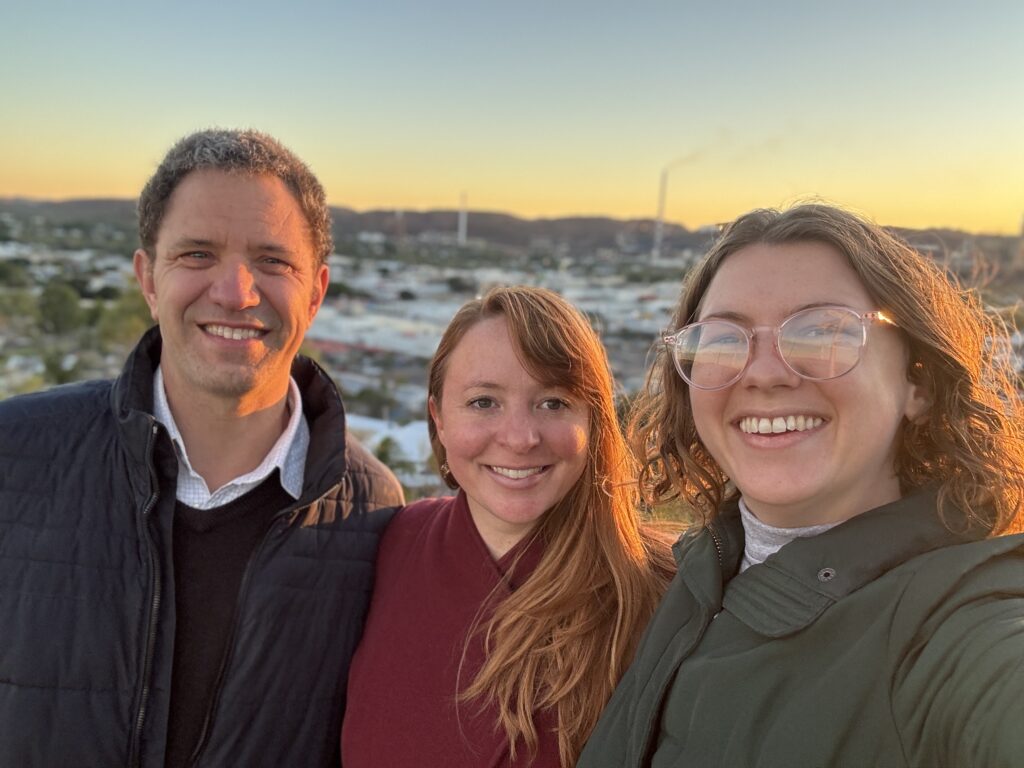
Climate-KIC’s Jason Nielsen with The Next Economy’s Reanna Willis and Kate Donnelly enjoying a Mount Isa sunset in-between workshops earlier this year.

Reanna Willis, senior project officer at The Next Economy, said: “Mount Isa is facing growing challenges, from mass job losses to regional connectivity to access to childcare and health services. It’s a critical time for the region to be exploring how to strengthen and diversify the region’s economy in ways that work for the community into the future. 

“The people of Mount Isa get it. They know that, if this change is managed well, there will be more opportunities to improve the liveability, attractiveness and viability here. The region is well-positioned to capitalise on emerging opportunities including in critical minerals and renewables as well as strengthen existing industries like tourism. Realising this vision will require significant coordination, collaboration and strong investment from industry, government and the community.” 

Council’s efforts towards economic diversification 

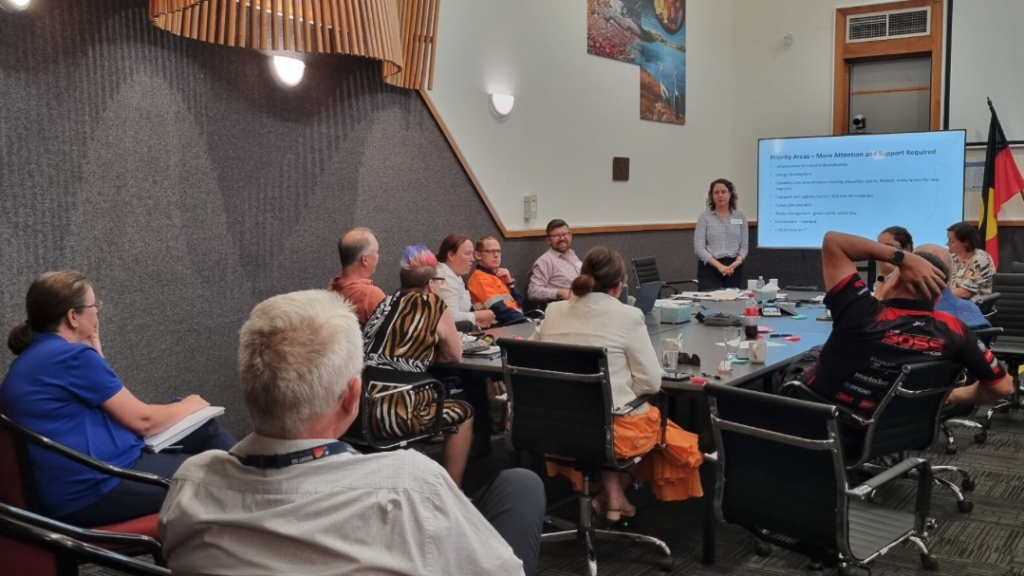
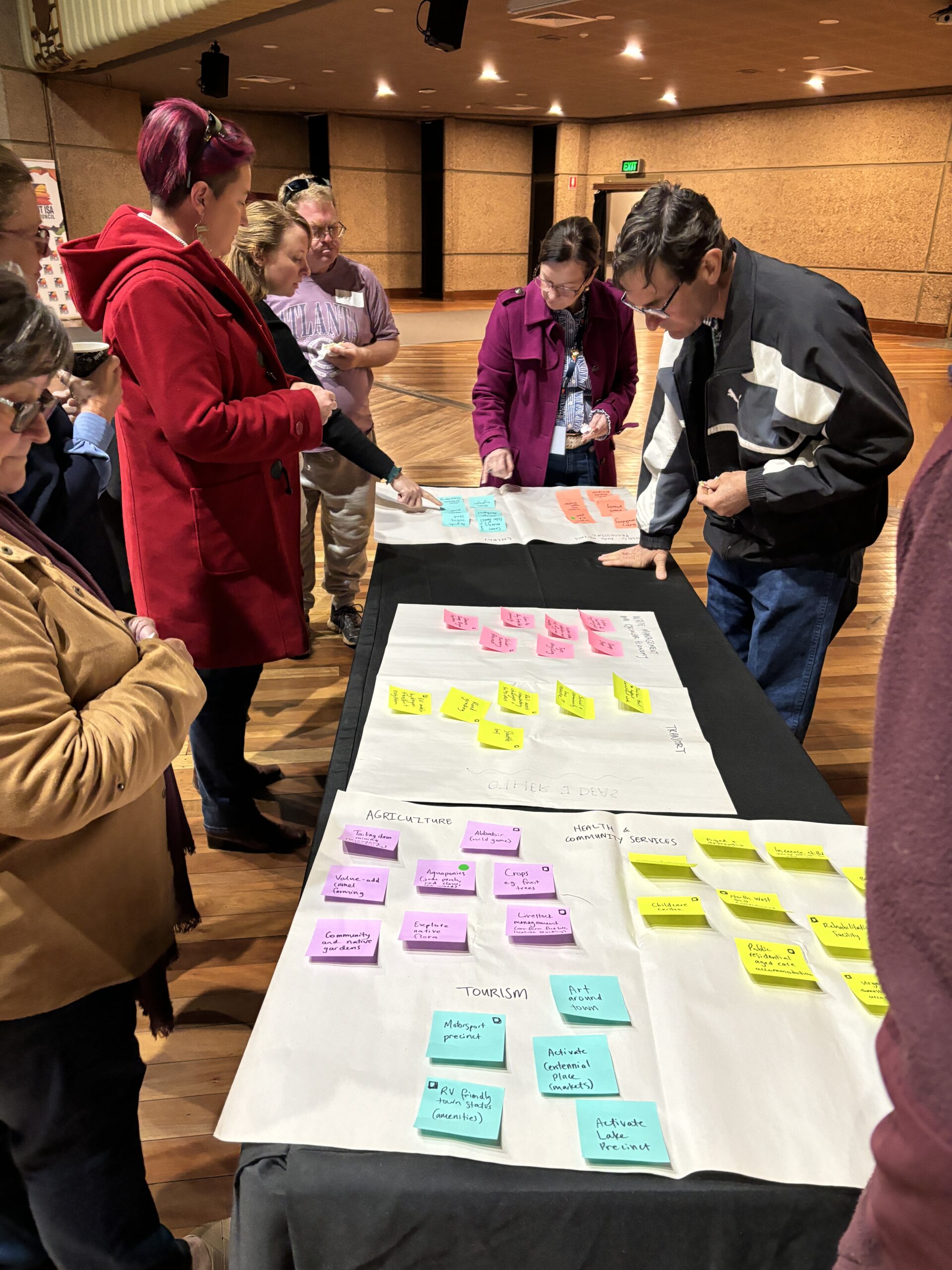
Mount Isa City Council discuss priority areas where support is needed to build a stronger, more resilient future at a The Next Economy workshop in October 2024.

Mount Isa City Council is already taking proactive measures to drive economic diversification. Through detailed economic analysis, the Council has identified 60 stimulus projects designed to retain skilled workers and strengthen the local economy.  

In October, in an Australian first, Council signed a memorandum of understanding with French-Canadian aeronautic company FLYING WHALES to establish a base for large capacity airships to transport heavy or bulky loads such as wind turbine parts. A technical feasibility study and business case is underway. (Read more in this ABC article)

Another notable initiative is the development of a Materials Recovery Facility (MRF), supported by $6.06 million from the Federal Government’s Building Better Regions Fund. Expected to be operational by 2025, the MRF will establish Mount Isa as a recycling hub for the North West. 

Engaging with the community 

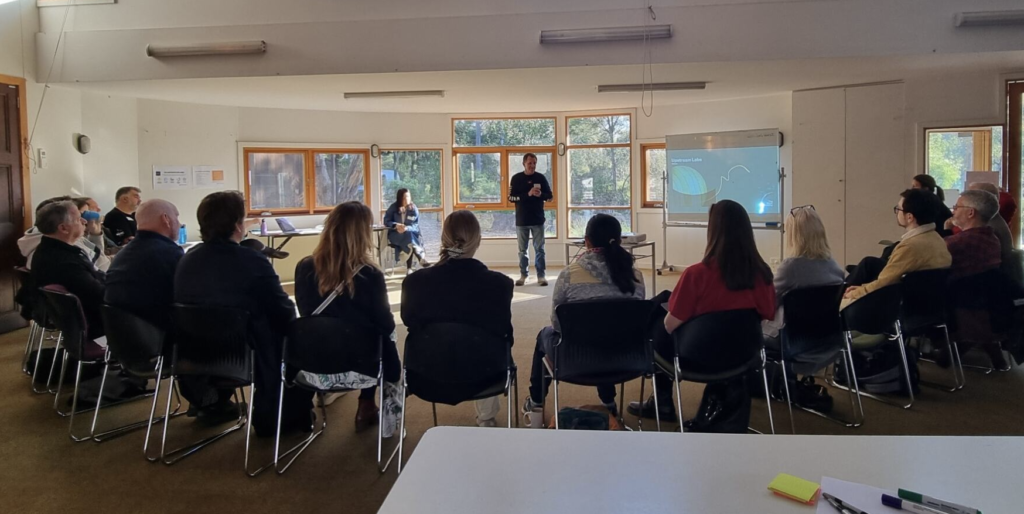
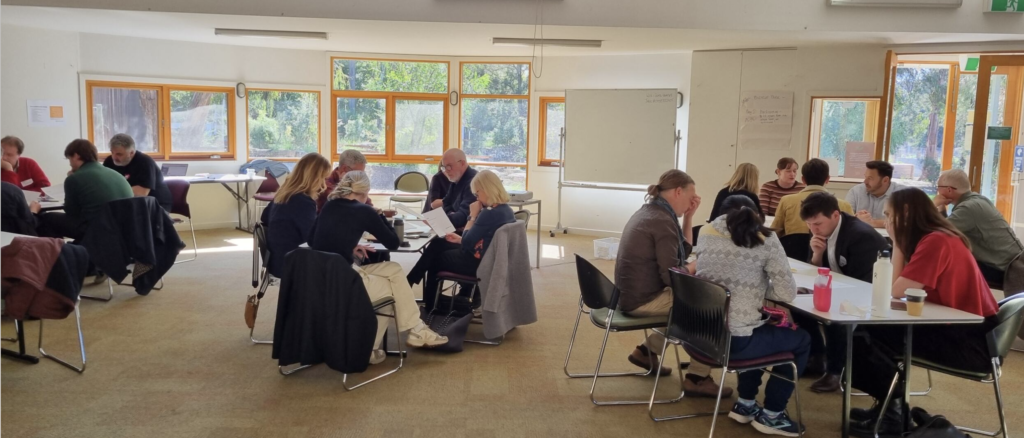
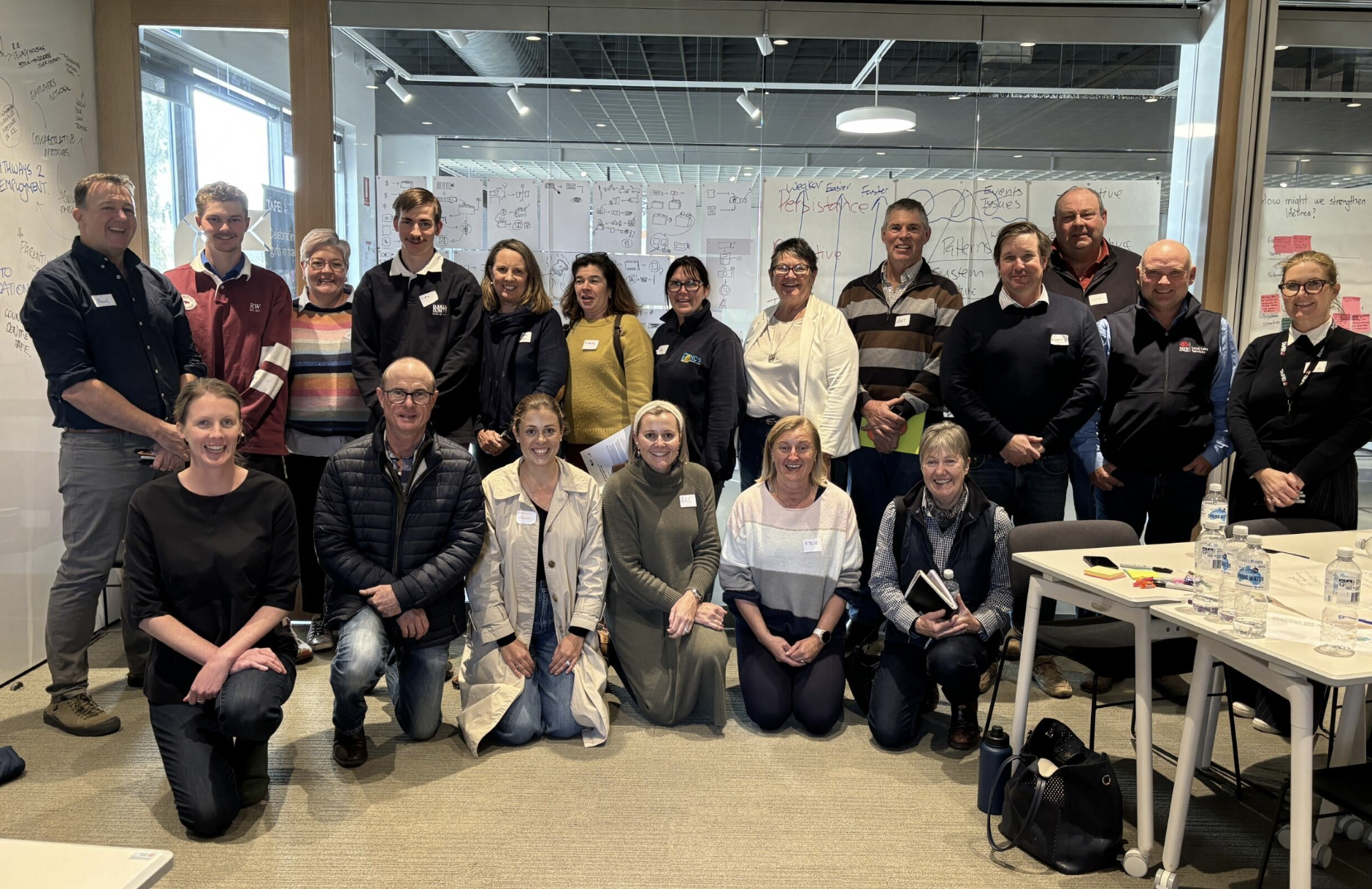
A series of workshops with stakeholders across government, industry and community in 2024 will help shape the Roadmap.

In September, The Next Economy held a series of meetings to gather feedback from First Nations people and community service organisations, ensuring the Roadmap reflects the needs and aspirations of the entire community. The Next Economy hosted a further workshop in October with Council to develop pathways to attracting the right attention and support behind local opportunities and priorities. 

Michelle Paulsen, Remote Operations Manager at Centacare North Queensland, was among those who participated in a series of community workshops earlier this year. She highlighted the importance of staying informed about the local economy’s changes and their impact on the community: 
 
“From emergency relief to supporting families and children, the demand for Centacare’s services is being affected by changes in the local economy and resources industry. Staying informed, sharing what we are witnessing on the ground, and engaging in new ideas helps us better support Mount Isa families and individuals in need.  
 
“The workshops were a valuable opportunity to contribute to Mount Isa’s growth and future. Expanding my understanding of circular economy opportunities has given me greater insight into new areas of economic growth. I encourage anyone who cares about Mount Isa’s future and wants to support our local community to get involved.” 

Get in touch to find out more about the initiative

Rethinking economic responses: addressing the roots of challenges

MORE than 20 leaders driving change in communities, the economy, and government across Australia have come together to discuss ways to put people and the planet front and centre when it comes to the Australian economy.

The two-day retreat in Melbourne in August, part of The Next Economy’s new Heading Upstream Lab and supported by Lord Mayor’s Charitable Foundation, explored how change happens in Australia and the barriers and opportunities for addressing the economic roots of our challenges. 

Dr Katherine Trebeck, Economic Change Lead at The Next Economy, said:

“Heading Upstream saw some of the best thought leaders in Australia thinking about the economy differently and how it can be shaped to be socially just and sustainable. This paradigm shift involves redefining what we expect the economy to deliver, focusing on what societies need more of, where, and how.

“The retreat revealed a shared commitment to tackling the systemic roots of Australia’s challenges, shifting the focus from reactive responses to proactive, upstream change. It stressed a need to change how we talk about the economy, and recognised the importance of fostering broad, engaged conversation, to ultimately change mindsets.

“Economic decisions often fail to address the root causes or consider the connection between issues, which leads to ineffective solutions or policies that merely patch-up damage once it has been done. This is despite the evidence linking our economic structure to impacts on our health, poverty and inequality as well as environmental damage.

“Action on the economic roots of issues, and considering the interconnections between them, can lead to effective solutions in the short and long-term. This is nothing new, with various schools of thought having highlighted the flaws in treating the economy as an isolated goal for decades. And First Nations communities long demonstrating an approach that acknowledges the interdependence of people, planet and the economy.”

Insights and recommendations from the retreat will be published later this year. To stay up to date, subscribe to The Next Economy’s newsletter.  

Read more: 

What’s a wellbeing economy? Q+A with our Economic Change Lead Dr Katherine Trebeck, May 2024

On the wellbeing economy, is Australia at risk of dropping the ball?Opinion piece by Dr Katherine Trebeck in Croakey Health Media, 14 May 2024

The Wellbeing Economy in Brief, Dr Katherine Trebeck and Warwick Smith, Centre for Policy Development, February 2024

Community unites: More than 85 people collaborate on Resilient Economy Roadmap

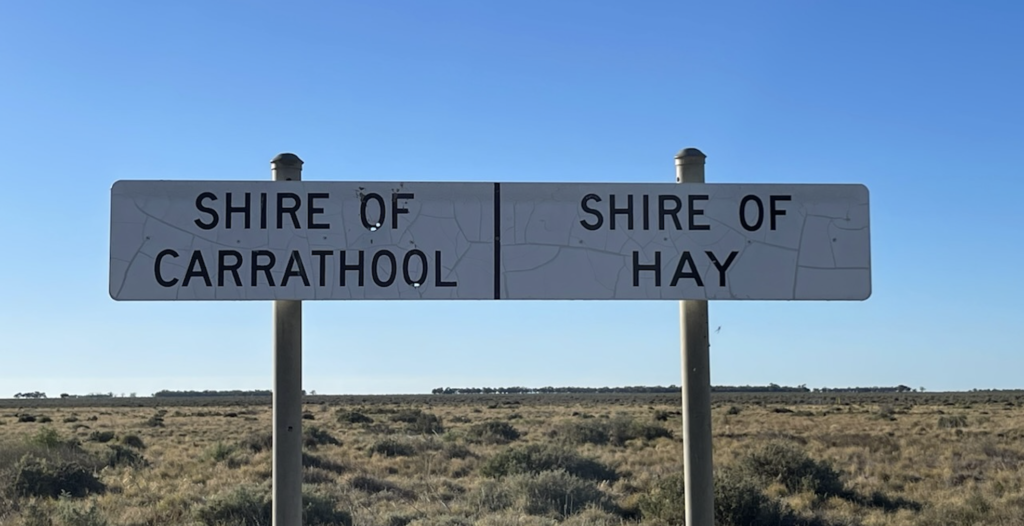
MORE than 85 passionate community members have come together to explore ways to future-proof communities as part of Hay and Carrathool Shire Council’s Resilient Economy Roadmap Project.  

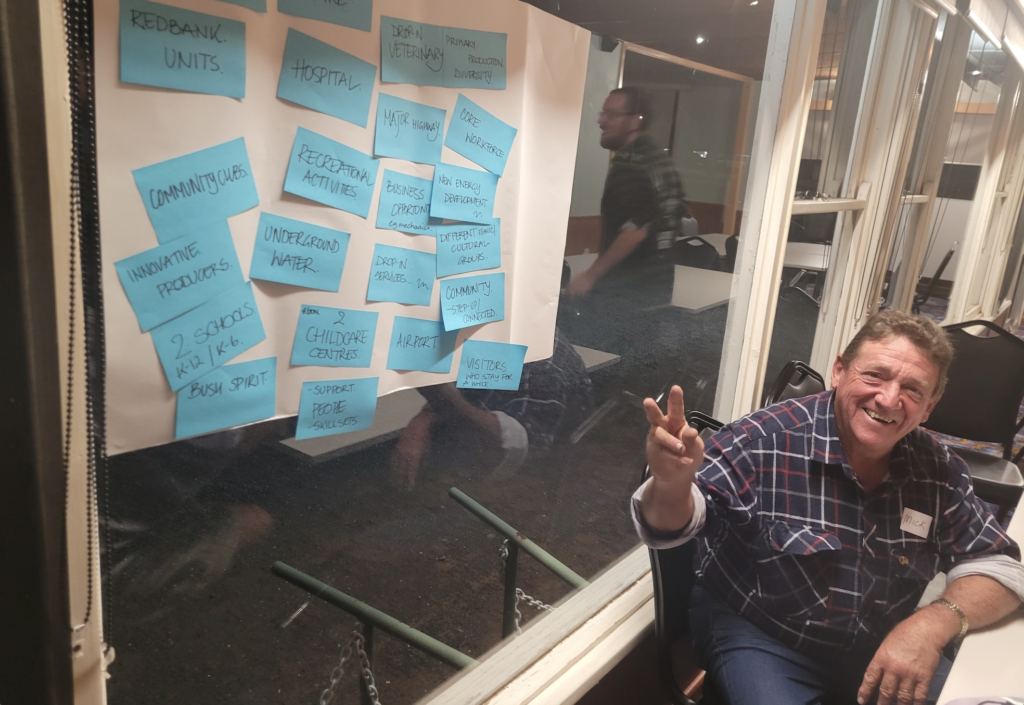
The workshops – held in Hay, Rankins Springs, Hillston, Carrathool, Goolgowi and Merriwagga in late June – built on the picture of the region in NSW’s Riverina painted through earlier discussions, workshops and a community survey under the Roadmap project.  

Alison McLean, Executive Manager – Economic Development and Tourism at Hay Shire Council said: “From farmers to business owners, grandparents to students, it was great to see such a diverse, passionate range of people show up with a wealth of knowledge and skills and ready to connect with one another and help bring about positive change.  

“Together, they worked to identify common challenges, such as strengthening pathways into local employment, as well as opportunities that have the greatest potential to strengthen resilience across the region like diversifying our regional economy and continuing to grow the next generation of community leaders.” 

Participants also identified strategies and actions councils, businesses, industries and communities can take over the next decade to leverage new opportunities, address current and emerging challenges and prepare for any future disruptions or change. 

Of the experience, one participant noted: “The genuine buy in and contribution from the community members was invaluable”. Another said: “Our region has an optimistic ability to accept change and drive opportunities”. 

Insights from the workshops will directly inform the development of the Resilient Economy Roadmap to be delivered in late 2024.  Feedback on a draft Roadmap will be sought from the community in the coming months.   

McLean added: “I can’t thank participants enough for their time and invaluable knowledge and insights. The voices of the community are vital in the success of this project – and the future of our region.” 

Read more:

Primary producers in Hay, Carrathool help shape NSW region’s economic future 

The Resilient Economy Roadmap initiative is a collaboration between Hay and Carrathool Shire councils, The Next Economy, The Australian Resilience Centre, and communities across the region.  Running from March to October 2024, it is funded jointly by the Australian Government and NSW’s Future Drought Fund and is part of the Regional Drought Resilience Planning Program. 

To stay up to date on the project, follow the Resilient Economy Roadmap Facebook page.  For further project information, please contact j.bell@nexteconomy.com.au 

Decarbonising regional economies: Leaders join forces to break down investment barriers

Senior leaders in investment, state and federal government, industry, and local community groups came together in Gladstone, Central Queensland to identify ways to solve regional just transition funding barriers and facilitate timely resourcing to where it is needed most. 

As the global race to decarbonise economies accelerates, Deloitte Access Economics estimates that over $400 billion of private and public investment is required to transform Australia’s emission-intensive economy into a productive, competitive net-zero economy by 2050.

The Gladstone Transition Investor Experience, which ran 6 to 9 May 2024, shone a spotlight on the transition in the Gladstone region. Like other key regions across Australia, Gladstone’s economic ties to emissions-intensive industries present both significant climate-related transition risks and major opportunities to develop and diversify the local economy for long-term resilience and prosperity.

Read more: 

  • In 2022, Gladstone Regional Council worked with The Next Economy to develop the Gladstone Region Economic Transition Roadmap: 10-Year Roadmap 2022-2032.
  • The Federal Government’s recently made a critical minerals project funding announcement, including $400 million in new loans for Alpha HPA’s high-purity alumina processing facility in Gladstone.
  • summary of The Next Economy’s address to a special senate committee hearing on bills relating to the Net Zero Economy Authority.

Participants connected around the key issues and opportunities that exist in the transformation of regional economies like Gladstone, through a range of site visits, roundtable discussions, guest presentations, workshops, and networking activities.

The Gladstone experience was a great way to get under the hood of a transitioning region, hear from industry and decision-makers regarding the levers that are being pulled to make change. We had access to a curated group of individuals and organisations, each pulling for change.

Participant

The event is hosted by The Next Economy (TNE) in partnership with the Investor Group on Climate Change (IGCC) and the Foundation for Rural and Regional Renewal (FRRR). Following further engagement, TNE will publish a summary of key findings and recommendations identified at the event in mid-2024.

Here’s what some of the organisers had to say ahead of the event:

Regional communities and industries are increasingly facing complex challenges and opportunities as they navigate the transition to a net zero economy. From developing new industries and technologies to supporting governance and welfare models, government and private investment is critical to setting regions up for the future. 

The Gladstone Transition Investor Experience connects senior leaders from across government, investment, industry and community to have the meaningful conversations needed to solve funding barriers and facilitating the timely flow of resources so regions can get on with the job.

Dr Amanda Cahill, CEO TNE

Each year, FRRR receives thousands of grant applications, which demonstrates that remote, rural and regional communities want to be in the driver’s seat when it comes to their region’s future. That applies to energy and climate transition too.

The Gladstone Investor Experience is bringing together key organisations who can help address the challenges that emerge when navigating rural energy transition. We’re delighted to be part of this event and look forward to exploring how different types of funding and investment can help just transitions to occur and ensure that regional communities have a better seat at the table and are engaged in designing the opportunities.

Natalie Egleton, CEO of FRR

Members of the Investor Group on Climate Change have a legal obligation to deliver good retirement savings for around 15 million Australians. A fast and fair transition will deliver the best returns to allow people to retire with dignity, but that won’t happen by accident.

Without planning and co-ordination Australia’s transition will become disorderly and increase the costs to everyone.  We’re supporting the Gladstone Transition Investor Experience because credible regional transition plans and essential for delivering the capital needed to support this transition to net zero emissions.

Erwin Jackson, Managing Director of Policy at Investor Group on Climate Change

Primary producers in Hay, Carrathool help shape NSW region’s economic future 

More than 80 primary producers and community members joined both Hay and Carrathool shire councils and The Next Economy (TNE) at a series of workshops to explore barriers and opportunities for strengthening community resilience and driving good economic development in the region.  

Situated within Australia’s renowned ‘food bowl’ in the Riverina region of southwest New South Wales, the Hay and Carrathool Shire communities boast a rich legacy in agriculture and primary production. 

The five workshops, held between 8 and 12 April 2024, brought together representatives from local businesses, community organisations, community services and primary production to identify what makes the region work now as well as opportunities and potential directions for good regional development that drives a strong, vibrant and climate resilient future. 

Feedback from workshop participants included:

It was great to see so many community members turn up and be involved.

and

It was good to feel like community members are important in decision making. 

The workshops marked the official start of extensive community engagement activities as part of Hay and Carrathool Shire Councils’ development of the 10-year Resilient Economy Roadmap initiative.  

The Roadmap will outline practical actions councils, business, industries and communities can take over the next decade to diversify their economies while building resilience in the face of change and disruption. This includes economic, social, cultural and environmental resilience. 

The project comes at a pivotal moment for the region as communities navigate a range of growing challenges and disruptions, including rising living costs, climate impacts from recent flood events to prolonged droughts, and the impact of the decarbonisation of global supply chains. 

Jacqui Bell, TNE’s Land Use Director, said:  

“These communities have a golden opportunity to stay strong now and into the future. To do that, they’re coming together to identify how to overcome barriers, diversify economies and build resilience. 

“The level of engagement with the Roadmap project demonstrates the region has a network of strategic local leaders and champions who are passionate about their communities, economy and the future of the region.   

“Community members, business owners and representatives from the primary production industry we’ve engaged with so far are constantly adapting and innovating in response to changes in the local climate and global economy.  It was great to see such overwhelming interest in working collaboratively to shape the region’s future.”  

The Resilient Economy Roadmap initiative is a collaboration between Hay and Carrathool Shire councils, The Next Economy, The Australian Resilience Centre, and communities across the region.  Running from March to October 2024, it is funded jointly by the Australian Government and NSW’s Future Drought Fund and is part of the Regional Drought Resilience Planning Program. 

To stay up to date on the project, follow the Resilient Economy Roadmap Facebook page.  For further project information, please contact j.bell@nexteconomy.com.au 

Welcome funding for CQ, SA critical minerals projects

Media Statement, 17 April 2024

In response to the Federal Government’s critical minerals project funding announcement, including a welcome $400 million in new loans for Alpha HPA’s high-purity alumina processing facility in Gladstone, The Next Economy CEO Amanda Cahill said:

“This is a good example of the role we need government to play if we are to unlock private investment and support regional communities to manage this massive transformation. It is this kind of support that helps Gladstone to attract new investment under the region’s 10-year Economic Roadmap, showing just what’s possible if communities, governments and industries come together to meaningfully address change.

“Australia is blessed with abundant resources, but this can be a curse if development is not done well with boom-and-bust cycles contributing to a range of challenges such as exacerbating housing and workforce shortages. We need a new, holistic approach to regional development so that profits are shared equitably, the rights of First Nations people are respected, and environmental impacts are avoided. For example, in some places companies are looking at how they can reduce the need for new extractive projects by adopting circular economy approaches, such as the mining of existing tailings.”

Read more about Gladstone’s 10-year Economic Roadmap, developed in partnership with The Next Economy.

For interviews, contact 0415 833 948.

A welcome Future Made in Australia

Media Statement
11 April, 2024

In response to Prime Minister Anthony Albanese’s Future Made in Australia Act announcement and address at the Queensland Media Club today, Dr Amanda Cahill, CEO of The Next Economy, said: 

“This is an important announcement at a pivotal time for Australia as the world races to decarbonise. Everyone is competing to build the industries that will be the basis of national prosperity, which means everyone is competing for the same components needed to build a renewable future.

“For the first time in decades, Australia can expand its manufacturing base to meet this domestic and international demand. Small, medium and large-scale companies across Queensland in regions like Central Queensland, Townsville and Mt Isa are already manufacturing RE components like towers for wind turbines, inputs for solar panels and electronics, processing important minerals like copper, bauxite and zinc, making green chemicals and hydrogen, and even batteries and electric vehicles.

“We hear from industry everywhere that government support like this is crucial to unlock private investment. Public finance has always played an important role in moments of large-scale and rapid transformation, from setting up the mining industry to building electricity and transport infrastructure. This moment of transformation is no different. 

“This level of government ambition offers huge potential for regions like Gladstone in Central Queensland, where local government is already attracting new investment and government support under their 10-year Economic Transition Roadmap. But only if it’s approached holistically and that means ensuring better support for essential services and housing so that communities genuinely benefit over the long term.”

For media requests, contact 0415 833 948

What next? Community perspectives on Latrobe Valley’s energy transition

Between February and June 2023, The Next Economy explored a range of perspectives among Latrobe Valley community leaders with regards to the energy transition.

The project involved hosting a series of interviews and workshops that engaged 31 community members, including First Nations people and young people, people from the multicultural community, grassroots environment groups, small businesses and the social service sector.

The report makes visible the wealth of experiences, insights and knowledge that exists in communities across the region and demonstrates how the local community can be a valuable partner in working towards good transition outcomes for the Latrobe Valley region.

The main project finding is that community members see a range of potential benefits from the energy transition, beyond job creation and Australia’s national decarbonisation agenda. If managed well, the transition could provide opportunities to transform the systems that underpin society, the regional economy, and people’s relationship with the local environment.

The key themes presented in the report are:

  • Socio-economic disadvantage, equity issues and liveability
  • Community Participation
  • Institutional capacity and good governance
  • Environmental protection, remediation and rehabilitation
  • First Nations leadership
  • New energy development
  • Regional economic development
  • Workforce development

To find out more, download a copy of the What Next? Community Perspectives on the Energy Transition in the Latrobe Valley.

Gladstone’s 10-year Economic Transition Roadmap

Gladstone Regional Council launched its 10-year economic transition roadmap to support and guide Queensland’s industrial capital to becoming a renewable energy superpower in 2022.

The roadmap sees the region in prime position to respond to once-in-a-generation changes in the energy sector.

The Next Economy collaborated with Gladstone Regional Council to develop the detailed roadmap, which is the result of two years of research and extensive engagement involving 220 community, government and industry stakeholders. This included industry representatives, First Nations people, energy workers, environment groups and education and training institutions.

The Gladstone Region Economic Transition Roadmap guides Council on what is required to adapt to a rapidly changing energy sector and support a positive economic transition for its community over the next 10 years. Key themes of the roadmap include:

  • Energy security and affordability
  • Establishing a viable hydrogen industry
  • Diversifying the economy
  • Supporting and developing the local workforce
  • Capturing the community benefits
  • Protecting land and water resources.

Energising the Future Economy of the Gladstone Region

Have your say in online survey about ‘Energising the Future Economy of the Gladstone Region’.

Locals across the Gladstone Region are invited to participate in an online survey to share their thoughts on the future changes to the energy sector and how the region can take advantage of emerging changes to generate new economic opportunities.

The survey content has been generated following a series of in-depth community and industry forums involving people from across the region.

Acting Gladstone Region Mayor Kahn Goodluck says Council would like to know if other residents share these views.

“Council recognises that the unfolding changes in the energy sector pose both challenges and opportunities for the Gladstone Region and people working in industry,” Councillor Goodluck said.

“This online survey is part of our joint initiative with The Next Economy – Energising the Gladstone Region Future Economy.

“Feedback from community, government, industry and other stakeholder groups will guide us on what is required to adapt to a changing energy sector and to support our region over the next 10 years.”

Full media release below:

Transforming Queensland: The Case for a Transition Authority

The Queensland economy is being transformed as the world embraces the challenge to phase out fossil fuels and rapidly expand renewable energy generation in pursuit of net zero emissions goals. As one of the world’s biggest exporters of coal and gas, and with an ongoing reliance on coal fired electricity generation, these changes pose huge risks to the Queensland economy. They also present us with massive economic opportunities, given the state’s abundance of solar, wind and mineral resources.

The experiences of other regions and countries demonstrates that change can be managed well, but it requires a high degree of leadership, resourcing and coordination from government. Transition authorities have proven a successful vehicle to support governments in this task by bringing together stakeholders from across government, industry and the community to plan and coordinate efforts to proactively manage the phase out of fossil fuels and expansion of renewable energy.

Have your say: Energising the Future Economy of the Gladstone Region

Gladstone locals are invited to share their thoughts on the future energy system and how the region can take advantage of emerging changes to generate new economic opportunities at upcoming community forums hosted by The Next Economy, on 19 and 20 March, 2022.

Listen to our CEO, Dr Amanda Cahill on local radio talk about the importance of having your say.

These forums are part of a new initiative of Gladstone Regional Council – Energising the Gladstone Region’s Future Economy. Feedback from community, government, industry and other stakeholder groups will guide the Council on what is required to adapt to a changing energy sector and to support our region over the next ten years.

“This project is leading the way in Central Queensland, using an inclusive and interactive planning process to tackle the challenges and opportunities of the energy transition.  We’ll be designing a roadmap for the Gladstone Region over the next ten years to help navigate changes in the energy sector that directly impact the local economy,” said Dr Amanda Cahill, Chief Executive Officer of The Next Economy.

“We are already seeing a lot of change across Central Queensland. The Gladstone Region is particularly well positioned to take advantage of new economic opportunities as we shift to new energy solutions, but we also need to plan ahead to manage the potential impacts on our regional economy and build community resilience,” added Dr. Cahill.

Attendees at the community forums at Agnes Water on Saturday 19 March and Gladstone on Sunday 20 March will explore the impact that changes to the energy system are having on the region and have their say about what they want for the future.

Gladstone Region Deputy Mayor Kahn Goodluck said The Next Economy will present the most recent information on energy trends, as well as how renewable energy and other emerging technologies have the potential to boost the local economy.

“The forums will cover topics such as supporting and developing the local workforce, energy affordability, diversifying the economy, and protecting land and water resources,” Clr Goodluck said.

“For those who prefer an online option, we encourage you to join the online forum on Wednesday 30 March.”

The Gladstone Regional Council initiative is delivered in partnership with The Next Economy and is made possible with funding from the Australian Government’s Building Better Regions Fund.

We welcome everyone to participate in the forums, whether you’re an interested resident, First Nations representative, worker, farmer or local business owner. The forums are free to attend, but registration is essential to ensure that we can organise the forums in line with COVID-safe practices.

For more information and to register, please visit Gladstone Regional Council here:

Event details

Date: Saturday 19 March 2022
Location: Agnes Water
Time: 9am to 2.30pm
Venue: Agnes Water Community Centre
71 Springs Rd, Agnes Water

Date: Sunday 20 March 2022
Location: Gladstone
Time: 9am to 2.30pm
Venue: Philip Street Communities and Families Precinct,
Maxine Brushe Rooms, Gladstone

Date: Wednesday 30 March 2022
Format: Online community forum
Time: 6.00pm to 9.00pm

Australia reMADE: The reMAKERS

Episode 5

Hosted by Lilian Spencer, Communications Lead for Australia reMADE, ewMAKERS is a new conversation that asks, ‘what is the best version of us, and how do we actually build it?’ How can we be more collaborative, transformative and ambitious? How can we help change systems, not just treat symptoms?

What Queensland Wants Report

Regional Perspectives on Building a Stronger Economy

By Dr Amanda Cahill

As the COVID pandemic hit, The Next Economy compiled the many economic stimulus ideas we’d collected from across Queensland into a report called “What Queensland Wants”. The report was well received by the State government, with a number of the recommendations being adopted as election promises.

The report also generated extensive media and public interest when it was released, garnering more than 62 media mentions, articles syndicated across 19 regional News Limited publications, 5 radio interviews and a regional television interview. The media attention in turn generated further interest from state and federal MPs.