Lord Mayor’s Charitable Foundation and economic development agency The Next Economy have announced a significant multi-year partnership to advance economic justice and wellbeing across Australia.
At the heart of this initiative is the belief that everyone deserves the opportunity to live a secure and dignified life. A wellbeing economy goes beyond economic growth alone, it focuses on equity, community resilience, and environmental stewardship. This new partnership hopes to contribute to and encourage a fairer sharing of prosperity by fostering a more balanced distribution of power, wealth, and opportunity.
Australia currently experiences high levels of income and wealth inequality. The top 20 per cent of households receive almost half (48 per cent) of the nation’s income, while the bottom 20 per cent receive only four per cent.1 These disparities have resulted in widespread insecurity, financial stress, delayed medical care, and adverse effects on mental health.
A considerable 63 per cent of Australians feel that the economy is structured to benefit the wealthy and powerful.2 Furthermore, the same economic model that has generated those disparities has led to ecological degradation, with evidence showing the country is close to exceeding at least five out of nine planetary boundaries.3
Peter Walton, Chief Executive Officer at Lord Mayor’s Charitable Foundation, said “This partnership represents a pivotal evolution in our philanthropic work. Through our Strategy 2030, we are committed to long-term, systemic change in Greater Melbourne by aligning partnerships to purposefully influence and shift current systems that perpetuate inequality.
“By working with The Next Economy, we are strengthening our efforts to create a just and equitable Greater Melbourne, focusing on the intersection of climate justice, economic justice, and housing justice.
“We are now working beyond traditional grantmaking to address the root causes of social and environmental challenges through systemic and future-focused strategies,” added Peter.
Lizzie Webb, Chief Executive Officer of The Next Economy, adds, “We are proud to collaborate with Lord Mayor’s Charitable Foundation on a multi-year program of work that aims to catalyse economic change in Australia. Over the next three years, we’ll work together to host national conversations and initiatives that build momentum for systems change — placing communities at the centre of economic transformation.”
4 August 2025: As Australia undergoes the shift to renewables, rural and regional communities are demonstrating new ways of securing a good deal from large-scale solar, wind and battery projects.
This is the conclusion of a new report – Striking a New Deal for Renewables in Regions – authored by FRRR and Projects JSA, as part of the Striking a New Deal collaboration. It comes ahead of a first-of-its-kind national gathering of local government and regional development leaders at a Summit hosted by RE-Alliance in Newcastle this week.
The report draws on insights from leaders in regions with significant renewable energy investments around Australia and outlines the common risks and opportunities facing their communities.
While the majority of Australians living in regional communities generally support the nation’s shift to renewable energy (CSIRO, FCA, Porter Novelli), the report clearly shows that the first phase of this change has been challenging.
Leaders have been grappling with significant uncertainty about what will actually be built and when; the local risks and opportunities of these developments for their economy, environment and community; and limited local agency to influence the development process.
With the need to replace aging coal-fired power stations, state and federal governments have so far been ‘building the plane while flying it’. However, with clearer policies and more projects reaching the approval stage, solutions to common issues have emerged, creating more opportunities for regions to achieve meaningful and lasting benefits from investments.
Sarah Matthee, Climate Solutions Portfolio Lead at FRRR, noted, “Communities simply want a good deal in return for hosting this new energy infrastructure. They want certainty, more clarity on the opportunities and risks of these projects, more resourcing and more agency in the decisions being made that will impact their regions for decades to come.”
Lead author, Jack Archer, added, “Development at this scale will never be universally popular, but if locals can see they have been heard and clearly understand how their community will benefit, there can be enduring support for the energy shift in regions across Australia.”
The report recommends government and industry collaborate to produce risk and opportunity accounts, to act as living ledgers, to make the terms of the local deal clearer. Currently information is fragmented and buried in planning documents, and with misinformation on social media and in local networks, it’s difficult for locals to understand what’s going to happen, if they will be better off and what issues need further work as development progresses.
The report also recommends combining the transparency of these new accounts with upgrades to community services and housing, ongoing input from local leaders in the development process and genuine security that benefits will be delivered.
“This set of actions is the key to unlocking the local social licence governments and industry are seeking. It’s a practical approach that can be implemented quickly and it will change the game,” Jack Archer said.
Not-for-profit organisations the Foundation for Rural & Regional Renewal, RE Alliance and The Next Economy, and consultancy Projects JSA are working collaboratively on the Striking a New Deal project to support regional communities at the frontline of the energy transition. Striking a New Deal has worked with community leaders across Australia to share insights and supports initiatives that seek to find a better way to develop renewables in regions.
About FRRR FRRR (Foundation for Rural & Regional Renewal) is the only national foundation specifically focussed on ensuring the social and economic strength of Australia’s remote, rural and regional communities. FRRR’s unique model of support is more than money – it connects common purposes and investment from government, business and philanthropy with the genuine needs of rural people and places.
About RE-Alliance The Australian Renewable Energy Alliance, or RE-Alliance, is an independent not-for-profit working to secure a responsible and rapid shift to renewable energy that actively contributes to the strength and resilience of rural and regional Australia.
About The Next Economy The Next Economy, TNE is a not-for-profit economic development agency, working across all economic sectors to support communities manage the transition to a climate-safe, socially just and regenerative economy.
About Projects JSA Projects JSA – Regional Advisory, led by Jack Archer, provides specialised advice on regional development issues in Australia. Jack is one of Australia’s foremost experts on regional development, experienced in policy, strategy, stakeholder consultation and facilitation, leveraging extensive networks and detailed knowledge of each region in Australia.
The Next Economy and Uralla Shire Council in NSW are teaming up to help the region navigate change and ensure renewable energy development delivers lasting benefits for the community.
Uralla Shire Council is taking steps to prepare for future change in the region and ensure that new development – particularly renewable energy – works for the community in the long term.
Through a project called Striking a New Deal, Council is working to understand what good development looks like for Uralla and how to make sure local priorities are front and centre when planning for how to manage change. This will help Council advocate for the kinds of benefits that matter most to our community – such as essential services, housing, infrastructure, or local job opportunities.
To support this work, Council is partnering with The Next Economy, a not-for-profit agency that supports regional communities across Australia to manage change in ways that are inclusive and locally appropriate. The Next Economy will support Council to carry out community engagement and feed community input into local planning.
In May, Council and The Next Economy spoke with a number of local stakeholders to hear a variety of perspectives on what people would like Uralla to look like in the future. In June, we’ll hold community workshops so that all residents have the opportunity to share their views.
“This is about planning ahead so that development happens in a way that reflects what our community wants. Council can’t control every project, but we can do the work now to represent our region’s interests and make sure we’re ready to shape a positive future together.” – Toni Averay, General Manager, Uralla Shire Council:
“In our work across Australia, we’ve seen that communities manage change best when they’re actively involved in shaping it. It is clear that Uralla residents have a strong sense of identity. By hearing from local voices, council can ensure that future development reflects community values, priorities and aspirations.” – Lizzie Webb, CEO, The Next Economy
To register your interest or stay informed about upcoming workshops, contact esims@uralla.nsw.gov.au
Find out more about our partnership with Uralla Shire Council:
A message from Professor John Wiseman, Board Chair at The Next Economy
Dr Amanda Cahill to step down as CEO and remain at The Next Economy in a new Founder role, and as a Board Director
Lizzie Webb, current COO and former Board Chair, to step into the CEO role from May 2025
The Board has every confidence in a smooth leadership transition, and the organisation’s continued commitment to navigate change and build momentum for a rapid, responsible and fair transition
Hear from Amanda, and Lizzie, below
Professor John Wiseman, Chair of the Board at The Next Economy
The Next Economy was established in 2018 in response to growing calls – from community, industry and government leaders – to support regions to navigate the growing disruptions and challenges associated with the need to decarbonise the economy.
Since then, we’ve partnered with communities and decision makers to demonstrate how it is possible to manage change in ways that strengthen social, economic and environmental outcomes.
We’ve worked with regions holding the key to Australia’s transition to net zero emissions, focusing on those with carbon-intensive industries, including the Latrobe Valley (Vic), the Hunter Valley (NSW) and Central Queensland (Qld).
Over the past year, global economic and political systems have grown more complex and unstable. In response, The Next Economy has grown substantially. We have supported a new wave of regions and industries to navigate the transition and stepped up our work to give decision makers across government, industry and the investment community the confidence needed to hold the line on long-term policies and investments at a time of great political uncertainty.
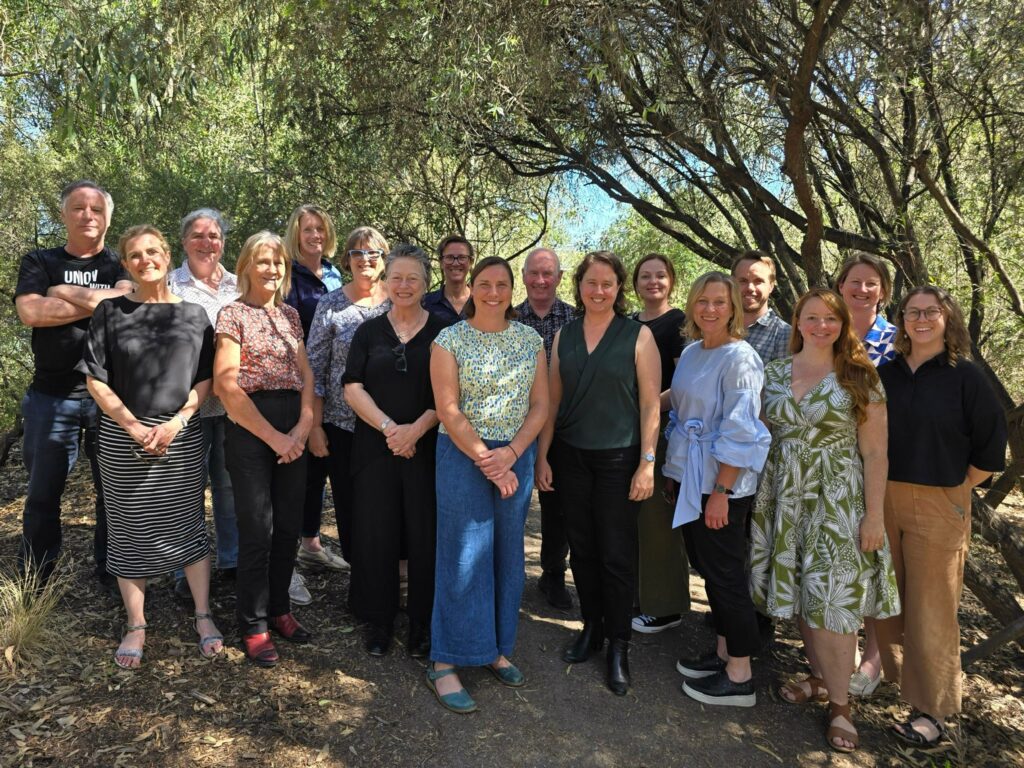
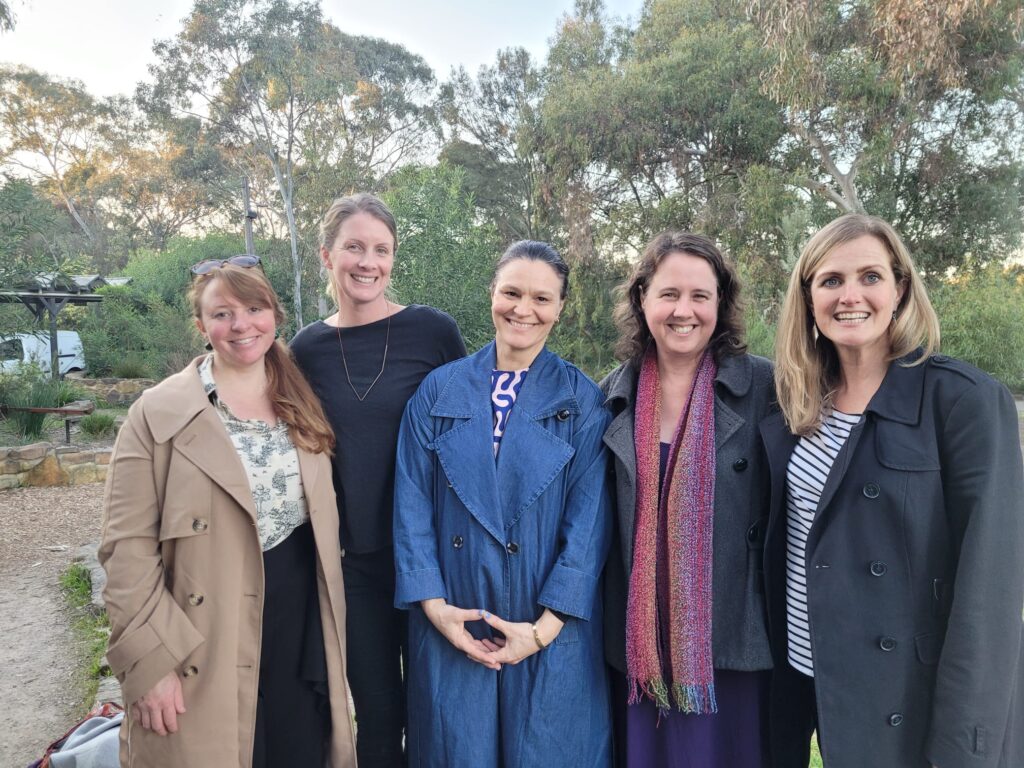
Dr Amanda Cahill and Lizzie Webb with The Next Economy’s board and staff in late-2024
We are now working in regions with the capacity for critical mineral extraction and processing such as in North-West Queensland; communities that produce agricultural commodities while managing renewable energy projects and climate impacts, such as in Hay and the New England Renewable Energy Zone in New South Wales; and with significant levels of First Nations land and sea stewardship, such as in Northern Australia.
None of this would have been possible without the vision and leadership of CEO Dr Amanda Cahill and the dedication of staff, partners and supporters. After seven years leading The Next Economy, Amanda has decided to step out of the CEO role and transition into the new role of Founder.
In this new role, Amanda will continue working within the organisation to provide strategic advice, develop new content, mentor staff, manage key relationships and explore new opportunities for The Next Economy. She will also remain on the organisation’s board as a Director.
The Board would like to take this opportunity to both thank Amanda for her enormous contribution as well as congratulate her on the new role.
For this next chapter, we warmly welcome Lizzie Webb, our current Chief Operations Officer, as The Next Economy’s new CEO. An engineer by background, Lizzie brings 20 years of experience leading start-up organisations and teams in the non-profit and social enterprises sectors, including work with communities across regional and remote Australia.
Lizzie has a deep understanding of The Next Economy, first joining as a board director in 2018, before becoming board chair, and moving into staff roles where she has managed both the organisation’s operations as well as overseen initiatives. Most recently, she led collaboration with Mount Isa City Council on the successful development and launch of the city’s Future Ready Economy Roadmap.
Lizzie will officially assume the role on 5 May 2025 and will be supported by Amanda and the TNE leadership team driving key programs across energy, land use and systems change.
The Board has every confidence in The Next Economy’s new leadership and the organisation’s continued commitment to navigating change and building momentum for a rapid, responsible and fair transition.
In the coming months, you will hear more from both Amanda and Lizzie as we reflect on the organisation’s success to date and direction moving forward.
In the meantime, please join us in thanking Amanda for her extraordinary contributions in establishing The Next Economy and welcoming Lizzie to the helm.
Hear From Dr Amanda Cahill and Lizzie Webb
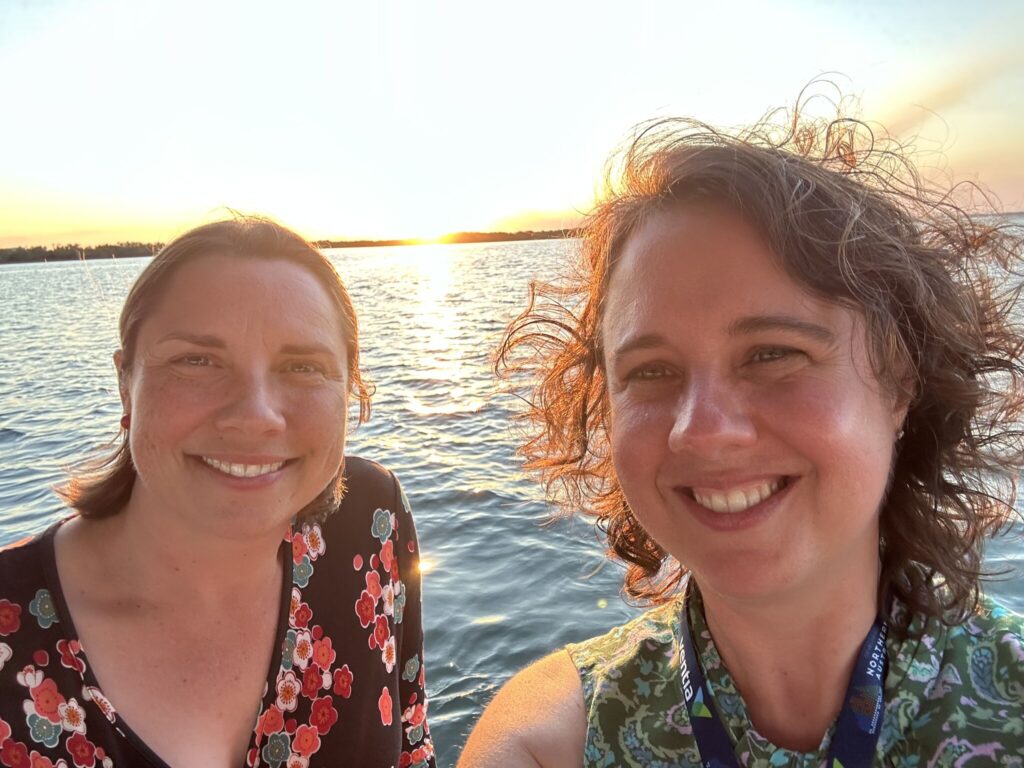
Long-time colleagues and collaborators, Lizzie Webb (L) and Dr Amanda Cahill (R), are working together alongside the board, staff and partners, for a smooth leadership transition at The Next Economy.
Dr Amanda Cahill, outgoing CEO and Founder, said:
“It has been an honour and privilege to work with inspiring people all over Australia to establish and grow The Next Economy into the strong, catalytic organisation it is today. I have learned so much from so many people who have been part of this journey that has spanned communities from Cairns in Far North Queensland, to the Latrobe Valley down South and across to Western Australia and even the Northern Territory.
“At this crucial time, when the impacts of efforts to decarbonise Australia are becoming increasingly felt, The Next Economy’s work is more important than ever. People across all sectors and regions, from government officials to industry executives, union delegates to Traditional Owners, small businesses to those who don’t always benefit from economic activities are all asking how can we achieve what we need to do in terms of emission reductions, but do it in a way that ensures the protection and regeneration of both nature and our communities.
“They are asking: What does good economic development look like? This is, and will continue to be, the guiding question for The Next Economy. And I look forward to the next seven years of figuring this out with communities across Australia and beyond.”
Lizzie Webb, incoming CEO, said:
“Amanda has worked tirelessly over the past seven years to support good decision making and action for a just transition. Her work is greatly respected by regions, government and industry alike, and she consistently works hard to inspire and support the climate and environment movement. We’re delighted Amanda will continue to work with us in her new role as Founder, and continue as a TNE Board Director.
“Supporting regions to navigate complex change to their economies will remain central to our focus. We have a strong team in place and through our 2030 Strategy we will work with a broader range of regions critical to a just transition in Australia, and integrate a strong focus on economic systems change across all aspects of our work.
“In the next six months, we’ll be working in partnership with multiple regions in western Queensland and central New South Wales on plans to strengthen their economies and maximise the benefits of new development across the energy and agricultural sectors. We will also commence work on a significant coral conservation project, supporting opportunities for First Nations participation and economic sovereignty.”
[Press Release from Mount Isa City Council, shared with permission here]
Mount Isa, North West Queensland: Mount Isa City Council has launched the Mount Isa Future Ready Economy Roadmap, a bold new economic vision to transform and diversify the local economy while delivering immediate jobs and long-term benefits for its residents.
Despite a rich asset base, including the North West Minerals Provinces’ $680-billion in known in-ground resources, many of which are key for Australia’s clean energy and future-technology capabilities, Mount Isa faces significant challenges due to its remoteness and dependence on a major employer.
Up to 1,200 jobs losses loom as Glencore winds down underground copper operations at Mount Isa Mines from mid-2025. As one of the city’s largest employers, this threatens a sharp decline in the city’s current 19,000-strong population and its ability to remain the service centre for the North West.
The Mount IsaFuture Ready Economy Roadmap presents 28 pathways and nearly 400 potential actions for local stakeholders, industry, government and community to strengthen and diversify the economy across energy, mining and minerals, transport, agriculture, and tourism.
Developed by Council with The Next Economy and Climate-KIC Australia, and with input from more than 100 industry, business, government and community contributors, the Roadmap also focuses on ways to support decarbonisation, climate adaptation, circular design, regenerative practices, and community well-being.
Key elements of the Roadmap include:
Supplying critical and strategic minerals the world needs to decarbonise, leveraging Mount Isa’s mining expertise and its gateway position to the North-West Minerals Province, rich in cobalt, graphite, vanadium, rare earth elements and important metals such as copper. Noting, retention of workforce capability and current industry assets is foundational to new industry development.
Producing and storing affordable, reliable renewable energy, particularly in innovative ways, with Council already working with Green Gravity and Glencore to explore repurposing legacy mining assets for gravitational energy storage systems.
Ensuring the timely completion of CopperString 2032 to connect Mount Isa to the national energy grid, unlocking opportunities for renewables, to decarbonise industries, and expand critical minerals mining and processing and other industries.
Improving transport and logistics infrastructure as a key enabler for industry and liveability, also to mitigate risks from extreme weather events like the recent floods. This includes common-user rail infrastructure, road upgrades, and innovative solutions such as airship freight which is already being explored.
Future-proofing and growing tourism and agriculture industries, with actions to build the resilience of local beef grazing operations as well as local multi-day tourism adventures to explore the region’s unique landscape and culture.
Improving social services and community infrastructure, including much-needed childcare facilities, affordable housing and specialist healthcare for residents and as the main service centre for the North West.
The Roadmap showcases Council’s existing commitment to economic development, such as the establishment of The Australian Critical Minerals Industrial Precinct, the Critical Minerals and Rare Earth Elements Research Centre with UQ, and a battery anode material facility for graphite production.
However, Mount Isa can’t do it alone. Council is calling on the Queensland and Australian governments to back Mount Isa’s future – and its significant contribution to the economy as Australia decarbonises – with multi-billion-dollar investment and tailored coordination and support.
Peta MacRae, Mount Isa Mayor, said: “The pending closure of Glencore’s underground operations is a huge loss for Mount Isa, but when one door closes, many more are opening to protect our workforce and build the industries, infrastructure and services we need for the future.
“We have a strong economic vision and plan. Council is already working with partners to unlock opportunities in new technologies and services. However, bold assistance from the state and federal governments is needed for Mount Isa to remain a great place to live, work and do business.”
Tim Rose, Mount Isa City Council CEO, said: “Mount Isa is very rich in critical minerals and rare earths, yet we face challenges with remoteness and huge costs for power and transport. It’s time to embrace new technologies to generate low-cost and clean power so our mining sector keeps running and we can keep the lights on in our communities.”
“With global uncertainty and the challenging nature of mining, Mount Isa offers an ideal location to de-risk and unlock the critical and rare earth minerals the world needs to decarbonise while adding value to our region. With the right investment and support, we can unlock further investment and keep punching above our weight for the national economy.”
Liz Webb, The Next Economy COO and project lead, said: “Business-as-usual economic development is no longer enough for historic mining regions like Mount Isa, grappling with major industrial upheaval taking a heavy toll on local workforces and economies.
“The Roadmap is the exact sort of initiative the Future Made in Australia bill is designed to support. New industry development is complex and takes time. Mount Isa is ready for this challenge, and will be successful with the right coordination, support and investment.
“The Roadmap showcases Mount Isa’s commitment to tackling urgent challenges in ways that secure long-term success. With a proud community, industry collaboration, and renowned innovation, Mount Isa is poised for a future ready economy that requires a new era of collaboration and investment from industry and government.”
Jason Nielsen, Climate-KIC Australia Director Strategic Projects and project lead, said: “A prosperous and sustainable future for Mount Isa depends on collaboration and coordination between companies, government, and the community. The speed and complexity of economic and social change make siloed efforts ineffective.
“It is critical that stakeholders see the interconnected and systemic nature of the problems and opportunities ahead, such as infrastructure development and workforce attraction and retention, and develop new ways of working together towards common goals. The Future Economy Roadmap is one of several important local initiatives to support and guide this process.”
Mount Isa’s Future Ready Economy Roadmap is available via Council’s website mountisa.qld.gov.au.
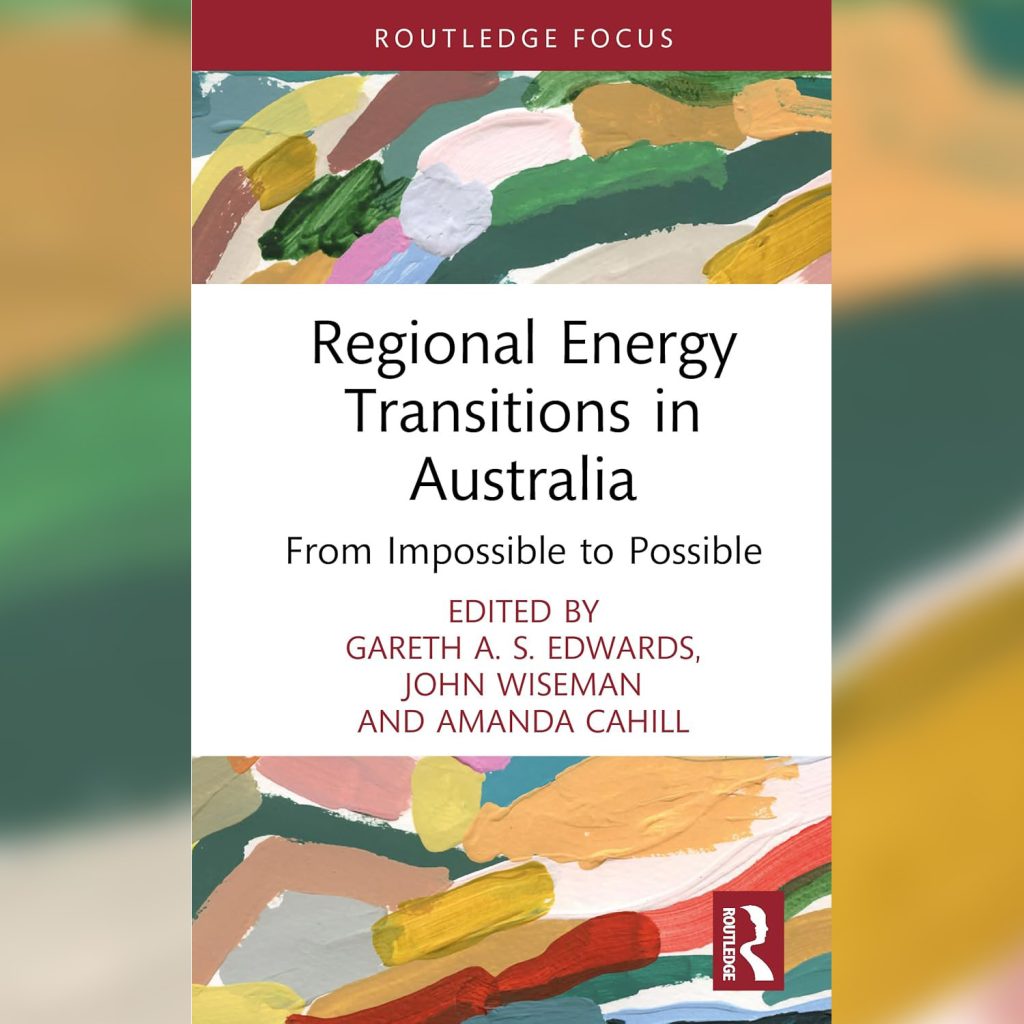
Regional Energy Transitions in Australia: From Impossible to Possible is out now. Join us at one of the many launches happening across the country from 5 March 2025.
It’s time for an honest conversation on the state of the energy transition, the remaining challenges, and what regions need to manage impacts and capture long-term benefits.
Australia is at a critical juncture in the energy transition. Once deemed impossible, the shift from fossil fuels to renewable energy is now well underway. For the transition to be just and sustainable, it is vital that regional communities, those at the forefront of change, are listened to.
The newly released book, Regional Energy Transitions in Australia: From Impossible to Possible, provides an in-depth look at the challenges and successes of energy transitions in five key Australian coal regions: Port Augusta, the Latrobe Valley, Collie, the Hunter Valley, and Central Queensland.
With insights from over 20 contributors—including government officials, academics, industry experts, and community leaders—this book is an essential read for anyone invested in Australia’s energy future. It was co-edited by Dr Gareth Edwards, Professor John Wiseman, and Dr. Amanda Cahill, CEO of The Next Economy.
Recent events
Gladstone, Central Queensland – Date change to 7 May 2025
📅 Date: Wednesday 7 May 5pm – 7pm AEST 📍 Location: Rex Metcalfe Theatre, Leo Zussino Building (Building 3), CQUniversity, Gladstone Campus 🎟 Tickets: Get tickets here
🎤 Speakers: An honest conversation with Mayor Matt Burnett (Mayor of Gladstone Regional Council), Dr Amanda Cahill (book editor and CEO of The Next Economy), Kristy Marks, Economic Development Manager for Gladstone Regional Council and Craig Jones (Chief Financial Officer at Alpha HPA).
Melbourne, Victoria
📅 Date: Wednesday, 5 March, 5pm – 7pm AEDT 📍 Location: Forum 3, Melbourne Connect, 700 Swanston St, Carlton, VIC 3053, Australia 🌍 Host: Melbourne Climate Futures with The Next Economy 🎟 Tickets:Get tickets here
🎤 Speakers: An honest conversation chaired by Professor John Wiseman alongside fellow book editors Dr Gareth Edwards and Dr Amanda Cahill, Sharan Burrow (Former General Secretary of the International Trade Union Confederation) and Dan Musil (Book contributor and Secretary, Earthworker Cooperative).
Latrobe Valley, Victoria
📅 Date: Tuesday 11 March, 6pm – 7.30pm AEDT 📍 Location: Morwell Innovation Centre, 1 Monash Way, Morwell 🎟 Tickets: Get tickets here
🎤 Speakers: An honest conversation with Dan Musil (Latrobe Valley chapter contributor), Chris Buckingham (CEO, Latrobe Valley Authority), Josie Hess (Environment Victoria, award-winning filmmaker) and Jeffrey Jacquet (Global Director, Global Coal Transitions Research Network).
Hunter Valley, New South Wales
📅 Date: Wednesday, 12th March, 6pm – 7.45pm AEDT 📍 Location: NUspace, The University of Newcastle (Room TBC), Newcastle 🌍 Host: Institute for Regional Futures 🎟 Tickets: Get tickets here
🎤 Speakers: An honest conversation with Amanda Cahill (book editor and CEO of The Next Economy), Associate Professor Liam Phelan (book contributor, University of Newcastle), Warrick Jordan (book contributor and Policy Specialist, the Australian Climate and Biodiversity Foundation), and Professor Kate Senior (Acting Director, the Institute for Regional Futures).
Sydney, New South Wales
📅 Date: Thursday, 13th March, 5pm – 6pm AEDT 📍 Location: Seminar Room 203, RD Watt Building, Camperdown 🌍 Host: Sydney Environment Institute with The Next Economy 🎟 Tickets: Get tickets here
🎤 Speakers: An honest conversation chaired by Professor Susan Park (Professor of Global Governance, University of Sydney), with Dr Gareth Edwards (book editor, Visiting Associate Professor, University of East Anglia), Kimberley Crofts (book contributor, Researcher and Service Designer), and Dr Elianor Gerrard (book contributor, Institute for Sustainable Futures).
Brisbane, Queensland
📅 Date: Tuesday, 1st April, 5.15pm – 6.30pm AEST 📍 Location: Room 0M08 (enter via lift in Atrium), UQ City, 308 Queen Street 🎟 Tickets: Get tickets here
🎤 Speakers: An honest conversation with Trevor Gauld (Deputy Commissioner of Jobs and Skills Australia), Dr Amanda Cahill (book editor and CEO of The Next Economy), Liz Young (Research Director of the Queensland Decarbonisation Hub at Centre for Policy Futures, UQ), and Carly Quinn (General Manager People and Strategy at Gladstone Regional Council).
Canberra, Australian Capital Territory
📅 Date: Thursday, 10th April, 5pm – 7pm AEST 📍 Location: Law Link Theatre, Fellows Lane, Australian National University, Canberra 🎟 Tickets: Get tickets here
🎤 Speakers: An honest conversation hosted by Professor Frank Jotzo with David Shankey (CEO of Net Zero Economy Authority), Dr Amanda Cahill (co-editor and author, CEO of The Next Economy), Associate Professor Bec Colvin (researcher on energy transition at ANU), and Jo Evans (former Deputy Secretary of the Department of Climate Change, Energy, the Environment and Water).
What you’ll learn from the book
Regional Energy Transitions in Australia captures vital insights from communities that have navigated the transition away from fossil fuels over the past decade. It shows that:
All energy transitions are local. They must be shaped by the histories, cultures, and needs of the communities most affected.
Justice is key. A just transition means supporting workers and communities, including through re-employment, retraining, and early retirement options.
Leadership and coordination matters. Strong governance, inclusive participation, and long-term policy stability are essential.
Regional case studies
Five coal regions featured in the book offer a powerful story about energy transitions in practice:
Port Augusta, SA tells a story of community optimism and renewable investment tempered by inadequate support by state and federal governments.
The Latrobe Valley, VIC grappled with unplanned coal-fired power station closures and built resilience through rapid community and government collaboration.
Collie, WA provides a powerful example of inclusive participation in transition planning, championed by First Nations Elders.
The Hunter Valley, NSW has shown the importance of local coalitions working together to put community needs on the agenda during a complex regional economic transition.
Gladstone, Central QLD demonstrates the importance of inclusive and locally driven engagement to shift from fossil fuels to renewable industries.
Praise for the book
This collection presents a unique set of insights into how energy transition can be achieved at the regional level.
Prof. Frank Jotzo, ANU
“From ‘impossible to possible’ is a testament to hope and tenacity. The lessons learned from these regions demonstrate that the support of and co-creation with workers and community, along with government support, make the difference.”
Sharan Burrow, Former General Secretary International Trade Union Confederation (ITUC)
Get your copy
Purchase Regional Energy Transitions in Australia: From Impossible to Possible now via Routledge.
📖 Order here: Routledge or Amazon. 🎟 Use the code 25AFLY1 for a 20% discount on hard copies via Routledge. 🛒 Available soon in paperback and electronic formats.
Join the conversation and be part of Australia’s just and sustainable energy transition.
About the editors
Dr Gareth A.S. Edwards Dr Edwards is Visiting Associate Professor at the University of East Anglia and Visiting Fellow at the Sydney Environment Institute. His research focuses on environmental governance, climate justice, and the socio-political dimensions of environmental change.
Professor John Wiseman Professor Wiseman is a Professorial Fellow at the University of Melbourne’s Climate and Energy College and Chair of The Next Economy. He has extensive experience in public policy research, particularly in the areas of climate change, sustainability transitions, and social justice.
Dr Amanda Cahill Dr Cahill is the CEO of The Next Economy, supporting communities in building resilient and sustainable economies. She has worked across Australia and internationally on projects related to economic development, energy transition, and social change.
As part of The Next Economy’s mission to reimagine Australia’s economic future, we are excited to co-host Sandrine Dixson-Declève, co-president of the Club of Rome and Executive Chair of Earth4All, during her visit to the country in late October 2024.
A global thought leader in sustainability and economic transformation, Sandrine will offer critical insights at a pivotal moment for Australia. With debates around emissions, energy, and housing intensifying, her perspective on building a wellbeing economy that addresses both environmental and societal challenges will be invaluable.
In this Q&A, Sandrine explores the political, social, and global dimensions of creating a fairer, more sustainable future.
Join Dixson-Declève in Australia for the Survival Guide for Humanity – October dates and ticket information here. Read more about TNE’s work on economic systems change:
Sandrine Dixson-Declève, head of the Club of Rome, will visit Australia in October 2024.
What is Earth4All and what are some of the key points from that project?
Fifty years ago, The Limits to Growth warned of the dangers of pursuing endless growth on a finite planet. Earth4All is a collective of economic thinkers, scientists and advocates from across the world building on the legacy of that report in the light of the interlinked crises we’re seeing today and setting out the changes we need to address them. We’ve used the latest computer modelling techniques to explore two future scenarios for the planet: one in which we carry on with business as usual – we call this Too Little, Too Late – and one where societies embark on a new path to a sustainable world by 2050, the Giant Leap. The results were published in 2022 in Earth for All: A Survival Guide for Humanity.
What we have found is that the Giant Leap scenario is still achievable, but to get there the world needs nothing less than five extraordinary ‘turnarounds’: ending poverty, addressing inequality, reaching gender equity, transitioning to clean energy and making our food system healthy for people and planet. The case for this is evident when you see the immoral windfall profits made by the fossil fuel companies and industrial agricultural producers on the back of growing energy and food poverty. These issues need to be addressed together and must go hand in hand with an upgrade of our current extractive economic system to one that centres human and planetary wellbeing, not endless growth.
Earth4All outlines bold steps toward a fairer, more sustainable future. How do you gauge the political and social feasibility of implementing such systemic changes?
It’s clear that economic growth isn’t serving the majority. Societies are more unequal than ever; wellbeing is low and social tensions are on the rise. People are feeling the impact of the climate crisis.
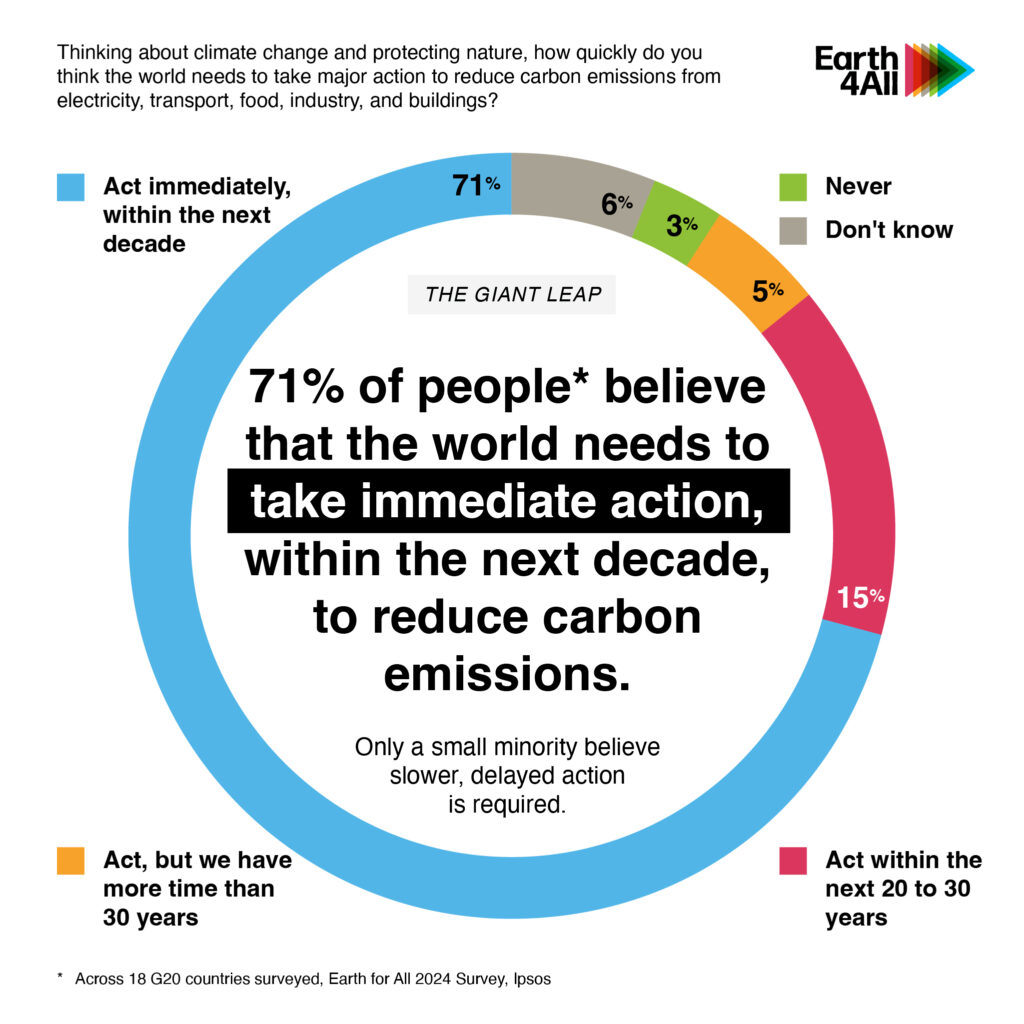
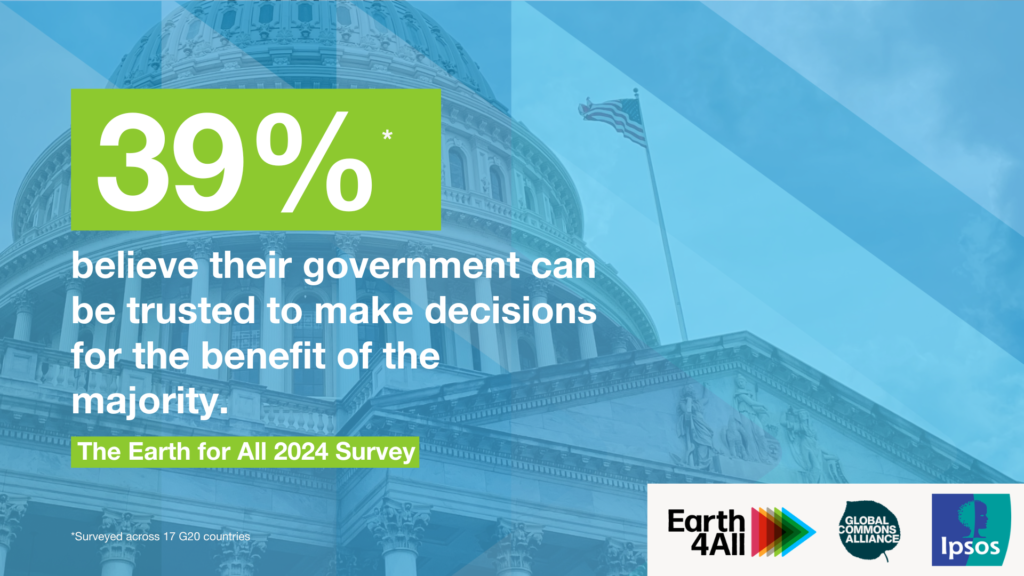
This year we undertook a major survey of G20 countries to understand public attitudes to our proposals for changing the economic system. We found that a strong majority of people want change: over two thirds of people think the goal of the economy should be human and planetary wellbeing, not just growth. The same proportion think we should implement a wealth tax on the very rich to fund changes to our societies. And we found that over half of people supported all our policy proposals for improving wellbeing, from investing in green energy and public healthcare, to a universal basic income. So socially, these changes are absolutely feasible, but politicians need to catch up with public opinion.
There are hopeful signs in the achievements of wellbeing governments like Iceland, Scotland, Finland, New Zealand Costa Rica and Wales, but there is much more to be done to get wellbeing economy proposals to the top of the political and policy agenda.
What do you see as the main obstacles to transitioning to a wellbeing economy, and how can governments and institutions overcome them?
We’re seeing the rise of misinformation and democratic backsliding. It’s clear that the public wants better wellbeing, a fairer economy, but our recent survey results also show a lack of trust in government to make good decisions, especially in Europe. The current crises are already being exploited by far-right populists proposing false solutions. We need to protect and reinforce strong democracies to ensure policies that truly benefit the majority. Increasing citizen participation, for example through citizen’s assemblies, is one way to rebuild trust.
We also know that the transformation of our economies and societies will be disruptive. We need to change everything, and fast, and that will cause shocks. But these shocks will be less painful if we prepare for them with resilient systems.
We also have to remember that the cost of inaction on climate change, poverty and inequality are higher that the cost of action now, so governments and policymakers need to ensure that the transition is fair and provides the essentials as soon as possible and before 2030.
That’s why one of Earth4All’s policy proposals is a Universal Basic Dividend, a kind of universal basic income, that will help absorb some of the shocks of this transition period and bring the majority on board with the changes we need.
How can Australia and other countries ensure the shift toward sustainability and a wellbeing economy addresses global inequalities, especially in the Global South?
Many of the inequalities we see today globally are the result of an international financial system that is outdated, immoral and unjust. And this system is perpetuated by rich countries who consistently refuse to take bolder action on debt. Wealthy countries must cancel debt to low-income countries and support urgent reform of the global financial architecture so that these countries can take full advantage of their own resources and invest in the policies and infrastructure needed to increase wellbeing.
Consumption in wealthy countries also needs to be addressed. In the case of Australia, it needs to tackle both its fossil fuel exports and the level of emissions and consumption. Australia has done well at taking up, for example, rooftop solar, and there are many incredible circular economy businesses in the country [The Federal Government’s Measuring What Matters initiative is a welcome step towards bringing a wider range of outcomes to the fore]. But Australia also has some of the biggest houses in the world, the environmental impacts of flying are rarely discussed (and in many locations there aren’t good public transport options), and there is huge scope for making more buildings more energy efficient.
Ensuring First Nations communities benefit from renewables projects is also critical.
In your view, how can technological innovation support the goals of a wellbeing economy, and what risks should we be wary of in the process?
AI and other technological innovations have huge potential for advancing the goals of a wellbeing economy – ensuring decarbonisation and optimising energy and water use through smart technologies and innovations, but the digital sector also has to seriously reduce its own emissions.
Most importantly we must ensure that the use of these technologies is focused on improving people’s lives, not just lining the pockets of the few. Left unchecked, these innovations risk exacerbating existing inequalities.
We must also be wary of leaning too heavily on technological solutions to global crises. Our focus should be on the root causes of the polycrisis and shifting away from an extractive, GDP-focused economy to one focused on wellbeing, empowerment and addressing inequality, and that is something that technology alone cannot fix.
What key international trends or movements (good or bad) do you see emerging around sustainability and wellbeing economics, and how can countries like Australia learn from or contribute to these global shifts?
Conversations about wellbeing economics are no longer on the fringes, we’re seeing them happening in more international institutions and businesses – the World Economic Forum, OECD, the US Business Roundtable have all spoken out about the importance of other priorities besides growth.
Regarding sustainability we are seeing a two-speed approach: on the one hand you have backlash against ESG in the US but on the other you have more and more companies realising that sustainability across their business models and their value chains is the only way to build resilience to future shocks and stresses. My worry is that as a growing number of companies know decarbonisation is our future, many incumbents, especially the fossil energy companies, are backtracking.
Then of course there are the examples of countries like Finland, Iceland, Wales, New Zealand, Costa Rica and Scotland that are implementing elements of wellbeing economics into their policies, like tracking complementary growth metrics beyond GDP.
Building broad movements with both high-level champions and grassroots support is crucial, as well as consistently celebrating positive visions of a wellbeing economy in the country to bring people on board.
Katherine Trebeck [pictured below, The Next Economy], the instigator of the Wellbeing Economy Governments partnership (WEGo) recently published an Earth4All deep-dive paper exploring their experiences and what can be learned from them.
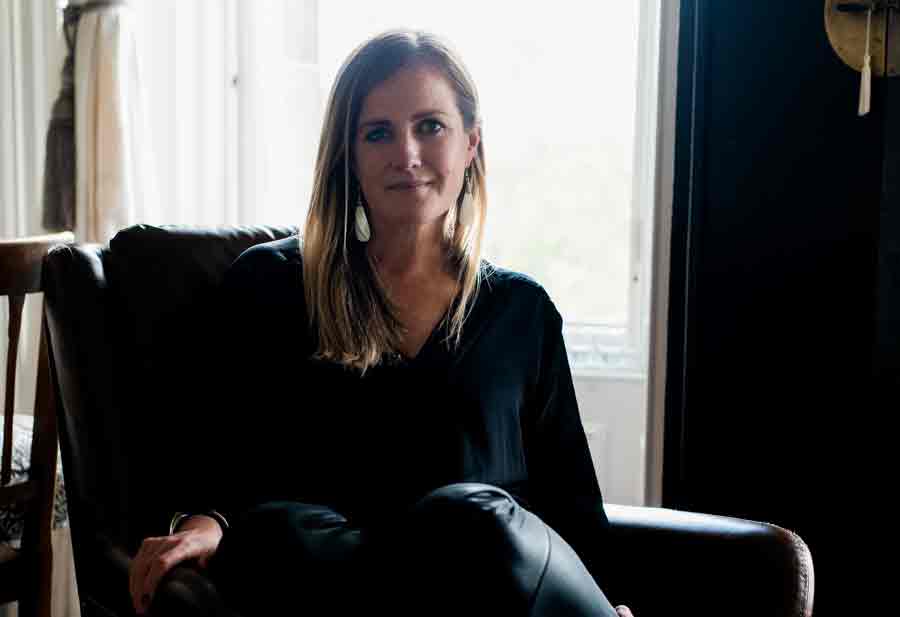
Katherine Trebeck, The Next Economy’s Economic Change Lead and instigator of the Wellbeing Economy Governments partnership (WeGo).
In the Australian context, what unique challenges or opportunities do you see in advancing the wellbeing economy, and what are you most looking forward to exploring during your visit here?
69% of Australians think that the country’s economy should prioritise the health and wellbeing of people and nature – this is pretty close to what citizens are saying across the G20. There is clearly an appetite for wellbeing economy proposals, and this is fantastic opportunity to centre them. Australia has no shortage of good examples to build on, whether that is pioneering businesses such as circular economy initiatives or employee-owned enterprises, or community banks or the growing community wealth building agenda. There are many creative innovators coming up with technological solutions. Various levels of government are starting to create multidimensional wellbeing frameworks to widen conceptions of success.
Now is an important time, when many people realise that business as usual cannot carry on but are unsure about what changes need to be made and are even anxious about that change. I look forward to talking with people about the need for change and the benefits it can bring, advancing the conversation in Australia alongside partners already doing fantastic work in the space like The Next Economy, and together building momentum towards a wellbeing economy. What we need now is to show Australians and citizens across the globe is that there is a plausible alternative future, one which reverses negative environmental and social tipping points, and Earth4All’s Giant Leap scenario shows the way.
Join Dixson-Declève in Australia for the Survival Guide for Humanity – dates and ticket information here.
As part of our mission to reimagine Australia’s economic future, The Next Economy will co-host Sandrine Dixson-Declève, co-president of the Club of Rome and Executive Chair of Earth4All, during her visit to Australia this October.
Dixson-Declève is an internationally renowned thought leader. She leads the Club of Rome’s Earth4All program and recently co-founded the System Transformation Hub.
Among her many appointments, Dixson-Declève serves as an ambassador for the Wellbeing Alliance (WEAll) – an international collaboration working to transform the economic system co-founded by The Next Economy’s very own Dr Katherine Trebeck.
Read more about The Next Economy’s work on economic systems change:
In a time when Earth has crossed multiple planetary boundaries and inequality is driving instabilities in societies worldwide, Dixson-Declève offers vital insights into how we can navigate these challenges.
Sandrine Dixson-Declève, head of the Club of Rome, will visit Australia in October 2024
Trebeck, TNE’s Economic Change Lead, said: “Sandrine’s visit comes at a crucial time for Australia. Debates around our emissions, our energy future, housing, and the cost of living are raging, but they often miss a critical element: what sort of economy needs to be built to enable the society we want on the planet we need?
“Sandrine has an incredible vantage point on this question and does not just offer a reality check on the implausibility of business as usual. She brings a suite of ideas for change and examples of tangible hope.”
Opportunities to hear from and meet Sandrine while she is in Australia include:
Canberra: Wednesday 23 October (6 to 7pm AEDT), ANU’s Planetary Health Equity Hothouse will host a public lecture.Register
Online via Zoom: Thursday 24 October (11am AEDT), Dixson-Declève joins The Australia Institute to explore critical issues and her work on Earth for All, a survival guide to humanity. Register
Melbourne: On Monday 28 October (5.30 to 7.30pm AEDT), join Dixson-Declève and the Centre for Policy Development at the State Library of Victoria. Register
MORE than 20 leaders driving change in communities, the economy, and government across Australia have come together to discuss ways to put people and the planet front and centre when it comes to the Australian economy.
The two-day retreat in Melbourne in August, part of The Next Economy’s new Heading Upstream Lab and supported by Lord Mayor’s Charitable Foundation, explored how change happens in Australia and the barriers and opportunities for addressing the economic roots of our challenges.
Dr Katherine Trebeck, Economic Change Lead at The Next Economy, said:
“Heading Upstream saw some of the best thought leaders in Australia thinking about the economy differently and how it can be shaped to be socially just and sustainable. This paradigm shift involves redefining what we expect the economy to deliver, focusing on what societies need more of, where, and how.
“The retreat revealed a shared commitment to tackling the systemic roots of Australia’s challenges, shifting the focus from reactive responses to proactive, upstream change. It stressed a need to change how we talk about the economy, and recognised the importance of fostering broad, engaged conversation, to ultimately change mindsets.
“Economic decisions often fail to address the root causes or consider the connection between issues, which leads to ineffective solutions or policies that merely patch-up damage once it has been done. This is despite the evidence linking our economic structure to impacts on our health, poverty and inequality as well as environmental damage.
“Action on the economic roots of issues, and considering the interconnections between them, can lead to effective solutions in the short and long-term. This is nothing new, with various schools of thought having highlighted the flaws in treating the economy as an isolated goal for decades. And First Nations communities long demonstrating an approach that acknowledges the interdependence of people, planet and the economy.”
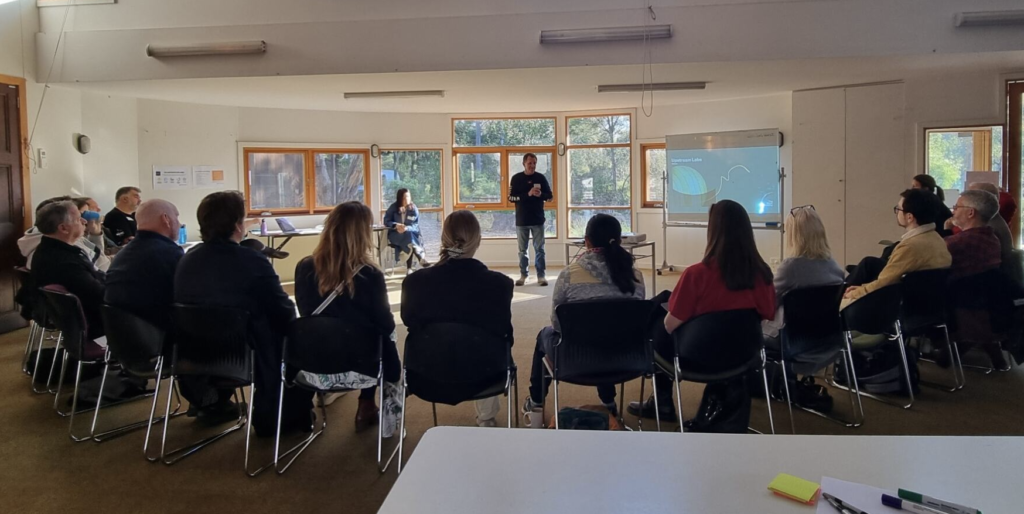
TNE staff at the first-ever Heading Upstream LabChange leaders came together to discuss Australia’s economyThere was space for meaningful conversations and new ideas
Insights and recommendations from the retreat will be published later this year. To stay up to date, subscribe to The Next Economy’s newsletter.
Senior leaders in investment, state and federal government, industry, and local community groups came together in Gladstone, Central Queensland to identify ways to solve regional just transition funding barriers and facilitate timely resourcing to where it is needed most.
As the global race to decarbonise economies accelerates, Deloitte Access Economics estimates that over $400 billion of private and public investment is required to transform Australia’s emission-intensive economy into a productive, competitive net-zero economy by 2050.
The Gladstone Transition Investor Experience, which ran 6 to 9 May 2024, shone a spotlight on the transition in the Gladstone region. Like other key regions across Australia, Gladstone’s economic ties to emissions-intensive industries present both significant climate-related transition risks and major opportunities to develop and diversify the local economy for long-term resilience and prosperity.
The Federal Government’s recently made a critical minerals project funding announcement, including $400 million in new loans for Alpha HPA’s high-purity alumina processing facility in Gladstone.
A summary of The Next Economy’s address to a special senate committee hearing on bills relating to the Net Zero Economy Authority.
Participants connected around the key issues and opportunities that exist in the transformation of regional economies like Gladstone, through a range of site visits, roundtable discussions, guest presentations, workshops, and networking activities.
The Gladstone experience was a great way to get under the hood of a transitioning region, hear from industry and decision-makers regarding the levers that are being pulled to make change. We had access to a curated group of individuals and organisations, each pulling for change.
Participant
The event is hosted by The Next Economy (TNE) in partnership with the Investor Group on Climate Change (IGCC) and the Foundation for Rural and Regional Renewal (FRRR). Following further engagement, TNE will publish a summary of key findings and recommendations identified at the event in mid-2024.
Here’s what some of the organisers had to say ahead of the event:
Regional communities and industries are increasingly facing complex challenges and opportunities as they navigate the transition to a net zero economy. From developing new industries and technologies to supporting governance and welfare models, government and private investment is critical to setting regions up for the future.
The Gladstone Transition Investor Experience connects senior leaders from across government, investment, industry and community to have the meaningful conversations needed to solve funding barriers and facilitating the timely flow of resources so regions can get on with the job.
Dr Amanda Cahill, CEO TNE
Each year, FRRR receives thousands of grant applications, which demonstrates that remote, rural and regional communities want to be in the driver’s seat when it comes to their region’s future. That applies to energy and climate transition too.
The Gladstone Investor Experience is bringing together key organisations who can help address the challenges that emerge when navigating rural energy transition. We’re delighted to be part of this event and look forward to exploring how different types of funding and investment can help just transitions to occur and ensure that regional communities have a better seat at the table and are engaged in designing the opportunities.
Natalie Egleton, CEO of FRR
Members of the Investor Group on Climate Change have a legal obligation to deliver good retirement savings for around 15 million Australians. A fast and fair transition will deliver the best returns to allow people to retire with dignity, but that won’t happen by accident.
Without planning and co-ordination Australia’s transition will become disorderly and increase the costs to everyone. We’re supporting the Gladstone Transition Investor Experience because credible regional transition plans and essential for delivering the capital needed to support this transition to net zero emissions.
Erwin Jackson, Managing Director of Policy at Investor Group on Climate Change
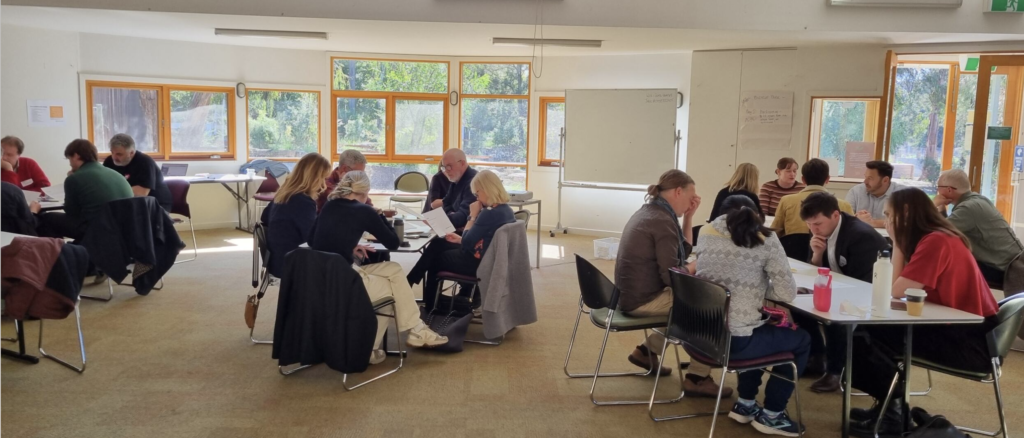
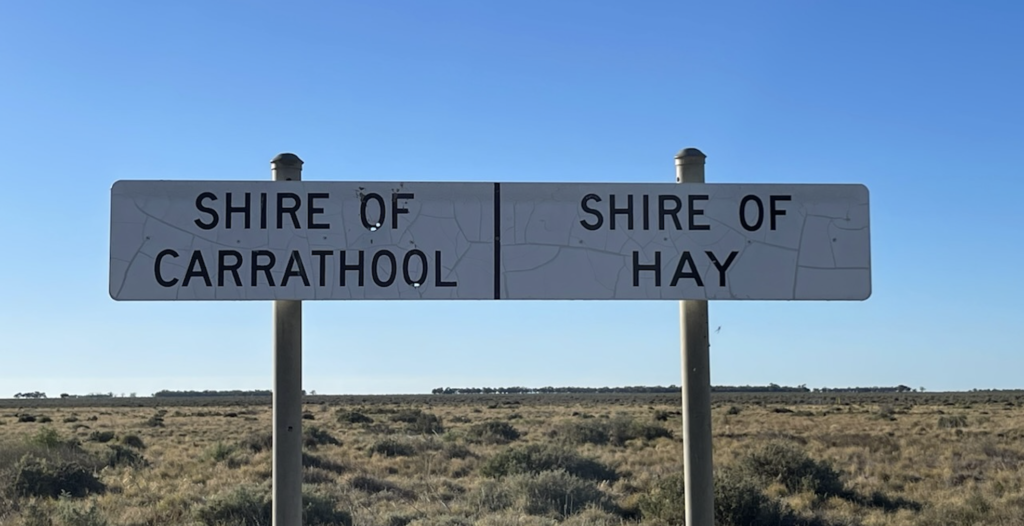
More than 80 primary producers and community members joined both Hay and Carrathool shire councils and The Next Economy (TNE) at a series of workshops to explore barriers and opportunities for strengthening community resilience and driving good economic development in the region.
Situated within Australia’s renowned ‘food bowl’ in the Riverina region of southwest New South Wales, the Hay and Carrathool Shire communities boast a rich legacy in agriculture and primary production.
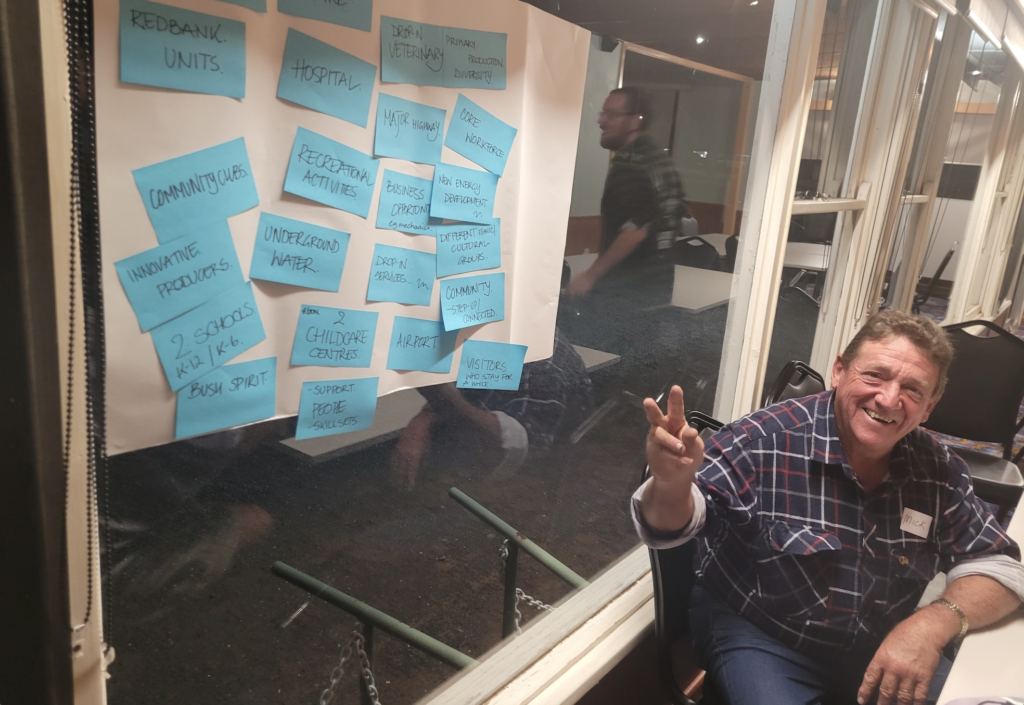
The five workshops, held between 8 and 12 April 2024, brought together representatives from local businesses, community organisations, community services and primary production to identify what makes the region work now as well as opportunities and potential directions for good regional development that drives a strong, vibrant and climate resilient future.
Feedback from workshop participants included:
It was great to see so many community members turn up and be involved.
and
It was good to feel like community members are important in decision making.
The workshops marked the official start of extensive community engagement activities as part of Hay and Carrathool Shire Councils’ development of the 10-year Resilient Economy Roadmap initiative.
The Roadmap will outline practical actions councils, business, industries and communities can take over the next decade to diversify their economies while building resilience in the face of change and disruption. This includes economic, social, cultural and environmental resilience.
The project comes at a pivotal moment for the region as communities navigate a range of growing challenges and disruptions, including rising living costs, climate impacts from recent flood events to prolonged droughts, and the impact of the decarbonisation of global supply chains.
Jacqui Bell, TNE’s Land Use Director, said:
“These communities have a golden opportunity to stay strong now and into the future. To do that, they’re coming together to identify how to overcome barriers, diversify economies and build resilience.
“The level of engagement with the Roadmap project demonstrates the region has a network of strategic local leaders and champions who are passionate about their communities, economy and the future of the region.
“Community members, business owners and representatives from the primary production industry we’ve engaged with so far are constantly adapting and innovating in response to changes in the local climate and global economy. It was great to see such overwhelming interest in working collaboratively to shape the region’s future.”
The Resilient Economy Roadmap initiative is a collaboration between Hay and Carrathool Shire councils, The Next Economy, The Australian Resilience Centre, and communities across the region. Running from March to October 2024, it is funded jointly by the Australian Government and NSW’s Future Drought Fund and is part of the Regional Drought Resilience Planning Program.
To stay up to date on the project, follow the Resilient Economy Roadmap Facebook page. For further project information, please contact j.bell@nexteconomy.com.au
In response to the Federal Government’s critical minerals project funding announcement, including a welcome $400 million in new loans for Alpha HPA’s high-purity alumina processing facility in Gladstone, The Next Economy CEO Amanda Cahill said:
“This is a good example of the role we need government to play if we are to unlock private investment and support regional communities to manage this massive transformation. It is this kind of support that helps Gladstone to attract new investment under the region’s 10-year Economic Roadmap, showing just what’s possible if communities, governments and industries come together to meaningfully address change.
“Australia is blessed with abundant resources, but this can be a curse if development is not done well with boom-and-bust cycles contributing to a range of challenges such as exacerbating housing and workforce shortages. We need a new, holistic approach to regional development so that profits are shared equitably, the rights of First Nations people are respected, and environmental impacts are avoided. For example, in some places companies are looking at how they can reduce the need for new extractive projects by adopting circular economy approaches, such as the mining of existing tailings.”
Read more about Gladstone’s 10-year Economic Roadmap, developed in partnership with The Next Economy.
In response to Prime Minister Anthony Albanese’s Future Made in AustraliaAct announcement and address at the Queensland Media Club today, Dr Amanda Cahill, CEO of The Next Economy, said:
“This is an important announcement at a pivotal time for Australia as the world races to decarbonise. Everyone is competing to build the industries that will be the basis of national prosperity, which means everyone is competing for the same components needed to build a renewable future.
“For the first time in decades, Australia can expand its manufacturing base to meet this domestic and international demand. Small, medium and large-scale companies across Queensland in regions like Central Queensland, Townsville and Mt Isa are already manufacturing RE components like towers for wind turbines, inputs for solar panels and electronics, processing important minerals like copper, bauxite and zinc, making green chemicals and hydrogen, and even batteries and electric vehicles.
“We hear from industry everywhere that government support like this is crucial to unlock private investment. Public finance has always played an important role in moments of large-scale and rapid transformation, from setting up the mining industry to building electricity and transport infrastructure. This moment of transformation is no different.
“This level of government ambition offers huge potential for regions like Gladstone in Central Queensland, where local government is already attracting new investment and government support under their 10-year Economic Transition Roadmap. But only if it’s approached holistically and that means ensuring better support for essential services and housing so that communities genuinely benefit over the long term.”
Co-hosted by Melbourne Climate Futures on 17 February 2022, The Next Economy organised an International Roundtable which brought together over 40 leading Australian, German and Polish thinkers who are deeply engaged in the question of how we manage change in the energy sector.
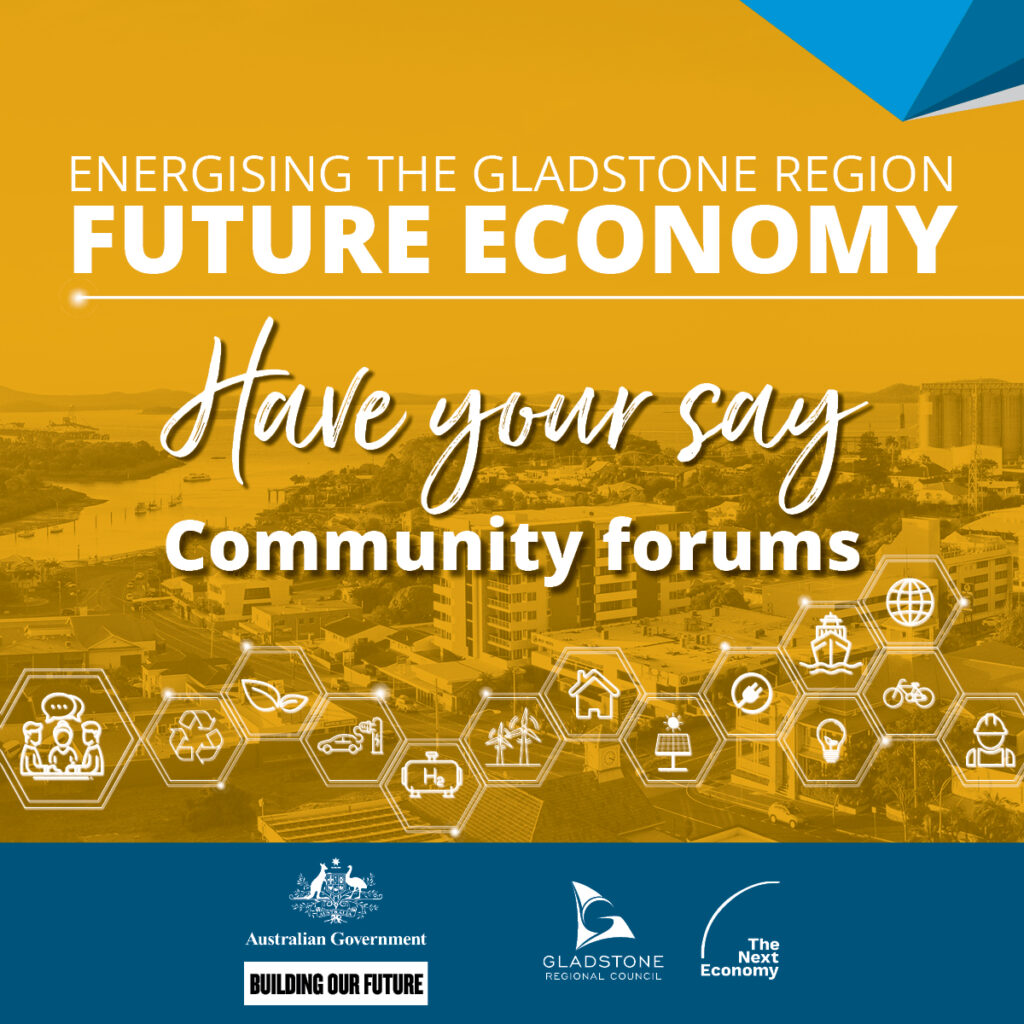
Gladstone locals are invited to share their thoughts on the future energy system and how the region can take advantage of emerging changes to generate new economic opportunities at upcoming community forums hosted by The Next Economy, on 19 and 20 March, 2022.
Listen to our CEO, Dr Amanda Cahill on local radio talk about the importance of having your say.
These forums are part of a new initiative of Gladstone Regional Council – Energising the Gladstone Region’s Future Economy. Feedback from community, government, industry and other stakeholder groups will guide the Council on what is required to adapt to a changing energy sector and to support our region over the next ten years.
“This project is leading the way in Central Queensland, using an inclusive and interactive planning process to tackle the challenges and opportunities of the energy transition. We’ll be designing a roadmap for the Gladstone Region over the next ten years to help navigate changes in the energy sector that directly impact the local economy,” said Dr Amanda Cahill, Chief Executive Officer of The Next Economy.
“We are already seeing a lot of change across Central Queensland. The Gladstone Region is particularly well positioned to take advantage of new economic opportunities as we shift to new energy solutions, but we also need to plan ahead to manage the potential impacts on our regional economy and build community resilience,” added Dr. Cahill.
Attendees at the community forums at Agnes Water on Saturday 19 March and Gladstone on Sunday 20 March will explore the impact that changes to the energy system are having on the region and have their say about what they want for the future.
Gladstone Region Deputy Mayor Kahn Goodluck said The Next Economy will present the most recent information on energy trends, as well as how renewable energy and other emerging technologies have the potential to boost the local economy.
“The forums will cover topics such as supporting and developing the local workforce, energy affordability, diversifying the economy, and protecting land and water resources,” Clr Goodluck said.
“For those who prefer an online option, we encourage you to join the online forum on Wednesday 30 March.”
The Gladstone Regional Council initiative is delivered in partnership with The Next Economy and is made possible with funding from the Australian Government’s Building Better Regions Fund.
We welcome everyone to participate in the forums, whether you’re an interested resident, First Nations representative, worker, farmer or local business owner. The forums are free to attend, but registration is essential to ensure that we can organise the forums in line with COVID-safe practices.
For more information and to register, please visit Gladstone Regional Council here:
Date: Saturday 19 March 2022 Location: Agnes Water Time: 9am to 2.30pm Venue: Agnes Water Community Centre 71 Springs Rd, Agnes Water
Date: Sunday 20 March 2022 Location: Gladstone Time: 9am to 2.30pm Venue: Philip Street Communities and Families Precinct, Maxine Brushe Rooms, Gladstone
Date: Wednesday 30 March 2022 Format: Online community forum Time: 6.00pm to 9.00pm
Turmoil and uncertainty seem to abound everywhere we look as people feel increasingly insecure about their futures and grieve the loss of faith in our crumbling institutions. But what if the current disruptions to our political, economic and social systems hold the potential for the emergence of an economy that can not only provide for the wellbeing of all people, but is centred on tackling the biggest ecological challenges that threaten our very existence? What would this regenerative economy look like and where is it emerging across the world? And what would it take to tackle the political dynamics in this country that continue to relegate so many positive initiatives to the margins?
Hosted by Morag Gamble, global permaculture ambassador, Sense Making in a Changing World explores ‘What Now?’ – what is the kind of thinking we need to navigate a positive and regenerative way forward, what does a thriving one-planet way of life look like, where should we putting our energy?
Hosted by Morag Gamble, global permaculture ambassador, Sense Making in a Changing World explores ‘What Now?’ – what is the kind of thinking we need to navigate a positive and regenerative way forward, what does a thriving one-planet way of life look like, where should we putting our energy?
Impact Gathering: Supporting Women In Impact-Led Business
Impact Boom helps people and organisations unleash their greatest potential to create positive social impact. They work across the ecosystem to create the right conditions, resources, tools and programs to help people tackle social and environmental challenges, changing the world for the better.
Dr Amanda Cahill On Proactively Addressing Community Issues & Acting On Climate Change
Impact Boom helps people and organisations unleash their greatest potential to create positive social impact. They work across the ecosystem to create the right conditions, resources, tools and programs to help people tackle social and environmental challenges, changing the world for the better.
Robert Pekin & Emma-Kate Rose On Cultivating Community Driven Social Enterprise
Impact Boom helps people and organisations unleash their greatest potential to create positive social impact. They work across the ecosystem to create the right conditions, resources, tools and programs to help people tackle social and environmental challenges, changing the world for the better.
Hosted by Lilian Spencer, Communications Lead for Australia reMADE, ewMAKERS is a new conversation that asks, ‘what is the best version of us, and how do we actually build it?’ How can we be more collaborative, transformative and ambitious? How can we help change systems, not just treat symptoms?