What’s a Wellbeing Economy?

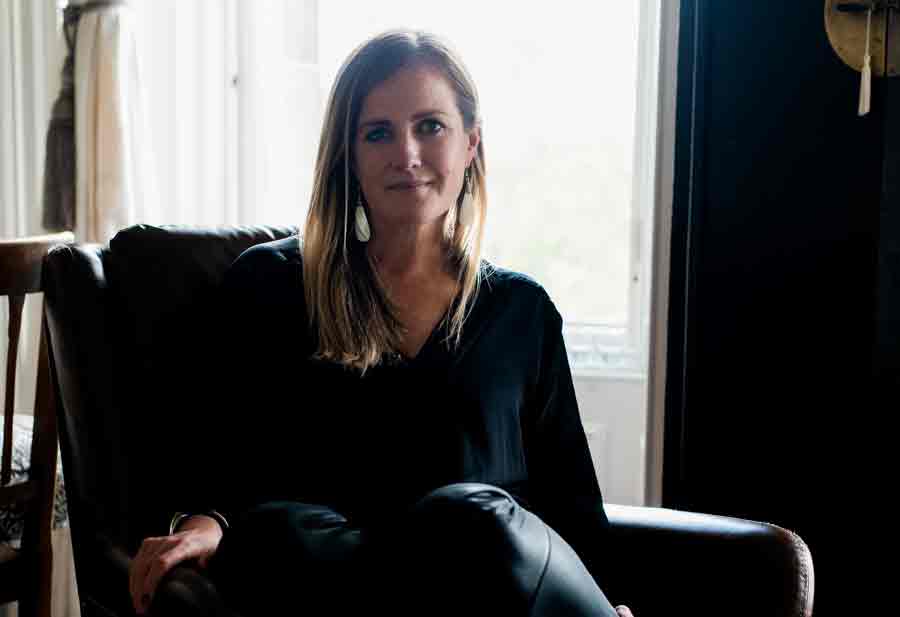
We ask Dr Katherine Trebeck, Economic Change Lead at The Next Economy
In a nutshell, what is a wellbeing economy?

An economy designed deliberately to work for people and the planet, not the other way around as so often seems to be the case today.  It’s about creating a context in which people thrive, first time around, rather than having to deploy loads of resources trying to fix and repair after damage has been done. This means initiatives that speak to the purpose of the economy, prevention, predistribtion (not just redistribution), and a people powered economy.

So, it requires thinking about what activities we need more of because they help create that context and finding ways to expand those activities: being selective about what is growing, rather than pursuit of any sort of growth.

Are there any examples of using this framework successfully? If so, how?

Think about the wellbeing economy not so much as a framework, but more as a paradigm. It requires a substantial shift in how the economy is thought about and approached. It is about seeing the economy as a mechanism to meet our real goals, and certainly not something to which all other goals are subservient. Not only are we seeing a growing conversation and emerging such as the Wellbeing Economy Alliance initiatives where people are coming together to promote the agenda or its component parts, but there are loads of examples of governments and enterprises making the sort of changes that are necessary. For example:

  • Multidimensional measurement dashboards (Australia’s Measuring What Matters statement is an example of this) and support for social enterprises (the recently announced Social Enterprise Development Initiative, for example)
  • Circular economy production and public transport systems
  • Community or worker owned businesses such as the Earth Worker Cooperative in Victoria
  • Considering the environmental cost of the things we buy. 

The challenge is that while there is no shortage of examples, often they are the exception that proves the rule. One nice illustration of the potential for this is seen in the Community Wealth Building work happening in places like Cleveland in the US and in Preston in the UK (plus in various parts of Australia too). In Preston, there has been research which shows the council’s efforts to procure locally, to support local businesses and local employment has meant the local economy has been more resilient, but also people’s mental health and reported personal wellbeing has improved. 

How might the principles of a wellbeing economy help address current challenges posed by high cost of living pressures?

A key feature of a wellbeing economy approach is to look at the root causes of an issue, and not just respond crisis to crisis, symptom to symptom. 

So in terms of cost-of-living pressures and high housing costs as a key part of that, a wellbeing economy approach would entail examining the way the housing market operates – who owns the houses? What taxes and incentives encourage the sort of ownership patterns that are forcing up prices? Why aren’t there more community housing cooperatives and other modes of providing housing in Australia? 

It would then step back and reflect on what the ultimate goal is – shelter for people in Australia’s towns and cities. It would then think about what needs to change in the economy for more people to have access to good quality shelter – perhaps that means shifting taxes to discourage people owning more and more homes as investment devices? Perhaps that means changing planning laws to enable more community groups to co-own housing? Perhaps that means ensuring homes are built with high energy efficiency standards so once people move into them, they aren’t spending huge amounts on heating and cooling them.

And speaking of energy efficiency, a wellbeing economy approach is also about being ambitious for flow-on benefits – so if housing is being built, can it help address environmental challenges by needing less carbon and using more recycled materials? Can it help address equity and inclusion by being built by companies employing local people, which have gender balance in their teams, and which pay living wages etc? And can it help roll out models of enterprise that have a social purpose at their heart, so could the houses be owned by a housing cooperative?

How might Australia adopt a wellbeing economy framework? What are the steps that need to happen?

There’s a precondition for government acting – that’s people talking about it, and being able to imagine an economy that serves them, not the other way around: an economy that doesn’t generate so much inequality and put so much pressure on the planet. That will be helped by learning about examples of this in practice, even in small scale. Then policy makers need to step in to design the rules of the game so those good examples are common place.

What would a state or federal budget for a wellbeing economy look like?

It would use things like taxes and subsidies to support the sort of activities which are good for people and planet, and to discourage those that aren’t. In other words, it would ask what we need more of and how can mechanisms in the budget help cultivate them?

With the support of the Lord Mayor’s Charitable Foundation, The Next Economy is convening an ‘Upstream Lab’ to explore the economic root causes of many of today’s challenges, including how to take action where there is scope to prevent harm happening in the first place. More details to come as we roll out this exciting initiative.

Find out more:

On the wellbeing economy, is Australia at risk of dropping the ball? Opinion piece by Dr Katherine Trebeck in Croakey Health Media, 14 May 2024

The Wellbeing Economy in Brief, Dr Katherine Trebeck and Warwick Smith, Centre for Policy Development, February 2024

Webinar: What Regions Need

The Next Economy hosted a report back and Q&A along with special guests, Professor John Wiseman and Dr Gareth Edwards on Wednesday, 11 May 2022.

Just Transitions Strategies

Case study examples, reports and resources (Click bolded titles for link)

Australian reports and resources


International reports and resources

What Regions Need on the Path to Net Zero

Australia speaks in landmark report 

A major new report from The Next Economy released today has found that regional Australia is undergoing an economic transformation, with historical coal and gas heartlands like Central Queensland, The Hunter Valley and the Latrobe Valley in pole position to capitalise on the global shift to net zero emissions – with appropriate Federal Government leadership, investment and support.

For ‘What regions need on the path to net zero’, The Next Economy engaged with over 500 people and organisations across regional Queensland, NSW, Victoria, WA and the NT to assess the support communities with close ties to fossil fuels need to manage the inevitable and accelerating transition to net zero emissions.

Participants included representatives of government, the energy sector, diverse industries, unions, economic development agencies, social services, universities and training institutions, Traditional Owners and First Nations groups, community members and environment organisations.

The research revealed a high level of consensus on a key theme – greater leadership is needed from the Federal Government, revolving around three key calls to action:

  1. An honest conversation: The Federal Government must be open and honest about what the changing energy system means for regional Australia.
  2. A clear, well resourced plan: The Federal Government needs to put in place the appropriate targets, policies and regulatory frameworks to guide investment, and to ensure that regional workers and communities are not left behind – such as a national transition authority.
  3. A strong democracy: The Federal Government must put in place measures to improve the health of our democracy – such as protection of public servants and decision-making from political interference, banning political donations, and a national corruption watchdog.

Dr Amanda Cahill, CEO of The Next Economy, said “The discussion about energy futures in regional Australia has changed dramatically since the federal election in 2019.

“When we started our consultations two and a half years ago, most people were questioning the whole concept of the energy transition. Now people see that things are changing quickly, with early closure announcements for coal plants, our trading partners increasing their climate ambitions and the rapid expansion of renewable energy projects across the country. They want to see a clear plan and support so they can manage these changes.

“If we want to take advantage of the wide range of new economic opportunities available – in renewable energy generation and storage, the mining and processing of critical minerals needed for renewable energy, and the manufacturing of projects like green hydrogen, batteries, renewable energy components, biofuels and other products –  we need to act now.

“Business has been leading the way in terms of investing in the new industries we need to develop to reduce our dependence on coal and gas export revenue. But it’s not enough and even industry players are now calling on the Federal Government for greater policy certainty and new regulatory frameworks to ensure that development is done well and actually benefits regions over the long term.”

“The new federal government has a lot of work to do”, Dr Cahill said. “I hope it shows the leadership and vision to grasp this once-in-a-generation opportunity, and to step up to the task of supporting our regions as the energy system changes.”

To view our presentation of the report, click below to watch our webinar on Wednesday, 11 May where we were joined by Professor John Wiseman and Dr Gareth Edwards, followed by a Q&A session with participants.

2020 Richard Jones Memorial Lecture

Turmoil and uncertainty seem to abound everywhere we look as people feel increasingly insecure about their futures and grieve the loss of faith in our crumbling institutions. But what if the current disruptions to our political, economic and social systems hold the potential for the emergence of an economy that can not only provide for the wellbeing of all people, but is centred on tackling the biggest ecological challenges that threaten our very existence? What would this regenerative economy look like and where is it emerging across the world? And what would it take to tackle the political dynamics in this country that continue to relegate so many positive initiatives to the margins?

Sense Making in a Changing World – episode 14

Hosted by Morag Gamble, global permaculture ambassador, Sense Making in a Changing World explores ‘What Now?’ – what is the kind of thinking we need to navigate a positive and regenerative way forward, what does a thriving one-planet way of life look like, where should we putting our energy?

Sense Making in a Changing World – episode 16

Hosted by Morag Gamble, global permaculture ambassador, Sense Making in a Changing World explores ‘What Now?’ – what is the kind of thinking we need to navigate a positive and regenerative way forward, what does a thriving one-planet way of life look like, where should we putting our energy?

Impact Boom – episode 238

Impact Gathering: Supporting Women In Impact-Led Business

Impact Boom helps people and organisations unleash their greatest potential to create positive social impact. They work across the ecosystem to create the right conditions, resources, tools and programs to help people tackle social and environmental challenges, changing the world for the better.

Impact Boom – episode 171

Dr Amanda Cahill On Proactively Addressing Community Issues & Acting On Climate Change

Impact Boom helps people and organisations unleash their greatest potential to create positive social impact. They work across the ecosystem to create the right conditions, resources, tools and programs to help people tackle social and environmental challenges, changing the world for the better.

Impact Boom – episode 24

Robert Pekin & Emma-Kate Rose On Cultivating Community Driven Social Enterprise

Impact Boom helps people and organisations unleash their greatest potential to create positive social impact. They work across the ecosystem to create the right conditions, resources, tools and programs to help people tackle social and environmental challenges, changing the world for the better.

Towards 2040 | A conversation series

We know that social change happens when ordinary people start having conversations with those they know and trust.

In this Towards 2040 webinar series, Amanda Cahill talks to a range of experts to explore how we can have the most effective conversations about climate change to take actions that will inspire others and in a way that empowers people to take action.

Our Permaculture Life

Episode 16 of Morag Gamble’s podcast Our Permaculture Life

The Next Economy CEO Amanda Cahill shares a conversation with Morag Gamble exploring leadership, transition, power, way-finding, change and resilience.