
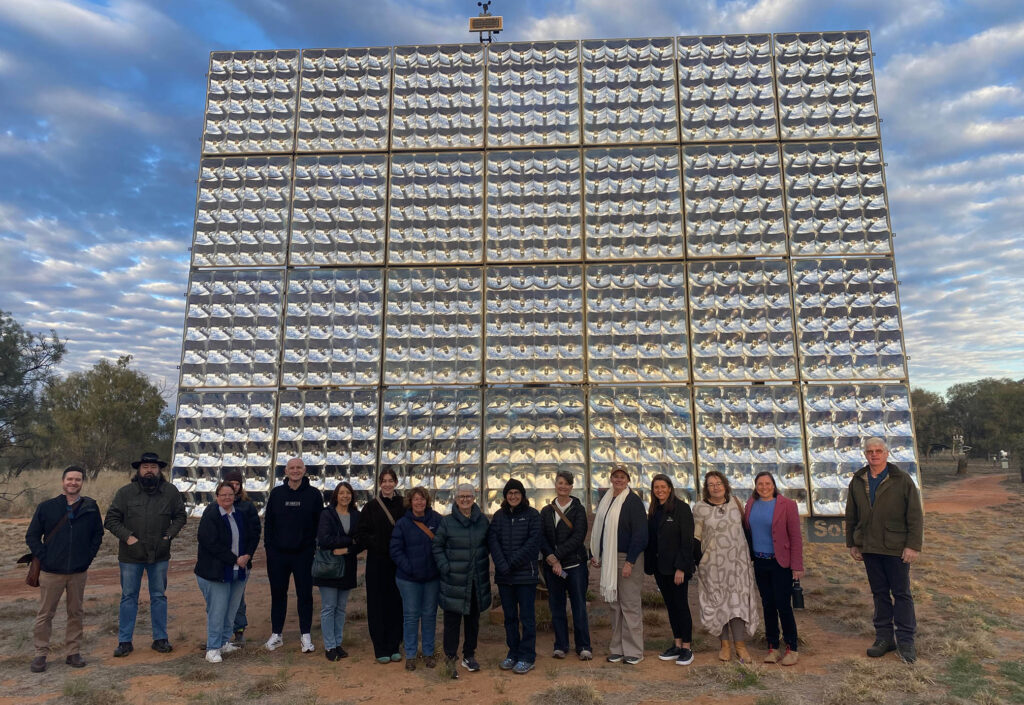
The Next Economy CEO Lizzie Webb joined industry leaders at the Developing Northern Australia Conference 2026, gaining a firsthand look at one of the country’s most significant renewable energy research facilities during a tour of the Desert Knowledge Precinct in Alice Springs.
Hosted by Desert Knowledge Australia (DKA) on 5 August, the early morning tour began at 7am, giving delegates a stunning sunrise view across the Precinct’s extensive solar installations before exploring the organisations and innovations helping shape Northern Australia’s future.
Led by DKA CEO Jimmy Cocking, the tour provided an overview of the Desert Knowledge Precinct, a unique hub that brings together organisations focused on research, education, innovation and sustainable development. The Precinct is also home to organisations including the Indigenous Land and Sea Corporation (ILSC), Aboriginal Investment NT (AINT) and Creating A Safe Supportive Environment Australia (CASSE Australia), alongside a range of education, research and community-focused organisations.
For Lizzie, the highlight was seeing how Central Australia’s climate is being used to drive world-leading renewable energy innovation.
“What stood out most was how the region’s unique environment has become a strength,” she said. “The work being done here demonstrates how Northern Australia can contribute solutions to global energy challenges while delivering benefits locally.”
World-leading solar research in the heart of Australia
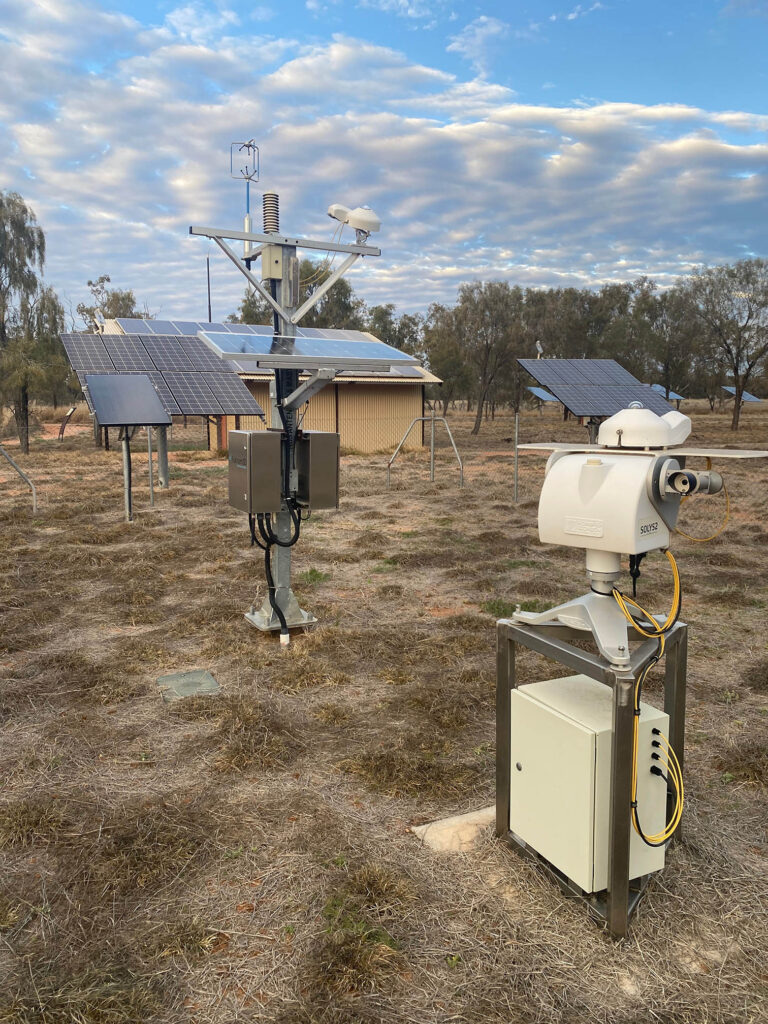
A key focus of the tour was the DKA Solar Centre, established in Alice Springs in 2008 and recognised as the world’s largest multi-technology solar demonstration facility.
The centre provides a real-world testing environment where more than 40 solar installations can be monitored and compared under identical conditions. Different technologies, manufacturers and system configurations are tested over time, generating valuable insights into solar performance in arid environments.
One of the centre’s most significant contributions is its long-term, open-access data. Live performance information from solar arrays, combined with onsite weather data, supports renewable energy research in Australia and internationally.
“The commitment to sharing data and knowledge is incredibly valuable,” Lizzie said. “Facilities like the Solar Centre help accelerate innovation by providing researchers, industry and communities with evidence they can use to make informed decisions.”
Local impact with global relevance
Beyond supporting research, the Solar Centre delivers practical benefits to the region. Its installations generate an average of around 420,000 kilowatt hours of electricity each year, supplying approximately 40 per cent of the Desert Knowledge Precinct’s electricity needs while contributing to the broader Alice Springs power network.
The tour also included visits to the library within the Desert Peoples Centre and the Business and Innovation Centre, showcasing the Precinct’s broader role in supporting education, enterprise and community development.
Lizzie said the experience highlighted the importance of collaboration in unlocking opportunities across Northern Australia.
“Bringing together researchers, educators, businesses and community organisations in one place creates a powerful ecosystem for innovation,” she said. “It’s an inspiring example of how collaboration can drive economic development and sustainability outcomes for regional Australia.”
As conversations continue around renewable energy, economic resilience and Northern Australia’s future, the Desert Knowledge Precinct remains a compelling example of how local expertise and unique environmental conditions can generate knowledge and solutions with global impact.