
Tracy Lefroy on how a landholder collective in WA is putting community at the centre of a wind farm project
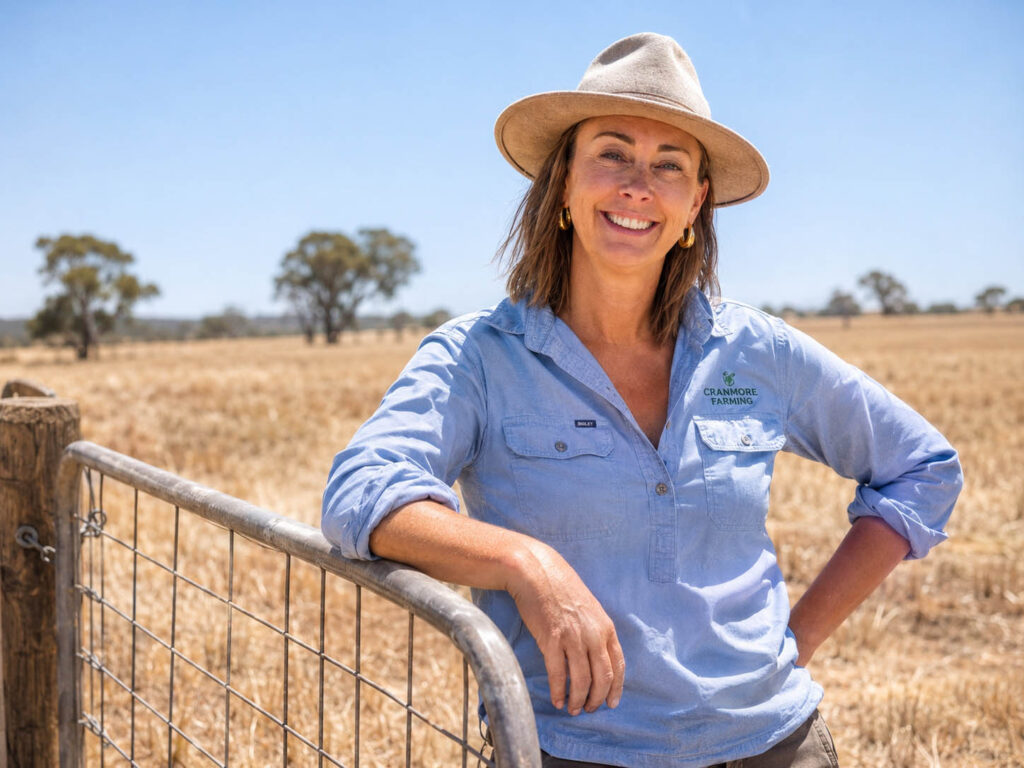
Tracy Lefroy wasted no time after two wind farm representatives strolled into her shearing shed on her family’s mixed-farming property in Western Australia’s Wheatbelt region.
‘We were approached by a developer one day. The next day I was on the phone to the neighbours.’
Tracy spent eight years as a Shire President and, in that role, learnt about the renewables industry and how disadvantaged farmers can be in negotiations.
‘These are people who are used to proposing projects; that’s their job. Our job is being a farmer,’ she says. ‘There’s an imbalance in information, an imbalance in experience and an imbalance in understanding the process.’
What began as a series of phone calls grew into a landholder collective that’s helped Tracy and her husband Kristin, alongside nine other landholders, share information, negotiate from a position of strength and keep community relationships central.
Nothing has been built yet; the wind farm is still a proposal. Getting comfortable with that level of uncertainty has been a real challenge for the group of landholders, but Tracy is feeling positive about where things are headed.
‘Once we’re in the operational phase, I’d really like to think that our community, hand on heart, is a better place, and that our farms have that resilience against drought and against a changing climate because there is some passive income.’
What good looks like
For Tracy, one of the strongest indicators of good renewable energy development was the developer’s willingness to engage with the Collective rather than insist on dealing with landholders individually.
‘The developer we were working with was open to that, which we appreciated,’ she says. ‘We understand that’s not always the case.’
Another important principle was transparency. Like many landholders entering renewable energy negotiations for the first time, the group found themselves rapidly learning about exclusivity agreements, option agreements, lease arrangements and commercial negotiations.
‘We didn’t want NDAs stopping neighbours from talking to each other. We needed permission to operate as a collective,’ Tracy says. ‘I think if that had been denied, we wouldn’t have moved forward.’
The collective approach also made it easier for the developer. ‘They knew they were dealing with a group of people who had trust in each other, who were researching deeply, and who were really keen to see the project go ahead if we could get it to a place where it was mutually beneficial.’
‘There was no pro-renewables or anti-renewables; it was all pro-landowner agency, pro-economic development, pro-community resilience.’
Protecting what matters
The Landowner Collective wasn’t just focused on commercial outcomes. Many members are second-, fifth- or even sixth-generation farmers with deep ties to the land and their local community. Kristin is the fifth generation from his family on their property at Bindi Bindi – their three children are the sixth.
Says Tracy: ‘We have an incredible connection to the place in which we farm, to our neighbours, to our community, and a huge desire to ensure that our community … retains that incredible sense of “we are community, we have each other’s back.”’
The Collective was also pragmatic in its approach, with a clear focus on the benefits for their farm operations as well as their communities. ‘We just went, “Right, this is what is happening, this is the reality. How do we leverage the very best opportunities, the very best economic diversification, the very best community uplift as a result of what is happening?”’
The Collective’s prioritisation of relationships influenced practical decisions throughout the process. Neighbouring landholders worked together to ensure turbine layouts were fair across property boundaries. They also sought to protect the amenity of nearby homes.
Tracy says working with the broader community meant treating them with care. ‘It’s about listening to what people’s concerns are and being kind,’ says Tracy.
Finding the right information
Wading through the misinformation and disinformation that abounds in this space is not easy, and information on old technology can give a misleading picture of how things are now.
Tracy read broadly and tapped into her networks, including those she’d developed through her work on GrainGrowers’ National Policy Group. ‘It was also a lot of reaching out to strangers and saying, “Hi, I’m Tracy from WA, can you share with me how you went about this?”’
She says decommissioning was a priority issue for the Collective and a tricky one to get good information on. ‘We worked really hard on that to ensure that it was something we’re all comfortable with, but also flexible enough to deal with the fact that decommissioning may happen in 30 years or it may happen in 60 years.’
Beyond the farm gate
For Tracy, the thinking started before any developer arrived. A few years earlier, an economist visiting the family’s kitchen table asked how they defined themselves.
‘We both said, “We’re farmers. We’re fifth generation.” And she said, “Have you considered being food, fibre and energy producers?”’
That question still shapes how Tracy sees the transition: not just what landholders are paid, but what regional communities keep once the construction crews have gone.
‘There’s been a massive focus on getting ready. There hasn’t been a massive focus on how do we retain and keep that value long term.’
She points to practical examples. A workers’ camp can be designed so its infrastructure becomes aged care afterwards. Construction tenders can be broken into parts that local businesses can bid on. Training can run alongside construction, so regional young people don’t have to leave home to join a new industry.
She is also clear that the current system relies too heavily on goodwill. ‘We shouldn’t be doing 30-year deals on the basis of happening to have someone in the group who’s willing to put their head up and do additional research.’
Advice to others
Tracy’s message to others who are approached by developers is simple. ‘Don’t think that you have to do it by yourself. Talk to your neighbours as much as possible. If you can work together, it’s incredible.
‘Find someone who’s done it before. Learn from what they would do differently or what they would do again.
‘You’re not the first people to go through this process, and yes, you have a context that is uniquely applicable to you and your farming enterprise and your community, but there are also more overarching principles that apply across most areas.
‘And remember that the relationships you have with your neighbours and with your family and with your community, it’s OK to put those front and centre of your considerations, because that’s certainly what we chose to do.’
To learn more about the work of the Landholder Collective, check out Tracy’s recent podcast interview with Tenacious Ventures