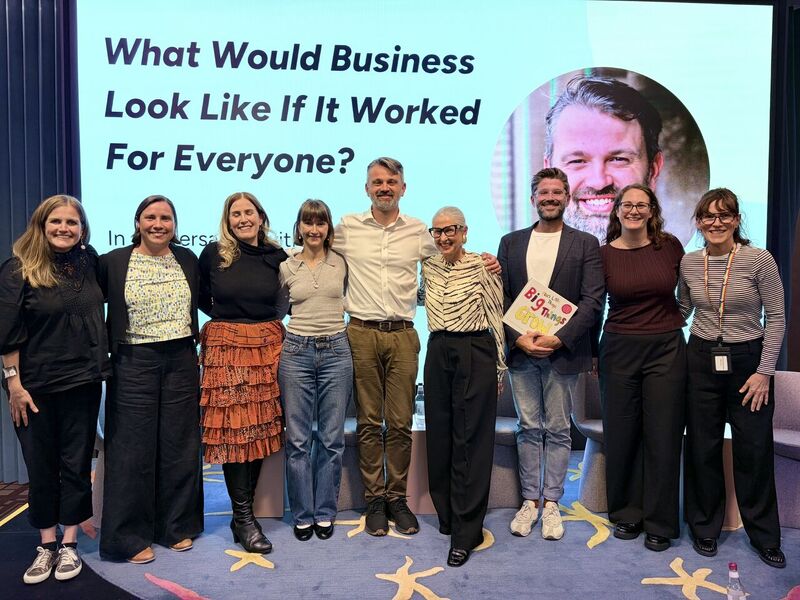
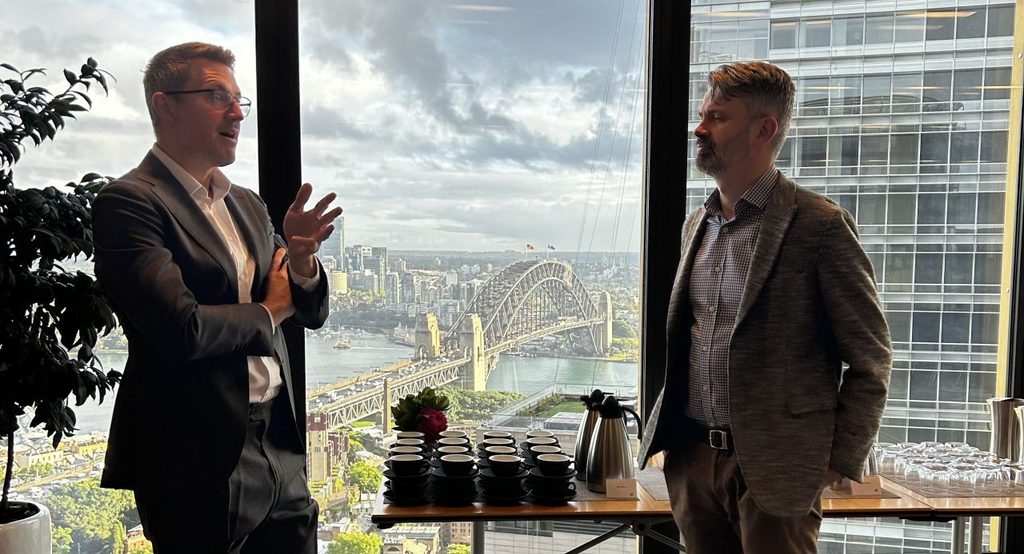
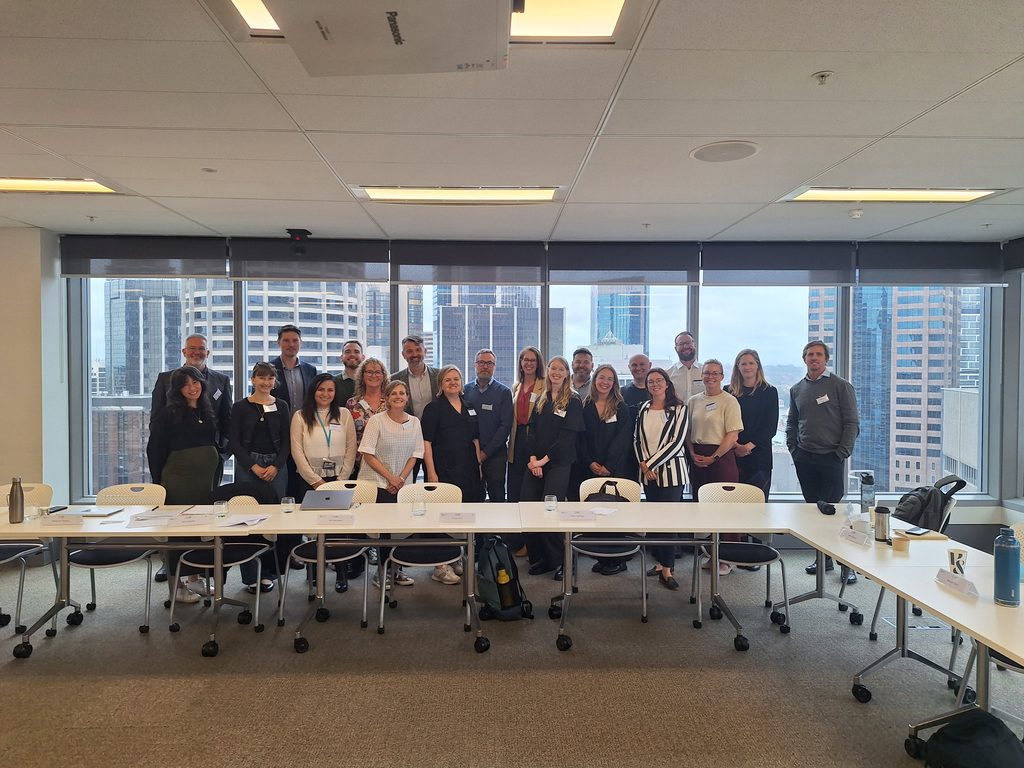
From October 6 until October 15, we hosted Erinch Sahan, a globally renowned thought leader with expertise in business design and investment on a short tour of Melbourne, Canberra and Sydney. We did so to widen the conversation in Australia on how business and investment can ensure that their activities and ways of working contribute to an Australia that future generations will be proud of.
Erinch spent 8 days and delivered 15 different speaking engagements on the critical role of business and investment in building the economy we could have.
Here are some highlights from his tour.
Melbourne:
Erinch started the day with our colleagues at Shared Value Project and the Sustainable Value Creation Institute Melbourne Business School for a bold conversation on how business can be redesigned to serve people, and to operate within the planetary boundaries we all depend on.
As Sarah Downie said: “The conversation left me thinking about many things…one that stood out was how elevating relevant voices – employee, nature or future generations, can surface opportunities and risks others are missing…”
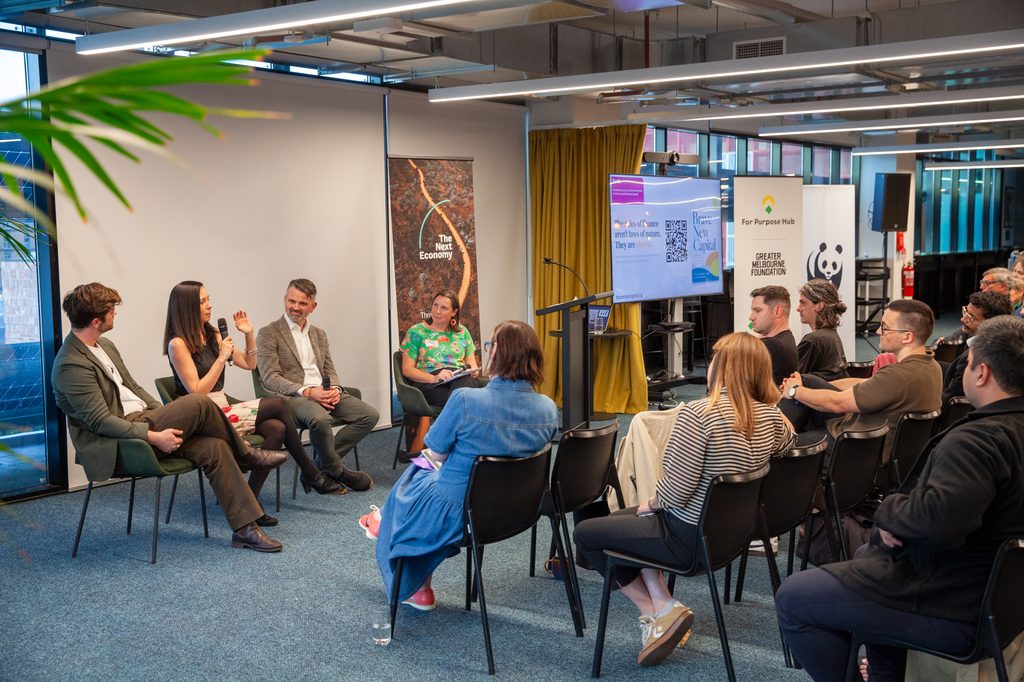
In the evening, TNE then hosted a public talk with Erinch Sahan on Transforming Business and Investment into a Force for Good, with the help of our partners Greater Melbourne Foundation.
Erinch talked about how if we can design regenerative and distributive business, we can genuinely reverse the trend of increasing wealth inequality and distrust in institutions. Doing so is an opportunity to build the muscle memory of democratic engagement: creating a healthier democracy, as well as a fairer economy.
We also heard from an incredible panel, facilitated by our CEO Lizzie Webb and featuring Tara Anderson from Social Traders and Josh Devine from Regen Melbourne. Tara and Josh translated Erinch’s messages into the Australian context and provided insights on their experience trying to make change from within the system and outside it. A big theme was the need for collaboration and support between both.
Canberra:
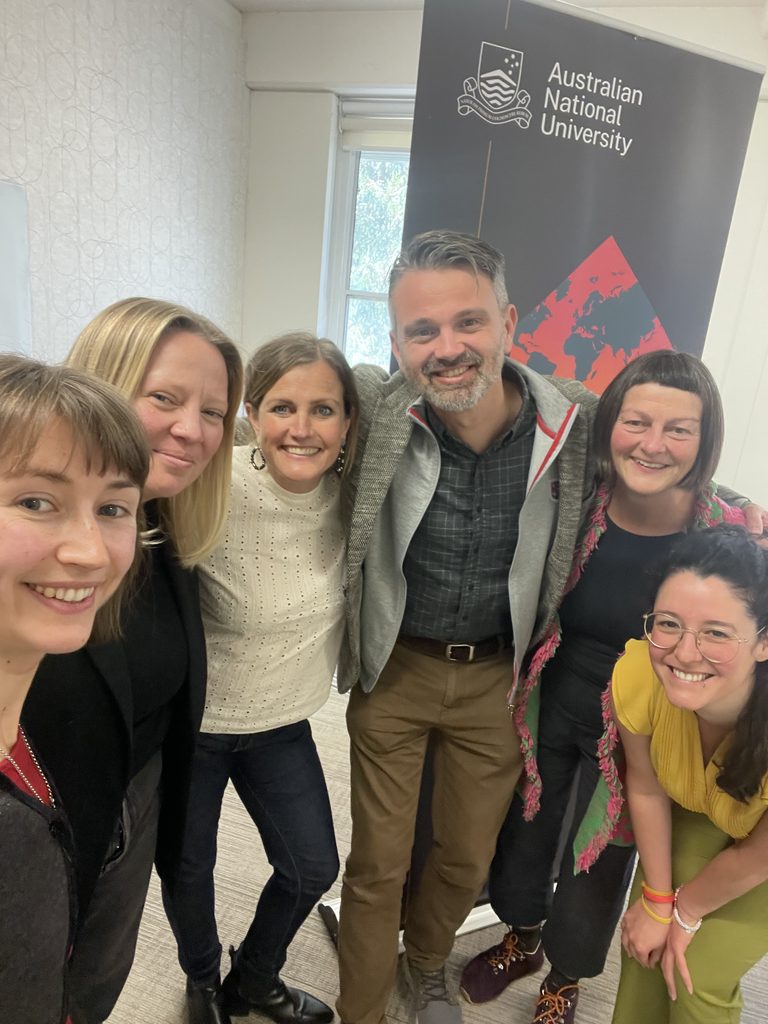
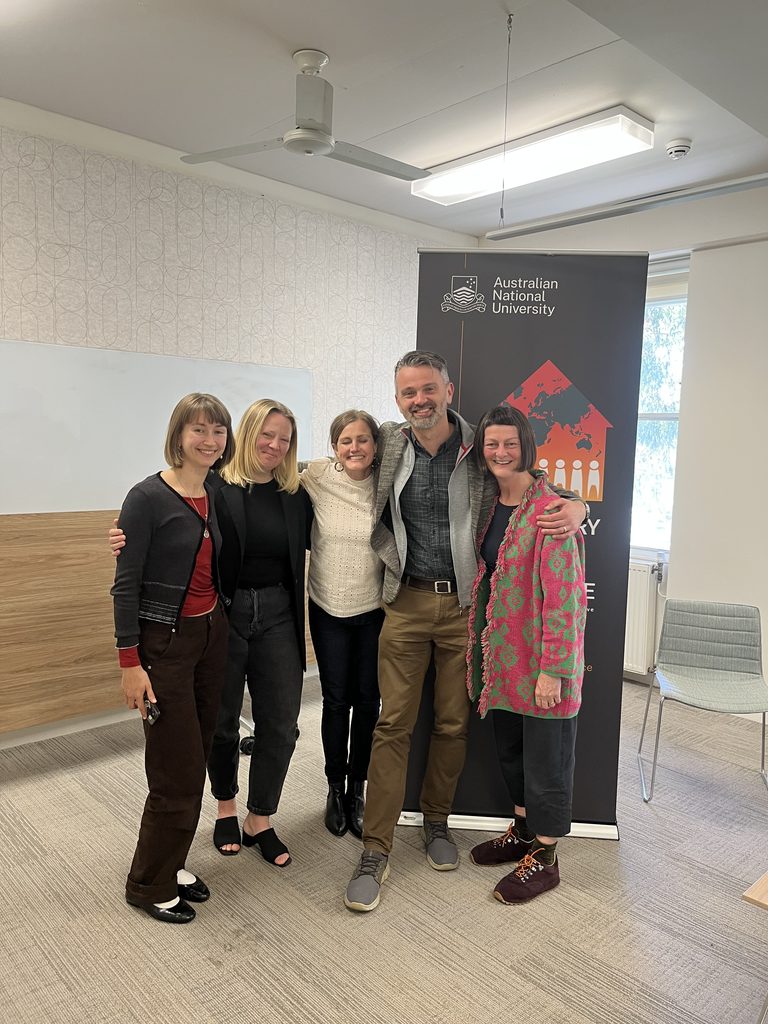
Erinch was in Canberra to present a webinar with Sharon Friel of The Australian National University Planetary Health Equity Hothouse and to meet the incredible team of interdisciplinary experts from public health, economics, political science, global governance and environmental science who work to promote the equitable enjoyment of good health within a stable Earth system.
The conversation brought up the many ways that policy could be used to shift in a positive direction, with a real opportunity for industrial policy in Australia to support different business and investment missions and models to create better conditions for workers and our economy.
In the morning, TNE also hosted a special webinar for our friends and partners who might not have been able to make it to Melbourne or Sydney, bringing global lessons to regional opportunities. This was a conversation with Erinch and our Economic Program Director Katherine Trebeck and our Land Program Director Jacqui Bell where the focus was on Australian regional opportunities and moving beyond the current barriers.
Erinch shared that starting small with business design innovations, with “little experiments”, can help grow the longer-term ambition to drive deeper change. and that we must tolerate messiness as a necessary part of making change.
There is a real feeling of possibility and that the moment is ripe for change in Australia. A common response from those attending events is that Australians are ready to connect and work together to build and support businesses that are good for people and planet, with flow on benefits to our democracy and society.
Sydney:
Paul Ramsay Foundation and The Next Economy co-hosted Erinch Sahan for his last public event in beautiful Yirranma Place, which was a perfect location, especially as “Yirranma” is translated from Gadigal meaning “many-create.”
Erinch was joined by a fantastic panel: Melina Morrison, CEO of Business Council of Co-operatives and Mutuals (BCCM), Dr Belinda Russon Nayanar, CEO of Tranby Aboriginal Co-operative Ltd. and Nathan Robertson-Ball, founder of Finding Nature.
One of the dangerous myths that structures how we run our economy is based on people being economic self-maximisers: but as Melina pointed out, societies are built and thrive through their ability to work together: “It’s enlightened self-interest to cooperate.”
As Australians face an uncertain future with increasing impacts of climate change, inequality reaching dangerous levels, political division, the implications of AI, it can feel difficult to imagine the solutions.
But the conversation last night was a strong reminder that working collectively is the solution, whether it’s via cooperatives, community ownership and Indigenous-led models of stewardship. 🌱
Importantly, these are long-standing, living alternatives that challenge the assumption that ownership has to mean extraction, concentration or “me, mine, more.”
The panelists also reflected on:
• How we need to ask better questions about sufficiency: what is enough?
• The way that stewardship enables thinking beyond the next quarter and toward future generations.
• Self-determination for First Nations people is built through governance, listening, reciprocity and responsibility.
• If we want to build the economy we could have, we need more ways for people and communities to own, decide and benefit together.
There are so many options for going beyond simply critiquing the current economy but taking decisions that back the alternatives: by asking hard questions about where we bank, what we buy, how we invest, how we govern, and what kinds of ownership models we help grow. ️
The systems we live in were designed. That means they can be redesigned.